























In an increasingly digital world, communication from government departments has evolved. The Department for Work and Pensions (DWP) in the United Kingdom has adopted SMS (Short Message Service) as one of the channels for reaching out to claimants.
This often raises questions among the public regarding the authenticity, safety, and purpose of such messages.
Understanding how and why the DWP sends text messages can help claimants stay informed while remaining vigilant against potential scams.
What Is the Purpose of DWP Text Messages?

The Department for Work and Pensions uses text messaging as a complementary communication method to update claimants about their benefits, appointments, or documentation requirements.
While official letters, online updates via the Universal Credit journal, and phone calls remain the primary means of correspondence, text messages provide quick and accessible updates that can be beneficial to both the department and claimants.
Text messages from the DWP are designed to:
- Notify claimants about the receipt of a claim or application
- Remind individuals about scheduled appointments
- Inform about payment dates or changes in benefit status
- Provide prompts to take specific actions, such as logging into their online journal
- Share time-sensitive updates related to services or deadlines
These communications are structured to be brief and direct. Messages will never ask for sensitive personal details, which aligns with the department’s internal SMS policy to avoid data misuse or phishing attempts.
How Can You Recognise a Legitimate DWP Text Message?
Recognising an authentic DWP message is essential in an environment where fraudulent texts are becoming more sophisticated. Legitimate DWP messages usually follow a standard format and tone.
A typical DWP message may include:
- A sender name like DWP, UC, or Jobcentre
- Professional language with correct grammar and structure
- Specific claim-related information such as dates or appointment times
- Directs users to GOV.UK links only
The format of the message is designed to avoid ambiguity. For instance, if a message refers to an appointment, it will mention the Jobcentre location, time, and the need for attendance. Texts related to Universal Credit might include a suggestion to check the claimant’s journal for further instructions.
Indicators of Genuine vs Suspicious DWP Messages:
| Criteria | Genuine DWP Message | Suspicious Message |
| Sender ID | DWP, UC, Jobcentre | Random mobile number |
| Link Provided | Always to www.gov.uk | Unfamiliar or non-governmental URLs |
| Request for Personal Details | Never | Often asks for National Insurance number or bank info |
| Tone and Grammar | Formal and accurate | Often urgent, with errors or informal tone |
| Action Required | Simple instructions like “Check your journal” | Requests to reply with sensitive info |
Claimants are advised to compare the content of any received message with known DWP contact formats or verify through their online account.
What Types of Information Will the DWP Never Request by Text?
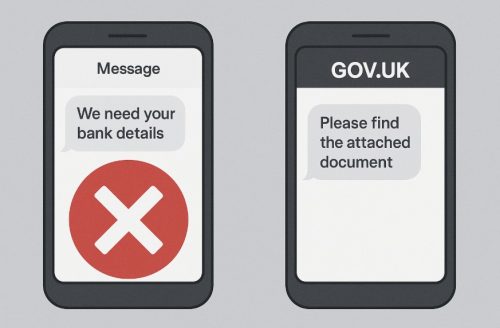
The DWP operates within strict boundaries to protect claimant data. Its SMS communications are deliberately restricted in content to avoid collecting any sensitive data through insecure channels.
DWP will never use text messaging to ask for:
- National Insurance numbers
- Bank account or sort code information
- Passwords or security answers
- Identification documents or personal addresses
- Click-throughs to external, unofficial sites
These rules are enforced to mitigate the risks posed by phishing attempts, identity theft, and data breaches. If a claimant receives a message requesting such information, it should be treated as suspicious and reported immediately.
The DWP’s text message policy also confirms that links will only direct users to official GOV.UK web pages.
How Can You Stay Safe From DWP Text Message Scams?
Text message scams targeting benefit claimants have increased in recent years, with fraudsters often impersonating government departments to collect sensitive information. Being able to spot these fraudulent attempts can help protect claimants from potential loss.
Safety tips include:
- Always double-check the sender’s ID. Authentic messages will not come from unrecognised mobile numbers.
- Never respond to texts asking for passwords or account numbers.
- If a message appears suspicious, compare it to messages received in your Universal Credit online journal.
- Do not click links unless they clearly point to GOV.UK domains.
- Use mobile services such as forwarding the message to 7726 to report it as spam.
Staying cautious while dealing with unsolicited communication is key to preventing fraud.
Through Which Channels Does the DWP Officially Communicate?
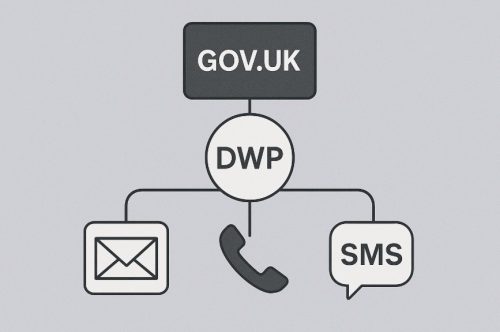
The DWP has a structured system of communication that includes both digital and traditional formats. Understanding these channels helps claimants recognise legitimate updates.
Official communication methods include:
- Universal Credit Online Journal: The main point of communication for UC claimants where updates, requests, and instructions are issued
- Postal Letters: Sent for formal notices such as decisions on claims, overpayment recovery, or appointment confirmations
- Phone Calls: Used for clarification, information requests, or support
- Text Messages: Used to send reminders or confirm action taken, without requesting sensitive data
- Social Media: Public updates may be posted on official platforms such as the DWP’s verified Facebook or Twitter accounts
Each method serves a specific purpose, and messages are generally consistent across platforms. If a text contradicts an update in your journal or recent letter, this may be a sign of impersonation.
What Are Some Examples of Genuine DWP Text Messages?
To further assist claimants, below are examples of authentic DWP text message scenarios. These messages typically maintain a consistent tone, structure, and provide only essential information.
- Confirmation of Benefit Application: “We have received your application for Employment and Support Allowance. You will be contacted shortly with the outcome.”
- Appointment Notification: “You have an appointment at Manchester Jobcentre on 15 June at 10:00 AM. Please attend or contact 0800 169 0190 if unavailable.”
- Universal Credit Verification Prompt: “To complete your Universal Credit application, please sign in to your account and upload identification documents at www.gov.uk/universal-credit.”
- Reminder for Evidence Submission: “Reminder: You must submit your proof of income by 12 June. Log in to your account for details.”
The messages do not contain attachments, will never request sensitive data, and only refer claimants to their online accounts or GOV.UK resources.
How Does the DWP Ensure Security in Digital Communications?

The Department for Work and Pensions (DWP) handles sensitive personal information for millions of individuals across the UK, including data related to income, identity, medical assessments, and financial support. As such, securing its communication channels, especially digital platforms like SMS, is a critical responsibility.
DWP has implemented multiple layers of security and internal policies to reduce the risk of fraud, impersonation, and unauthorised data access. The goal is to ensure that every piece of information sent to or from the department is traceable, verifiable, and secure.
SMS Usage Policy and Guidelines
The DWP’s use of text messaging is governed by a clearly defined SMS policy, which outlines what kind of information may or may not be included in messages. According to this policy:
- Text messages are only used to provide reminders, confirm actions, or notify claimants about specific events such as appointments or claim updates.
- Messages are intentionally brief and never request claimants to send personal or financial information via SMS.
- If a message includes a link, it will only direct users to official GOV.UK pages or DWP’s secure login platforms.
The content is reviewed before distribution to ensure it aligns with the department’s language guidelines and security protocols.
Sender Identity and Verification
To prevent impersonation, the DWP uses verified sender IDs such as:
- DWP
- UC (for Universal Credit-related messages)
- Jobcentre
These identifiers allow mobile networks to display the sender’s name instead of a random phone number. It also ensures that messages appear consistent and recognisable to the recipient. If a claimant receives a message from an unfamiliar number or one not associated with these identifiers, it should be treated with caution.
Additionally, messages never come from standard mobile numbers, which are often a hallmark of scam attempts.
Message Format and Tone
Every text message sent by the DWP is carefully formatted to include:
- Clear language with no grammatical errors
- Concise details like date, time, or type of appointment
- Direct action points, such as “Check your Universal Credit journal” or “Visit GOV.UK for details”
- Absence of alarmist or overly urgent language
This formal, consistent tone reduces the chances of confusion and makes fraudulent messages easier to detect by comparison.
Employee Training and Access Control
Internally, the DWP ensures its staff are trained in digital communication protocols. Employees who are authorised to send messages must follow strict guidelines on:
- When and why a text message can be sent
- What content can be included
- Which templates or systems must be used
- How to log and audit messages for security tracking
There are internal audit mechanisms that regularly review communication logs to ensure messages align with compliance standards.
Technology and Infrastructure
The DWP partners with secure, accredited SMS providers who are contractually required to follow government data protection standards. These providers ensure that:
- Messages are encrypted during transmission
- Delivery logs are maintained and traceable
- Sender verification is applied to every batch of messages
This infrastructure ensures that messages cannot be easily spoofed or manipulated by external entities.
Monitoring and Response Systems
To maintain integrity and trust in its digital channels, the DWP actively monitors feedback and reports of fraudulent activity. If a scam campaign impersonating the department is detected, immediate steps are taken to:
- Notify claimants via social media or GOV.UK
- Coordinate with mobile service providers to block known scam numbers
- Update communication guidelines to address emerging threats
Claimants are also encouraged to report suspicious messages, which feeds into a broader fraud prevention strategy that includes collaboration with Action Fraud and other cybercrime agencies.
Consistency Across Platforms
Finally, DWP ensures that all communication, whether it comes from a text, letter, phone call, or online journal entry, is consistent in tone and message. This alignment makes it easier for claimants to spot inconsistencies or suspicious activity, reducing the likelihood of falling for scams.
By combining strict policy enforcement, secure technology, training, and responsive monitoring, the DWP provides a structured and safe digital communication environment that protects both the department and the public it serves.
When Should You Contact the DWP Directly?
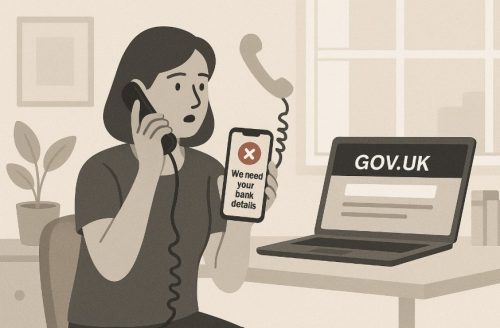
There are times when a text message may seem unclear, suspicious, or unrelated to your current status as a claimant. In these situations, it is best to make direct contact with the DWP to avoid taking action on potentially false information.
Claimants should consider contacting the DWP directly if:
- A message requests personal or financial information
- They have received multiple messages without prior activity
- There is a conflict between the content of the text and what’s shown in their journal
- They are unsure about whether a payment is genuine or have not been informed of a pending appointment
DWP helplines and contact details can be found on the GOV.UK site, and claimants are advised to only use official numbers.
When to Contact the DWP vs Take No Action:
| Scenario | Action Required |
| Message requests personal info | Contact DWP immediately |
| Payment notification matches journal | No action needed |
| Appointment reminder with correct info | Attend as advised |
| Link to non-GOV.UK domain provided | Contact DWP to verify |
| Message content contradicts recent updates | Contact DWP |
Direct communication with the DWP remains the safest option if there is any doubt about the authenticity or accuracy of a received text message.
Conclusion
Staying informed about how the DWP uses text messaging can help claimants manage their benefits with confidence and security.
While genuine messages offer timely updates and reminders, it’s crucial to recognise the signs of scams and take action when necessary.
Always verify unexpected messages through official channels and never share personal details by text. Understanding these practices ensures safer communication and helps maintain trust in the systems supporting benefit claimants across the UK.
FAQs
Is it normal to get a text from DWP about Universal Credit?
Yes, the DWP may send reminders or updates regarding your Universal Credit application or appointments.
Can DWP text me asking for my National Insurance number?
No, the DWP will never ask for personal information like your National Insurance number via text.
How do I check if a DWP message is real?
Visit GOV.UK or contact DWP directly to confirm the message’s authenticity.
Will the DWP send links in their texts?
Yes, but only to official GOV.UK websites. They will never include third-party or suspicious links.
Can DWP send SMS about fraud investigations?
Yes, but such messages are limited to informing you of actions or prompting contact through secure channels.
Is replying to a DWP text message safe?
Generally, replies are not required. If a message asks for a response, verify it before replying.
Where can I find DWP’s official communication policy?
You can find the official SMS policy on the GOV.UK website in their public document archive.