


Christmas is one of the most anticipated times of the year for many in the UK, filled with tradition, family gatherings, and a slower pace at work.
However, when it comes to employment rights and public holidays, questions often arise about what the law actually says. One common question is: Is Christmas Eve a bank holiday in the UK?
This guide provides a detailed look at what workers, parents, and employers need to know about the status of Christmas Eve, employment rights, and how different sectors handle this day.
What Is The Official Bank Holiday Status Of Christmas Eve In The UK?


Christmas Eve is not an official bank holiday in the United Kingdom. According to GOV.UK, the only designated bank holidays during the festive period are Christmas Day, Boxing Day, and New Year’s Day.
Christmas Eve remains a standard working day unless otherwise specified in an employee’s contract or by an employer’s discretion.
While many people associate the day with celebrations and early finishes, there are no legal protections or entitlements for the day off.
Businesses that decide to close or reduce hours do so voluntarily. Some include this gesture as part of employee engagement or internal policy, but it is not mandatory.
Why Do Some Businesses Close Early On Christmas Eve?
The decision for businesses to close early on Christmas Eve usually stems from workplace tradition, customer behaviour, or staff welfare considerations. It’s not a legal requirement, but it has become common practice in many industries.
Key reasons why businesses opt for early closures include:
- Reduced customer demand during the afternoon
- Promoting staff wellbeing and holiday morale
- Aligning with school closures or transport limitations
- Encouraging work-life balance in the run-up to Christmas
Sectors like finance, consulting, and education often support early finishes. However, businesses in retail, hospitality, and logistics may remain open for extended hours due to increased demand.
Are Workers Entitled To Time Off On Christmas Eve?

Employees are not automatically entitled to take Christmas Eve off. Since it is not a public or statutory holiday, the right to time off depends entirely on:
- The terms outlined in the employment contract
- Whether annual leave is available and approved
- Employer discretion and internal policy
Employees should request time off in advance and expect it to be approved based on business needs. In workplaces with high demand, such as retail or emergency services, leave may be limited or denied during the festive season.
Here’s how leave entitlement typically applies:
| Employee Type | Time Off on Christmas Eve |
| Full-Time Employee | Can request annual leave, subject to approval |
| Part-Time Employee | Entitled to leave if Christmas Eve is a regular workday |
| Zero-Hour/Contractor | Based on agreement and work pattern |
| Shift Workers | Depends on rota and employer discretion |
What Are The Official Bank Holidays During The Christmas Period?
In the UK, public holidays are set by nation and vary slightly between England, Wales, Scotland, and Northern Ireland. Christmas Eve is not part of these statutory holidays. The official holidays during the festive season are listed below:
| Date | Bank Holiday | Region |
| 25 December | Christmas Day | UK-wide |
| 26 December | Boxing Day | UK-wide |
| 1 January | New Year’s Day | UK-wide |
| 2 January | New Year Holiday | Scotland only |
If any of these dates fall on a weekend, a substitute day (usually the following Monday) is provided.
How Does Christmas Eve Affect Working Parents?
Christmas Eve can be a complex day for working parents, particularly as most schools close several days before Christmas. This creates childcare challenges for those still expected to work.
Employers often offer additional flexibility to support parents, such as:
- Allowing remote or hybrid working
- Offering early finishes or split shifts
- Accepting annual leave or unpaid leave requests
Working parents can also make a statutory request for flexible working under UK employment law, although this must be done in advance and is subject to employer agreement.
What Are Employers Legally Required To Do For Staff On Christmas Eve?
Understanding Legal Obligations
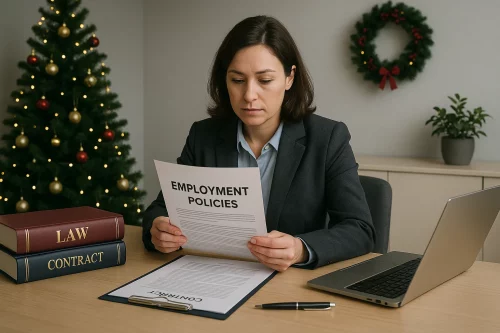
Employers in the UK are not legally required to provide time off on Christmas Eve. Since 24th December is not a statutory holiday, it is treated like any other working day under UK employment law.
The decision to offer leave, early finishes, or flexible working is at the employer’s discretion, unless otherwise stated in the employment contract or company handbook.
However, employers must still comply with general employment law, including:
- Adhering to terms set out in contracts
- Applying policies consistently across the workforce
- Avoiding any form of discrimination
Employers cannot treat employees unfairly based on their holiday preferences or family circumstances, especially if they belong to a protected category under the Equality Act 2010.
Respecting Contractual Agreements
If an employment contract or staff handbook mentions specific conditions for Christmas Eve—such as an early finish or reduced hours employers are legally obligated to honour these terms.
Contracts may include:
- Guaranteed time off or shortened working hours on Christmas Eve
- Bonus or enhanced pay if staff are required to work during the festive period
- Specific working conditions for part-time or shift workers
Failure to follow these terms could constitute a breach of contract.
Communicating Working Hours Clearly
A key employer responsibility is to clearly communicate expectations around Christmas Eve. This includes informing staff in advance about:
- Operating hours for the day
- Whether early closure will be offered
- Any changes to scheduled shifts or rota patterns
Employers are encouraged to share this information at least 4–6 weeks in advance to allow staff time to make personal arrangements.
Balancing Business Needs With Employee Wellbeing
While the law does not enforce closures, many employers voluntarily adopt practices that support employee morale during the holidays. Offering flexible options, such as remote working or an early finish, can enhance workplace satisfaction and retention.
Where full closure is not possible, some employers:
- Provide time off in lieu (TOIL)
- Allow casual dress or festive activities
- Offer bonuses or holiday treats as a gesture of appreciation
These goodwill efforts can improve productivity and employee engagement without compromising business continuity.
Can Employees Request Christmas Eve Off As Annual Leave?
Employees may request Christmas Eve as part of their annual leave entitlement. The approval of such requests depends on the employer’s policies and operational needs.
To improve the chances of approval:
- Submit the request early, ideally before December
- Be flexible with other shifts or workdays
- Check existing company policies regarding Christmas leave
Some organisations operate a rotation system to ensure fairness across teams. In businesses with increased demand over the festive period, holiday requests may be limited.
How Do Christmas Eve Practices Vary By Sector?

Office-Based Roles
In sectors like finance, marketing, administration, and professional services, Christmas Eve is often treated as a lighter workday. Many businesses close early or allow remote working.
Common practices include:
- Early finishes, often around midday or 1 PM
- Optional work-from-home arrangements
- Informal dress codes and in-office festive events
Since demand from clients is generally low, these sectors prioritise employee morale during this time.
Retail and Customer Service
For retail and customer-facing roles, Christmas Eve is one of the busiest days of the year. Many stores operate with extended opening hours to accommodate last-minute shoppers.
Retail staff can expect:
- Full shifts or overtime
- High footfall and pressure to meet sales targets
- Limited approval for annual leave
Some employers in this sector offer incentives such as bonuses or end-of-day perks to thank staff for their efforts.
Hospitality and Entertainment
Pubs, restaurants, hotels, and venues often operate at full capacity on Christmas Eve, hosting gatherings, dinners, and parties. Employees in this sector are typically required to work standard or extended hours.
Hospitality sector practices may include:
- Evening shifts and late finishes
- Mandatory staff attendance for scheduled events
- Limited holiday flexibility due to seasonal demand
Employers may offer staff parties or additional leave post-Christmas as compensation.
Healthcare and Emergency Services
Christmas Eve is considered a normal working day in healthcare, emergency response, and essential public services. Staffing levels are managed through rotas to ensure service continuity.
Typical practices:
- 24/7 shift coverage
- Leave granted only if operational needs allow
- Time off in lieu for those working through the holidays
Public sector workers in these roles are often covered by specific union agreements or public sector leave policies.
Transport and Logistics
With the surge in last-minute deliveries and travel, Christmas Eve is often one of the most demanding days for transport and logistics workers.
Expectations include:
- Early starts and long shifts
- High-pressure timelines for delivery services
- Limited opportunities for leave
Many companies plan rotas well in advance and may offer additional pay or rewards to staff working on the 24th.
What Are Some Best Practices For Managing Christmas Eve In The Workplace?
To support a smooth and fair process around Christmas Eve operations, HR departments and business leaders can adopt a number of best practices:
- Communicate expected working hours and policies by mid-November
- Apply all decisions consistently across departments
- Offer alternatives such as remote work or flexi-time
- Rotate shifts for fairness where coverage is required
- Reward teams who work on Christmas Eve, such as with a bonus or time in lieu
Balancing operational continuity with employee wellbeing during the festive season can help create a more positive and productive environment.
Conclusion
While Christmas Eve is widely recognised as an important date in the calendar, its legal status remains that of a regular working day in the UK.
Some argue that the cultural and emotional significance of the day warrants official recognition, especially as many countries in Europe treat it as a full or partial holiday.
For now, the decision rests with employers and their internal policies. Clear communication, fair treatment, and advance planning are the keys to navigating this grey area of the festive calendar.
FAQs About Christmas Eve and UK Bank Holidays
Is Christmas Eve a legal holiday for UK employees?
No, Christmas Eve is not a legal or statutory holiday in the UK. Employers are not obligated to provide the day off.
Can I be forced to work on Christmas Eve?
Yes, unless your contract states otherwise or you’ve booked annual leave, employers can require staff to work on 24th December.
Do I get extra pay for working on Christmas Eve?
There’s no legal requirement for premium pay on Christmas Eve. Any extra pay depends on your employer’s policy or union agreements.
Is it common for UK offices to close early on Christmas Eve?
Yes, many office-based businesses in the UK close early on Christmas Eve as a gesture of goodwill, but this is not mandatory.
How can I check if I have to work Christmas Eve?
Review your employment contract or contact your HR department for confirmation of working hours and policies around the holiday period.
Are shops open on Christmas Eve in the UK?
Yes, most retail stores remain open on Christmas Eve, often with extended trading hours to accommodate last-minute shoppers.
Does the Christmas bank holiday schedule change if it falls on a weekend?
Yes, if Christmas Day or Boxing Day falls on a weekend, substitute bank holidays are observed on the following weekdays.