


St. Patrick’s Day is one of the most widely celebrated cultural and religious holidays, known for its parades, green-themed festivities, and association with Irish heritage.
While it is a significant day for many, its status as a public or bank holiday varies depending on the country. In some regions, it is an official holiday with businesses and schools closed, while in others, it remains a normal working day.
This article explores whether St. Patrick’s Day is a bank holiday in the UK, Ireland, and the United States, along with its historical and cultural significance.
Is St. Patrick’s Day a Public Holiday in Northern Ireland?


St. Patrick’s Day is a public and bank holiday in Northern Ireland, meaning that most businesses, schools, and government offices close for the day. It is recognized as a bank holiday under the Banking and Financial Dealings Act 1971 and is observed annually on March 17.
If March 17 falls on a Saturday or Sunday, the holiday is typically observed on the following Monday. However, this does not affect the main celebrations, which still take place on the official date.
Northern Ireland hosts various celebrations, including:
- Belfast St. Patrick’s Day Parade: A large-scale event featuring floats, live music, and community performances.
- Armagh’s Cross-Community Festival: Highlights Irish cultural heritage with storytelling, dance, and traditional music.
- Religious Services – Many churches hold special masses to honour St. Patrick, particularly in Downpatrick, where he is believed to be buried.
The day is widely embraced as both a religious and cultural celebration, with many people wearing green and displaying shamrocks, which are closely associated with Irish identity.
Is St. Patrick’s Day a Bank Holiday in England, Wales, and Scotland?
St. Patrick’s Day is not a public or bank holiday in England, Wales, or Scotland. Unlike in Northern Ireland, businesses, schools, and public institutions remain open as usual.
The UK government has not designated March 17 as a public holiday outside of Northern Ireland, as it primarily commemorates Irish heritage rather than British national history.
However, major cities with significant Irish communities, such as London, Manchester, Birmingham, and Glasgow, hold parades and public events. These include:
- London St. Patrick’s Festival: A three-day event featuring Irish music, film screenings, and a large parade through central London.
- Manchester Irish Festival: One of the largest outside of Ireland, lasting two weeks and including cultural exhibitions, concerts, and traditional performances.
- Birmingham St. Patrick’s Parade: A well-attended event with floats, marching bands, and street performances.
Despite these celebrations, the day does not hold official holiday status, meaning employees are not entitled to time off, and businesses operate normally.
Is St. Patrick’s Day a Bank Holiday in the United States?
St. Patrick’s Day is not a federal holiday in the United States, meaning government offices, schools, and businesses remain open.
However, some cities with strong Irish-American populations recognize the day as a special observance and hold large-scale celebrations.
Prominent St. Patrick’s Day events in the US include:
- New York City St. Patrick’s Day Parade: One of the largest and oldest parades, dating back to 1762. It features thousands of participants, including marching bands, police officers, and community groups.
- Chicago’s Green River: Since 1962, Chicago has dyed its river green to mark the occasion, drawing crowds from across the country.
- Boston’s Irish Heritage Month: Given Boston’s deep Irish roots, the city hosts numerous concerts, pub events, and historical exhibits throughout March.
While some employers allow workers time off, St. Patrick’s Day does not hold the same official recognition as other national holidays, such as Independence Day or Thanksgiving.
What Is the History Behind St. Patrick’s Day?
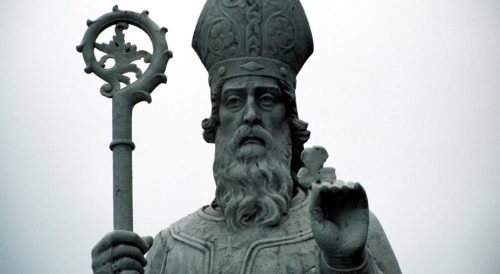

St. Patrick’s Day commemorates the life and work of St. Patrick, the patron saint of Ireland, who is believed to have died on March 17, around the year 493.
St. Patrick was born in Roman Britain and was kidnapped as a teenager by Irish raiders. After years of captivity, he escaped and later returned to Ireland as a Christian missionary.
He played a key role in spreading Christianity across the country and is credited with converting much of the Irish population.
Several myths surround St. Patrick, including:
- The banishment of snakes from Ireland: According to legend, St. Patrick drove all snakes out of Ireland. However, scientific evidence suggests there were never any native snake species in Ireland after the last Ice Age.
- The shamrock’s significance: St. Patrick is said to have used the three-leaf shamrock to explain the Christian concept of the Holy Trinity.
- Burial at Down Cathedral: It is widely believed that St. Patrick is buried in Downpatrick, County Down, alongside St. Brigid and St. Columba.
His legacy continues to influence Irish culture, and March 17 has been recognised as a significant date in both religious and secular traditions.
Has St. Patrick’s Day Ever Been Rescheduled?
While March 17 is the fixed date for St. Patrick’s Day, there have been rare occasions when the Catholic Church has rescheduled the religious observance to avoid conflicts with other important dates in the Christian calendar.
- 1940: The celebration was moved to April 3 to avoid overlapping with Palm Sunday.
- 2008: St. Patrick’s Day was observed on March 15 instead of March 17, as it would have conflicted with Holy Monday.
These changes primarily impacted religious services, and public celebrations generally proceeded as planned. The bank holiday in Northern Ireland remained unchanged, taking place on the official date or the following Monday when March 17 fell on a weekend.
When Did St. Patrick’s Day Become a Public Holiday?
St. Patrick’s Day was originally a religious feast day, celebrated primarily by the Catholic Church. It was formally declared a public holiday in Ireland in 1903 under the Bank Holiday (Ireland) Act.
For much of the 20th century, the holiday was more subdued than today’s modern celebrations. Until the 1970s, Irish laws prohibited pubs from opening on St. Patrick’s Day to maintain the religious nature of the occasion.
However, the restrictions were lifted as the holiday gradually became a global celebration of Irish culture.
Over the years, the day evolved into a national and international festival, attracting tourists to Ireland and promoting Irish heritage worldwide.
What Do People Do on St. Patrick’s Day?
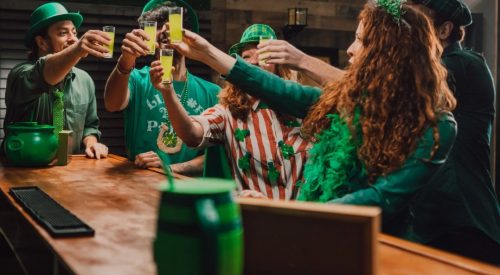

St. Patrick’s Day is celebrated in various ways, depending on cultural traditions, religious observances, and regional customs.
While it is a bank holiday in Northern Ireland and the Republic of Ireland, people worldwide take part in the festivities, embracing Irish heritage through parades, public gatherings, and symbolic traditions.
Religious Observances
In Ireland and Northern Ireland, many people begin the day by attending church services to honour St. Patrick’s contributions to Christianity.
Special masses are held, particularly in Downpatrick, County Down, where St. Patrick is believed to be buried. Religious ceremonies often include prayers, hymns, and reflections on his missionary work.
Parades and Festivals
St. Patrick’s Day is known for its large-scale parades and festivals, attracting both locals and tourists. Some of the most notable parades take place in:
- Dublin, Ireland: The largest festival in Ireland features a multi-day event with live music, street performances, and a grand parade.
- Belfast, Northern Ireland: A colourful parade with floats, traditional dancers, and community performances.
- New York City, USA: One of the world’s oldest and largest St. Patrick’s Day parades, drawing millions of spectators.
- London, UK: The city hosts a major parade through central London, ending with celebrations at Trafalgar Square.
Wearing Green and Shamrocks
People wear green clothing and accessories to symbolize their connection to Ireland. Green is associated with:
- The Emerald Isle, referring to Ireland’s lush green landscapes.
- St. Patrick’s use of the shamrock to explain the Holy Trinity.
- A traditional belief that wearing green makes one invisible to leprechauns, who are said to pinch anyone not dressed in the colour.
In many cities, iconic landmarks such as the Sydney Opera House, Niagara Falls, and the Colosseum in Rome are illuminated in green to mark the occasion.
Traditional Irish Food and Drinks
Food plays an important role in St. Patrick’s Day celebrations. Many people enjoy traditional Irish dishes, including:
- Irish stew: A hearty dish made with lamb, potatoes, carrots, and onions.
- Boxty: A type of Irish potato pancake.
- Colcannon: Mashed potatoes with cabbage or kale.
- Soda bread: A dense, rustic bread made without yeast.
In countries like the United States, people celebrate by eating corned beef and cabbage, a dish popularized by Irish immigrants.
Irish pubs and restaurants also serve Guinness stout, Irish whiskey, and Bailey’s Irish Cream, which have become symbols of the holiday.
Music, Dance, and Entertainment
Live music is a key part of the celebrations, with performances of traditional Irish folk music featuring instruments like the fiddle, tin whistle, and bodhrán (Irish drum).
Many events include céilí dances, a form of Irish social dancing accompanied by lively jigs and reels.
Modern celebrations often include street performances, comedy acts, and storytelling events that highlight Irish folklore and history.
Dyeing Waterways Green
One of the most unique traditions takes place in Chicago, USA, where the Chicago River is dyed green in honour of St. Patrick’s Day.
This tradition, which began in 1962, lasts for a few hours and attracts large crowds. Other cities, including San Antonio and Indianapolis, have adopted similar traditions by dyeing their waterways green.
Drinking Culture and Pub Gatherings
St. Patrick’s Day has also become associated with social drinking, particularly in countries like the United States and the UK.
Irish pubs host special events, live music, and themed drinks, attracting large crowds. However, in Ireland, St. Patrick’s Day was once a dry holiday, with pubs being closed by law until the 1970s.
Today, while many enjoy drinks responsibly, there has been ongoing discussion about the commercialization of the holiday and concerns over excessive alcohol consumption.
Family-Friendly Activities
While pub celebrations are common, many families prefer to celebrate in a more relaxed manner. Some common family-friendly activities include:
- Crafting: Making shamrocks, leprechaun hats, and Irish flags.
- Storytelling: Sharing Irish myths and legends about St. Patrick and leprechauns.
- Watching Irish films: Enjoying movies like The Secret of Kells or The Quiet Man.
- Community gatherings: Attending festivals that include games, face painting, and Irish dance performances.
Modern Adaptations and Global Influence
Over the years, St. Patrick’s Day has transformed from a religious observance into a global celebration of Irish identity.
Countries with large Irish communities, such as Canada, Australia, and Argentina, have incorporated their own unique customs while maintaining the core elements of the holiday.
Although not all celebrations are officially recognized as public holidays, millions of people around the world participate in St. Patrick’s Day festivities, making it one of the most internationally recognized cultural celebrations.
How Is St. Patrick’s Day Celebrated Worldwide?

St. Patrick’s Day has grown into a global event, celebrated far beyond Ireland. Many countries with Irish expatriate communities hold their own parades, festivals, and cultural activities.
Notable international celebrations include:
- Dublin, Ireland: The main festival in Dublin features a multi-day event with music, street performances, and one of the world’s largest parades.
- London, UK: Trafalgar Square hosts Irish-themed events, including dance performances, food markets, and film screenings.
- Sydney, Australia: The Sydney Opera House is illuminated in green as part of the worldwide “Global Greening” campaign.
- Buenos Aires, Argentina: Home to one of the largest Irish communities in South America, Buenos Aires celebrates with a massive street party.
Symbols commonly associated with the celebrations include shamrocks, leprechauns, green clothing, and Irish folk music.
Many landmarks, including the Eiffel Tower, Empire State Building, and Niagara Falls, are illuminated in green to mark the occasion.
Is St. Patrick’s Day Considered a Dark Holiday?
Although St. Patrick’s Day is widely regarded as a day of joy and celebration, some aspects of its history have darker connotations.
- The Great Irish Famine (1845-1852) led to widespread starvation and mass emigration, significantly shaping Irish communities abroad.
- In the 19th century, Irish immigrants in the US often faced discrimination, and some St. Patrick’s Day gatherings led to riots.
- The holiday’s religious origins have sometimes been overshadowed by commercialisation, with critics arguing that excessive alcohol consumption has diluted its cultural significance.
Despite these historical challenges, St. Patrick’s Day remains a globally recognized event that honours Irish heritage, resilience, and national pride.
Conclusion
St. Patrick’s Day holds different statuses in various countries. While it is a bank holiday in Ireland and Northern Ireland, it remains a normal working day in England, Wales, Scotland, and the US. Despite this, the celebrations continue to grow worldwide, bringing together Irish culture, history, and traditions.
FAQs
Is St. Patrick’s Day a paid holiday in Ireland?
Yes, it is a public and bank holiday, meaning employees are generally entitled to a paid day off.
Do businesses close on St. Patrick’s Day in the UK?
No, in England, Scotland, and Wales, it is a normal working day, and businesses remain open.
Why is St. Patrick’s Day not a bank holiday in England?
St. Patrick’s Day is mainly associated with Irish heritage. England has its own patron saint, St. George, whose feast day (April 23) is also not a public holiday.
Is St. Patrick’s Day a national holiday in the US?
No, it is not a national holiday, but it is widely celebrated across the country, particularly in cities with large Irish-American populations.
What countries celebrate St. Patrick’s Day as a public holiday?
The Republic of Ireland, Northern Ireland, and Montserrat (a Caribbean island with Irish heritage) are the only places where it is an official public holiday.
Why do people wear green on St. Patrick’s Day?
Green is associated with Ireland, St. Patrick, and Irish nationalism. According to folklore, wearing green also protects against being pinched by leprechauns.
Has St. Patrick’s Day always been a secular holiday?
No, it was originally a religious feast day. Over time, it became a global celebration of Irish culture and heritage.