























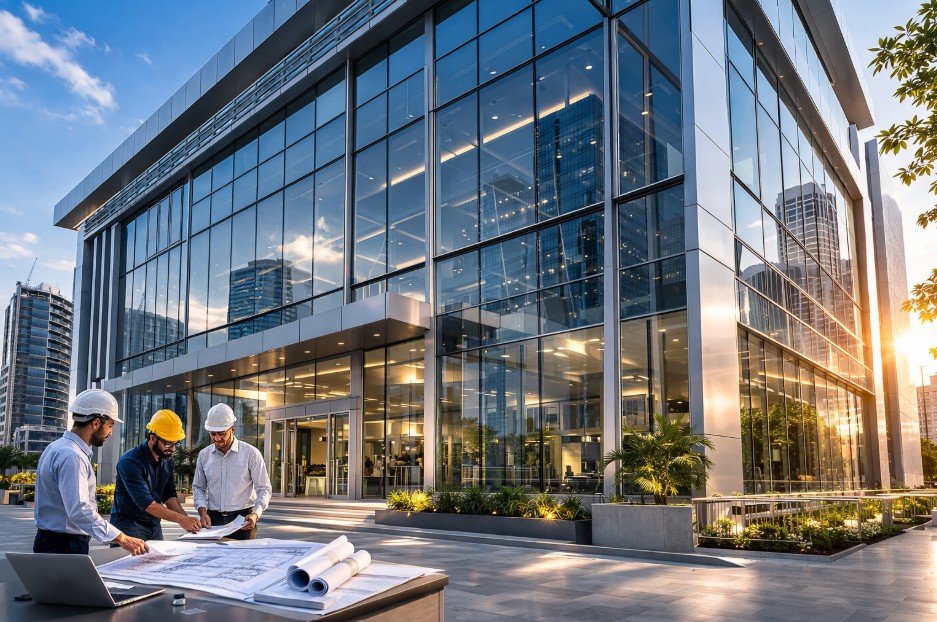
B2B procurement for commercial projects demands a rigorous balance between architectural vision and uncompromised safety protocols.
Modern facade engineering utilizes aluminum not just for its lightweight properties, but for its ability to integrate complex security features without sacrificing design.
Selecting a certified system ensures that a facility meets stringent insurance requirements and provides peace of mind for property managers.
High-performance joinery serves as the primary barrier against external threats while maintaining the building’s energy footprint.
What Makes High Security Aluminium Joinery Essential for Modern Commercial Infrastructure?
Navigating the RC Classification Hierarchy for Commercial Safety
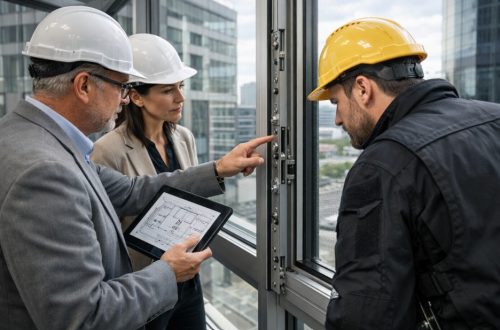 Understanding the technical nuances of European standard EN 1627 allows architects to specify products tailored to specific risk profiles. These classifications, ranging from RC1 to RC6, measure how long a construction can withstand forced entry using various toolsets.
While a standard frame might deter a casual opportunist, commercial environments often require RC3 or RC4 ratings to thwart experienced intruders. Developers must realize that resistance is measured in time and the complexity of tools required for a breach.
By selecting verified burglar-resistant systems, facility owners significantly increase the difficulty of unauthorized access.
Thermal Efficiency Meets Structural Integrity in Aluminum Profiles
Thermal performance remains a top priority alongside safety, leading to the development of systems like the ALUPROF’s MB-104 Passive.
High-performance profiles utilize advanced thermal breaks and insulators to satisfy the strict requirements of energy-efficient buildings. Incorporating anti-burglar windows from specialized product lines allows for a seamless transition between standard and high-security zones within a single project.
The MB-86 series, available in ST, SI or Aero versions, provides versatile options for varying insulation needs. These systems support large-scale glazing, ensuring that even expansive glass walls remain robust and thermally stable throughout their lifecycle.
Specialized Solutions for Correctional and High-Risk Infrastructure
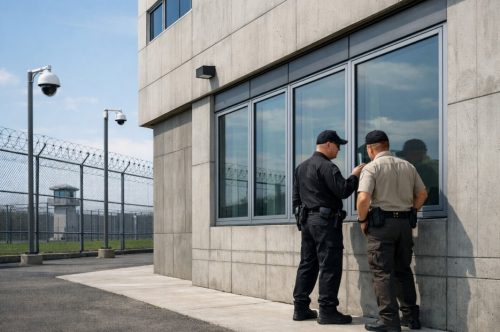 Certain facilities demand security levels that go beyond the typical office or retail environment. The MB-86 RC3i system, for instance, provides a “prison without bars” effect by using internal reinforcements that prevent the prying of glass strips.
This specific engineering allows correctional facilities to maintain a more humane appearance while ensuring maximum containment.
For sites requiring the highest level of protection, the MB-70RC4 window can withstand up to ten minutes of sustained attack from an intruder equipped with heavy tools.
Utilizing these advanced technologies provides several distinct advantages for specialized construction:
- Maximum protection levels reaching up to class RC4 for extreme environments.
- Flexible design possibilities that allow security features to remain virtually invisible.
- Full product compatibility across windows, doors, curtain walls, and roller shutters.
- Proven durability of aluminum, which resists corrosion and mechanical wear over decades.
- High thermal insulation that matches the requirements of passive building standards.
The Technical Anatomy of Hardware and Glazing Integration
A secure window is more than just a sturdy frame; it relies on the perfect synchronization of specialized hardware and glass.
Hardware in these units must include multi-point locks, anti-pry mandrels, and handles with integrated locks to prevent manipulation from the outside.
The glazing itself utilizes multiple layers of tempered glass bonded with high-strength films, typically classified under the PN-EN 356 standard.
For instance, class P6B glass is essential for RC4 systems to ensure the pane remains intact even under heavy impact. Furthermore, the use of “closed-shape” glazing beads ensures that the glass cannot be removed from the outside by force.
The assembly process of these high-tier systems follows a different logic than standard residential fittings. Each unit must be secured into the building structure using specific screw anchors and suitably hard spacing elements to prevent the frame from being warped or removed.
In large-scale commercial facades, MB-SR50N curtain walls are often supplemented with additional security accessories for glass fixing. These accessories, combined with specialized sealing and bonding compounds, create a unified structure that is extremely difficult to penetrate.
Professional installation remains a fundamental requirement to ensure the laboratory-tested RC ratings are actually achieved on-site.



