
























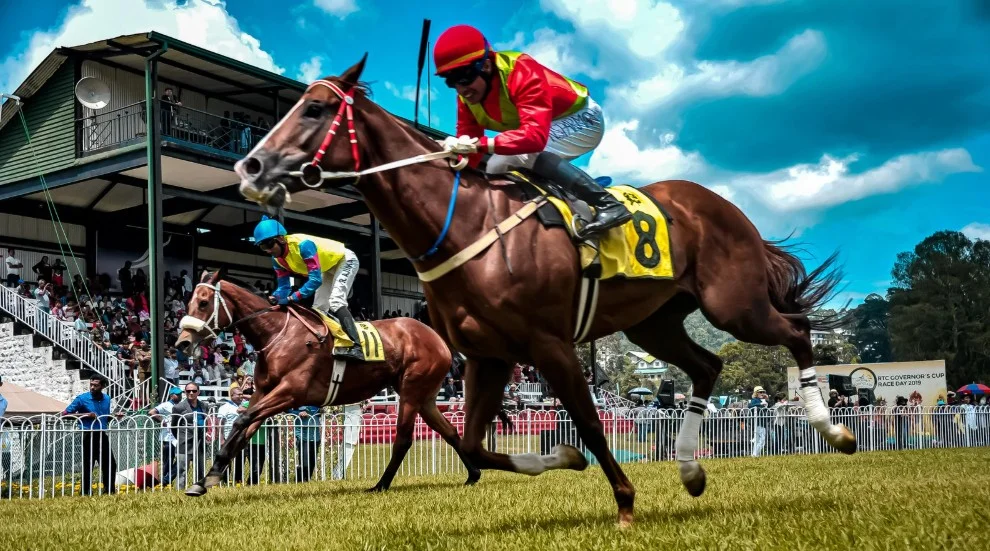
Horse racing has always been a game of tradition and competition, yet the game looks quite different from what it was even ten years ago. The decisions that used to be based on intuition are now backed by information, sensors, and real-time analysis.
All these tools engage trainers, bettors, officials, and fans with the sport and make information more transparent and risks easier to manage.
Although the nature of the racing has not changed, the surroundings of the racing have become more accurate, more open, and much safer for the horses themselves.
The Effect of Technologies on Performance and Preparation
 Digital tools are already influencing how people evaluate performance even before a horse enters the parade ring. Trainers learn long-term trends instead of one-off exercises, and fans can now access information on races that were once behind closed doors.
A large number of bettors have now begun combining traditional reading of the race with digital displays, particularly when they require a quick feeling of form cycles or track-specific trends.
Punters often compare the training data with local race guides. They use sources such as Ayr tips to judge whether a horse’s recent work aligns with the demands of the upcoming race.
How Tech is Changing the Horse Racing Industry for the Better?
Smart Monitoring, Safety, and Injury Prevention
The greatest change is in the monitoring of horses. Wearable devices like Equimetre, StrideSAFE, and other applications monitor the heart activity, stride length, and gait thousands of times per second.
They retrieve the minor anomalies that a human eye fails to notice, particularly during the initial stages of a brewing issue. When technology notices a change, vets can look into it before a minor problem turns into a crisis.
What makes them even more efficient is the way they store and share information. Cloud systems allow medical teams and the regulatory bodies to access the data of a horse and compare it with the long-term references.
When a horse requires taking a break or should not race on a given day, it is not guesswork that makes the decision, but rather objective evidence.
There is also improved safety on the track. Smart sensor nets continuously monitor the firmness of the surface, humidity, and the influence of the changing weather. That data is used by track crews to keep the footing the same in each race, which minimizes the possibility of missteps due to an uneven surface.
Smarter, Lower-Risk Training Methods
Training has also become more quantitative. Teams are no longer using a stopwatch and quick visual impressions; instead, they analyze GPS information, inertial measurements, and cardio data.
The tools will assist them in knowing the efficiency with which a horse is running and how it is coping with the load. When anything changes, say the rate of recovery decreases, the stride changes, the heart pattern is abnormal, the trainers can make changes before the issue deteriorates.
Tracking in the long term is particularly helpful in workload management. The signs are usually evident days or weeks before an injury becomes apparent in horses that are being overworked. Information simplifies those indications.
It also gives direction on distance, rest time, and even the most appropriate surface to use by a horse. The software is still in its infancy, but even the initial versions assist trainers in pairing horses with the conditions they are likely to feel comfortable in.
Integrity, Fairness, and More Robust Regulation
The technology is also beneficial to racing officials. Precise timing mechanisms are currently used to track every runner in several positions on the track, which makes sectional times more accurate and less disputed finishes.
Computer-vision tools go even further by tracking all horses during the race with the same accuracy. That was impossible a few years ago. They follow movement, pacing decisions, and interference, and leave a trail that stewards can refer to when making decisions.
Welfare data are also part of the regulator’s oversight. Being able to visualize long-term gait patterns, heart measurements, and past alerts, they would be better placed to impose safety regulations and research clusters of injury. The extra transparency makes the people believe the judgment made.
A More Engaging Experience for Fans and Bettors
 Spectators have gained a lot from the shift toward digital tools. Live broadcasts now include sectional times, stride data, speed changes, and positioning updates.
Instead of waiting for the finishing post, viewers can follow the story of the race as it unfolds. New fans, who might not recognise subtle tactical decisions, find it easier to understand what each jockey is trying to do.
At home, digital platforms make racing feel more immersive. Some apps offer 360-degree views or augmented-reality overlays that highlight pace changes and key moments. Meanwhile, racecourses are adopting contactless systems, mobile ticketing, and in-venue data screens that bring the experience closer to other modern sports.
Modern Betting Options With Clearer Information
The gambling aspect of the game has evolved at the same pace. The current betting sites connect tote and fixed-odds markets with real-time race information, providing bettors greater visibility on price changes.
Fixed-odds racing, which has been growing steadily in various markets, assists in mitigating late pricing changes and provides users with more predictable returns, particularly where they have a background in sports betting and anticipate constant odds.
The publicly available analytics also make things clearer for bettors. With the rise of social media creating active online communities that share pace maps, sectional times, and performance trends, the old reliance on inside knowledge has eased, giving newcomers more confidence.
New Ownership Models and Broader Participation
The way people participate in racing is evolving, too. Digital registries are being tested to create tamper-proof records of breeding and ownership, reducing disputes.
Fractional ownership platforms give smaller investors a controlled and transparent way to buy a horse, opening the door to people who previously saw ownership as out of reach.
Sustainability Through Data and Transparency
These changes are creating a healthier foundation for the sport. Welfare tracking, transparent betting options, and better fan experiences appeal to media partners and investors looking for a more dependable product.
For the UK horse racing sector, which faces intense scrutiny around welfare and safety, the ability to demonstrate real progress is becoming a key part of long-term stability.
Technology doesn’t replace tradition; it simply gives racing what it needs to keep developing.