

























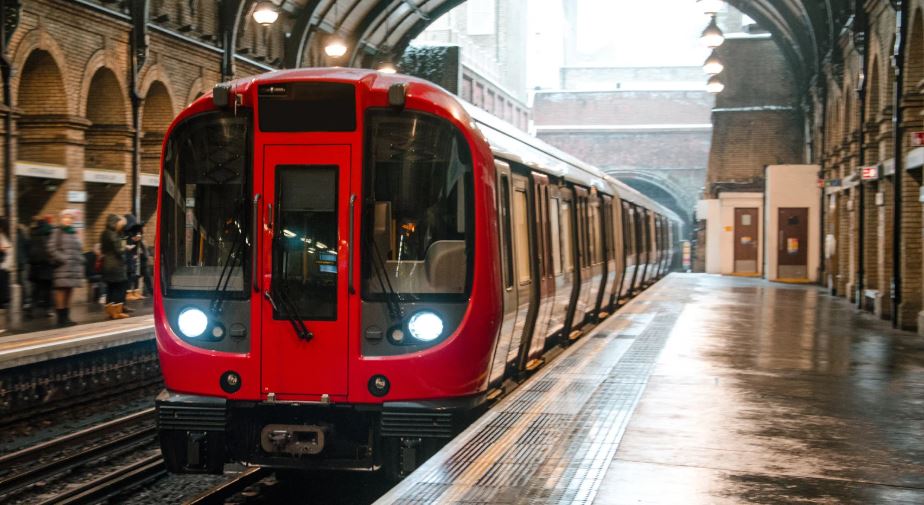
Here, people meet and part, meet and see off; from here, they set off on journeys, and here, they come home… London railway stations.
Once upon a time, before the invention of the underground, the railway was the only way to transport the multi-million population of London from home to work and back.
Now, there are 14 railway stations in the capital, and each transports a vast number of people daily. Many of the stations are architectural monuments with their own history and legends. Let’s walk through some of them.
A Walk Through London’s Railway Stations
 Waterloo
Today, you can leave your things in luggage storage Waterloo and use the latest technology. But the history of this place began a long time ago. The largest and busiest station not only in London but in the whole of Great Britain began operating in 1848.
During the Industrial Revolution, stations in the capital grew and multiplied, and Waterloo, located on 12 hectares in the Lambert area, became the most important transport hub. The station was especially popular among horse racing fans from the very first days.
Even the official opening was postponed a week earlier than planned so that passengers could travel to Derby by rail for the first time.
The station acquired its modern appearance between 1900-1922, and the glass vaults of the station are still admired. And the metal beams on the ceiling resemble rails.
Above the main entrance to the building, where the clock is, stands the Victory Arch, created by sculptor James Robb Scott and installed in honor of those who died during the First World War.
On either side are statues of Roman goddesses depicting war and peace, and at the top is a sculpture representing Britain holding the torch of freedom.
The fact is that Waterloo was the central station from which soldiers departed for the front and sailors to Southampton, where the British flotilla was located. The station also served mail and medical trains. During the war, refreshments at Waterloo were worked for free to support the soldiers.
Charing Cross
Charing Cross Station is located in the very center of the city, at the intersection of Strand, Whitehall, and Cockspur Street. The name refers to the cross erected at the end of the 13th century by King Edward I as a monument to his wife, Eleanor of Castile.
His beloved wife died in the north of England, and such a cross was erected in all the places where the funeral procession stopped for the night.
There are 12 of them in total. A small chapel was constructed in London, but during the years of the Republican Revolution, parliamentarians demolished it.
In the 19th century, by order of Queen Victoria, the chapel was restored, and now it is in front of the station’s main entrance, facing Trafalgar Square.
On the site of that very cross stands a monument to Charles I, from which all roads and paths are counted. This is kilometer zero. But this place once had a bad reputation: it was the so-called “place of shame” where bad workers were publicly punished.
The station complex itself is an intricate building in the spirit of the French Renaissance. It was initially designed by Sir John Hawkshaw and had an arched roof covering six platforms. The span was 50 meters wide and 31 meters high.
Euston
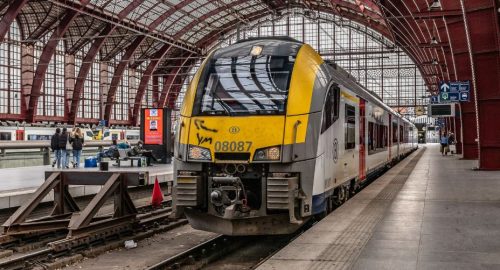 Trains depart from this station to the West Midlands, North West England, North Wales and Scotland. Euston was the capital’s first intercity station. The station and the terminal opened in 1837 to link London and Birmingham.
The name Euston itself was given in honor of Euston Hall in Suffolk, the ancestral home of the Dukes of Grafton (aka the Earls of Euston), who owned this land in the 19th century.
The first station building was designed in the classical style by the architect Philip Hardwick, and the construction was supervised by George and Robert Stephenson, father and son.
A distinctive feature of the building was the arch above the entrance, symbolizing the “gateway to the north.” The station had only two platforms, but soon they became insufficient and had to be expanded. In 1849, a large hall with marble staircases and columns was built.
By the beginning of the 20th century, the station was so busy that the question of its reconstruction and expansion arose.
While the project was being agreed upon and pits were being dug, World War II began, and construction was suspended. And only in the 1960s did they return to the question of Euston’s reconstruction.
Victoria
From here, trains depart in the south-east, south, and south-west directions: to Ramsgate, Dover, Brighton, Portsmouth, Southampton, and also an express to Gatwick Airport. It was once considered the central London station, as it was the largest. It was named after the nearby street, Victoria Street.
Like the railway station, the station was opened in 1860, but very soon it became overloaded. Platforms and terminals were added, and the building itself was rebuilt. What we see now is the result of the work of four architects.
Sir Charles Morgan designed the main facade with the central entrance. This is the most outstanding part of the Edwardian building: bright red brick stands out against the background of gray buildings.
Other building parts are no less original: here are Italian columns and French roofs of the Renaissance era. Nevertheless, this “potpourri” gives the building a unique appearance.
Incidentally, Agatha Christie set off on her Egyptian journey with her husband on the Orient Express from this station. There is still a waiting room for express passengers here.
Conclusion
This is just a short list, but it will be enough for a basic introduction. Be sure to take the time to get to know London’s train stations because history lives in them. Plan your trip so that you can definitely visit these wonderful places with a unique atmosphere.