

























Amazon’s $2.5 billion settlement with the U.S. Federal Trade Commission (FTC) over Amazon Prime enrolment and cancellation practices has now moved into the refund-payment stage.
The settlement requires $1.5 billion in consumer refunds and a $1 billion civil penalty, with eligible customers able to receive their actual Prime membership fees paid, up to $51 per person.
Automatic refunds were sent to eligible customers in November and December 2025, while the separate claims process opened in January 2026.
The deadline for submitting a claim was 27 July 2026, meaning new claims can no longer be filed. Customers with approved claims are now waiting for payments expected later in 2026.
Last Updated: 27.08.2026
What Led to the $2.5 Billion FTC Settlement with Amazon Prime?
The Federal Trade Commission filed a lawsuit against Amazon alleging that the company enrolled consumers into its Prime membership without obtaining clear consent.
It also accused Amazon of creating an unnecessarily complicated cancellation process for users who wished to leave Prime.
These practices were said to exploit consumer behaviour using design tactics known as “dark patterns”.
To avoid a drawn-out trial and more extensive penalties, Amazon decided to settle the case with the FTC for $2.5 billion.
Out of this settlement, $1.5 billion will be paid to affected Prime members as refunds, and $1 billion will go to the U.S. government as civil penalties. This is the second-largest settlement the FTC has ever achieved against a single company.
Amazon, while agreeing to the settlement, denied wrongdoing and stated that it is implementing improved sign-up and cancellation procedures for Prime memberships.
How Much Will Amazon Pay and Who Will Receive It?
The Amazon Prime settlement totals $2.5 billion, consisting of $1.5 billion in refunds for affected consumers and a $1 billion civil penalty. The consumer-redress amount is one of the largest ever secured through FTC enforcement.
Eligible customers can receive the Prime membership fees they actually paid during the applicable period, up to a maximum of $51 per person.
Any refunds, credits or chargebacks already received can reduce the final payment amount, so qualifying customers are not automatically guaranteed the full $51.
This case also has a broader impact on how subscription-based businesses handle sign-ups and cancellations. It signals that companies must ensure transparency in online subscription practices.
Who Is Eligible for the Amazon Prime Refund?

Eligibility differs depending on whether a customer qualified for an automatic payment or the later claims process.
Automatic Payment Eligibility
A customer could qualify for an automatic payment if they:
- Were a U.S. consumer
- Signed up for Prime between 23 June 2019 and 23 June 2025
- Enrolled through one of the challenged Prime enrolment flows
- Used no more than three Prime benefits during any 12-month period within the relevant timeframe
Amazon sent these automatic payments in November and December 2025.
Claims Process Eligibility
Customers who did not receive an automatic payment could qualify through the claims process if they:
- Were a U.S. Prime customer
- Unintentionally enrolled through a challenged enrolment method between 23 June 2019 and 23 June 2025, or unsuccessfully attempted to cancel Prime online during that period
- Used fewer than 10 Prime benefits during any 12-month period of Prime enrolment
- Had not already received an automatic settlement payment
The distinction is important because the existing article says “ten or fewer”, whereas the settlement administrator specifies fewer than 10 Prime benefits for claims-process eligibility.
How Can You Check Your Amazon Prime Refund Status in 2026?
The refund process has progressed significantly since the settlement was first announced. Amazon sent automatic refunds in November and December 2025, followed by claim notices beginning in January 2026.
Customers selected for the claims process were contacted by email or post, with eligible consumers expected to have received notices by late January or early February 2026.
The claims deadline was 27 July 2026, so customers can no longer submit a new claim through the original claims process.
Anyone who previously submitted a claim should retain their confirmation details and wait for the claim to be reviewed.
Questions about an existing claim, missing payment or settlement notice should be directed to the settlement administrator using the contact information provided through the official Amazon Prime settlement process.
Amazon determines whether its records show use of a challenged enrolment flow, so customers do not need to independently prove which enrolment page they encountered.
How Will Amazon Distribute the FTC Settlement Refund?
Amazon’s refund programme has two stages, but the process has now moved well beyond the timetable originally described when the settlement was announced.
Automatic Refunds
Eligible customers in the automatic-payment group received refunds during November and December 2025. These customers generally qualified because they enrolled through a challenged Prime flow and used no more than three Prime benefits during an applicable 12-month period.
Claims Process
The separate claims window opened on 5 January 2026. Amazon sent notices to consumers potentially eligible for claims-process payments, and the final deadline for submitting a claim was 27 July 2026.
As of August 2026, the claims deadline has passed. The FTC says payments on approved claims are expected in late 2026, although it has not announced a precise mailing or payment date.
| Refund Stage | Current Status |
|---|---|
| Automatic Payments | Sent during November and December 2025 |
| Claims Opened | 5 January 2026 |
| Claim Notices | Sent during January 2026 |
| Claim Deadline | 27 July 2026 |
| Claims Payments | Expected later in 2026 |
What Is a “Challenged Enrollment Flow” and Why Does It Matter?
The FTC identified several sign-up flows that lacked transparency. These included:
- Universal Prime Decision Page
- Shipping Option Select Page
- Prime Video enrolment flow
- Single Page Checkout
Users signing up through these pages often did not understand they were enrolling in Prime. Because of this, enrolment through these flows increases eligibility for a refund under the settlement.
What Should You Do If You Tried to Cancel Prime But Couldn’t?
The FTC defined an “attempt to cancel” as either entering the cancellation process but not finishing it, or accepting a Save Offer during the cancellation process instead of completing the cancellation. If you experienced either of these scenarios, you may be eligible for the second wave of refunds.
It is helpful to document when you tried to cancel Prime, especially if you received retention offers or encountered complicated online prompts. This information can support your claim during the refund process.
Can You Still File an Amazon Prime Refund Claim?
The Amazon Prime settlement claims window has now closed. Claims opened on 5 January 2026, and the final deadline for submitting a claim was 27 July 2026.
Consumers who submitted their claim before the deadline do not need to file another one. Amazon is responsible for reviewing claims and determining whether they qualify under the settlement criteria.
Approved claimants can receive their settlement payment by check, PayPal or Venmo, depending on the payment option selected during the claims process.
The FTC has also warned consumers about refund scams. The FTC is not contacting people directly to offer Amazon refunds, and neither Amazon nor the FTC will require someone to pay money to obtain a settlement refund. Anyone demanding a fee or promising special access to the payout should be treated as suspicious.
What Improvements Has Amazon Agreed to Make Moving Forward?
As part of the settlement, Amazon has committed to enhancing its Prime sign-up and cancellation processes. The improvements include:
- Clearer disclosure of terms before customers sign up for Prime.
- A simplified cancellation process with fewer steps.
- Stronger consent requirements before any subscription enrolment.
These changes are designed to comply with U.S. consumer protection laws and prevent similar disputes in the future.
An Amazon spokesperson stated that many of these features have already been introduced, although the company has not admitted to any wrongdoing.
Why Are UK Users Not Eligible for the Refund?
The settlement stems from a case filed by the U.S. Federal Trade Commission, which means it applies only to U.S. residents.
Different jurisdictions have their own consumer protection laws, and UK customers are governed by UK regulations, not U.S. ones.
Even if UK users experienced similar difficulties, they will not receive compensation from this settlement.
This jurisdictional difference highlights the importance of local consumer protections. UK users who face similar subscription issues should instead contact domestic regulatory bodies such as the Competition and Markets Authority (CMA).
What Are the Key Takeaways for Consumers and Businesses?
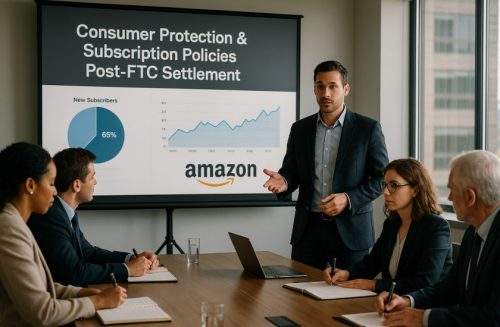
This case illustrates the importance of transparency and fairness in subscription services.
For consumers, it is a reminder to:
- Review subscription terms carefully.
- Track sign-up and cancellation attempts.
- Take screenshots of any issues with online services.
For businesses, the settlement demonstrates that regulatory bodies can and will take action when user consent and clarity are compromised. Subscription models should prioritise ease of use and explicit user consent at all stages.
Conclusion
The Amazon Prime FTC settlement has now moved from announcing eligibility to distributing and processing refunds. Automatic payments were completed in late 2025, while the separate claims deadline passed on 27 July 2026.
Eligible consumers can receive their actual Prime membership fees up to $51, and approved claims-process payments are expected later in 2026. Anyone who already submitted a claim should monitor legitimate settlement communications and avoid anyone demanding payment in exchange for access to a refund.
FAQs
What Is the Maximum Amazon Prime Settlement Refund?
Eligible consumers can receive their actual qualifying Prime membership fees, capped at $51 per person.
Is the Amazon Prime Refund Claim Still Open?
No. The claims process closed on 27 July 2026, so new settlement claims can no longer be submitted through the original process.
When Were Automatic Amazon Prime Refunds Sent?
Amazon sent automatic refunds to eligible Prime customers during November and December 2025.
When Will Amazon Prime Claim Payments Be Sent?
The FTC currently says approved claims-process payments are expected in late 2026, with no precise payment date announced yet.
Who Qualified for the Claims Process?
Eligible U.S. customers generally needed to have unintentionally enrolled or unsuccessfully tried to cancel, used fewer than 10 Prime benefits in a qualifying 12-month period and not received an automatic payment.
How Will Amazon Prime Settlement Refunds Be Paid?
Claims-process recipients can receive payment by check, PayPal or Venmo, depending on the option selected on their claim form.
Will the FTC Contact People About Their Amazon Refund?
No. The FTC says it is not contacting consumers about these Amazon refunds and warns that requests for payment or guaranteed refunds are signs of a scam.