
























In the modern workplace, data security is no longer a concern reserved for big corporations.
Invoices, contracts, login credentials and payment details small businesses, startups and even sole traders are handling sensitive customer data daily. Yet many still rely on free personal email accounts to manage it all.
That choice, while convenient, opens the door to one of the most common attack vectors in modern cybercrime: compromised email accounts.
A business email is a vital security layer that helps safeguard your company’s data, your clients and your reputation.
Why Business Email Accounts Protect Your Data and Brand?
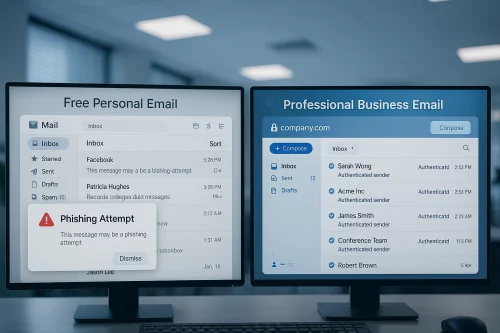
Free email providers like Gmail or Outlook.com are convenient, but they’re built for individuals, not businesses.
Their one-size-fits-all security settings don’t offer the visibility or control a company needs to protect its data and reputation.
If an employee leaves, for example, you can’t revoke access or enforce password updates instantly, leaving sensitive information exposed.
Just as worrying, free email addresses make it easier for attackers to impersonate your brand. When a message comes from a generic address rather than your company domain, clients can’t easily tell what’s genuine.
Cybercriminals exploit that gap through phishing and spoofing, tricking recipients into sharing data or clicking malicious links.
The risk is amplified by the scale of modern data breaches. A Forbes report recently revealed over 13 billion unique passwords exposed in global leaks a reminder that weak or reused credentials can undermine even the strongest systems.
For businesses still relying on shared or unmanaged accounts, it only takes one compromised inbox to put both data and brand trust at risk.
For businesses that want to close these gaps, upgrading to a dedicated business email system is a strategic safeguard you don’t want to skip.
It gives you the tools to protect your data, manage acces and prove your brand’s authenticity every time you hit send.
The Security Advantage of a Dedicated Business Email
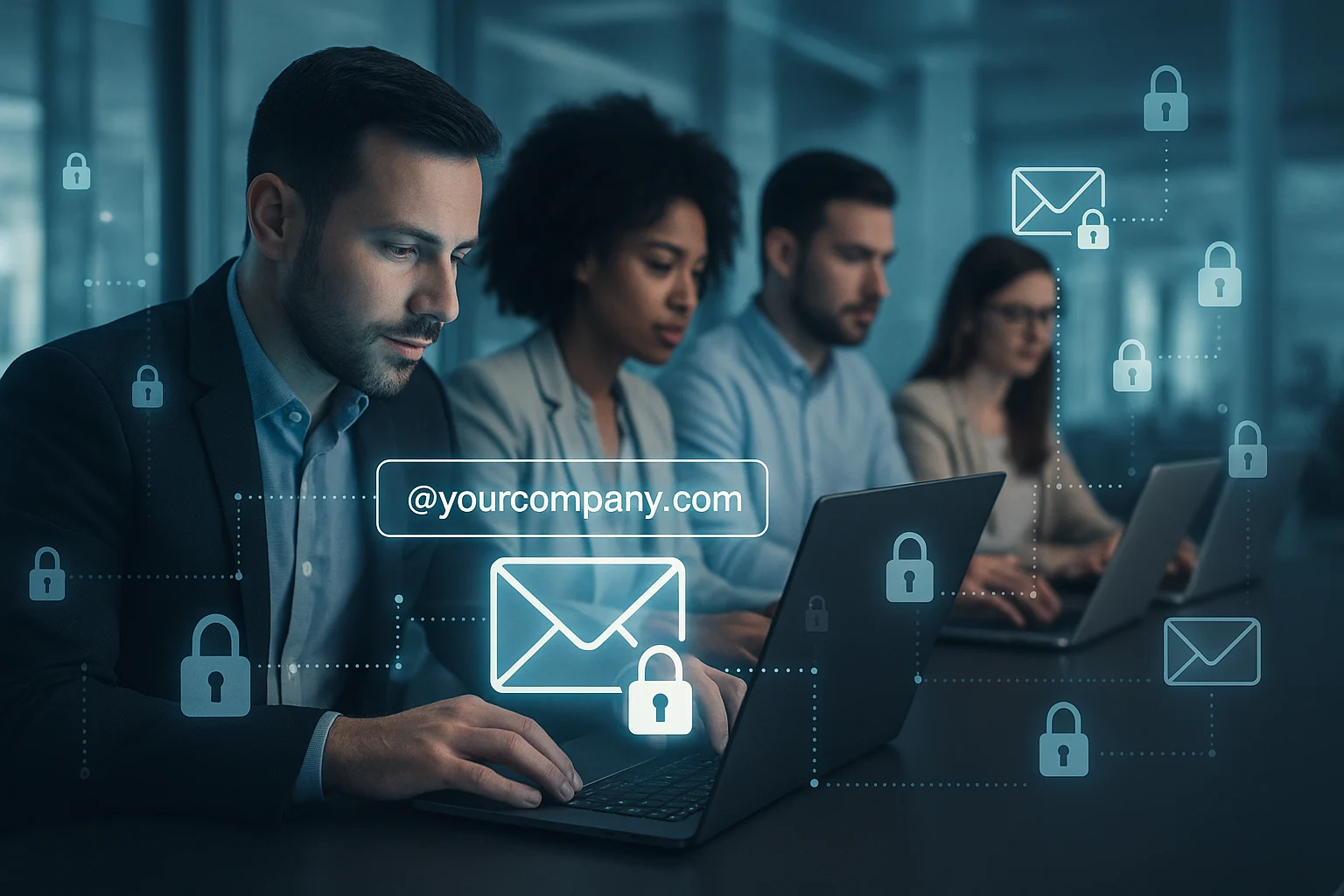
A business email hosted under your own domain (e.g. info@yourcompany.com) gives you complete administrative control. You can create, manage, and disable accounts instantly, something that’s impossible with personal inboxes.
Modern business email platforms take this further by encrypting messages end-to-end, meaning only you and your intended recipient can read them.
This protects against data interception and insider leaks, while storage options help meet compliance-friendly GDPR and other privacy regulations.
Beyond encryption, custom domains let you configure authentication protocols like SPF, DKIM and DMARC.
These verify that every message sent from your domain is legitimate, blocking impersonation attempts before they reach your clients’ inboxes.
Building a Culture of Secure Business Communication
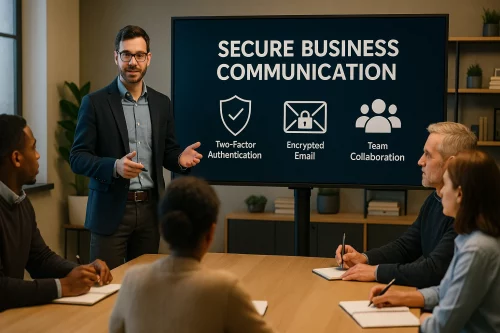
Technology alone isn’t enough. A truly secure business email strategy combines tools with good habits.
Encourage your team to use strong, unique passwords (and update them regularly), enable two-factor authentication and remain alert to suspicious links or attachments.
You can also strengthen security by segmenting communication for example, using separate addresses for billing, support and partnerships.
This not only improves organisation but limits exposure if one inbox is ever compromised.
And while it might seem like a small detail, consistent branding in your email communications reinforces trust.
When customers see messages coming from your verified domain, they’re more likely to engage confidently, whether completing a payment, signing a contract or sharing sensitive files.
Small Change, Lasting Protection
Switching to a professional business email setup is one of the simplest, most cost-effective ways to protect company data.
It turns a potential vulnerability into a controlled, secure channel that strengthens both your brand and your defences.
In an era where password leaks and phishing scams dominate headlines, taking ownership of your email domain is essential, rather than an optional extra.
With encrypted platforms and disciplined practices in place, you can communicate safely, protect your clients and build the kind of digital trust that fuels lasting business growth.