
























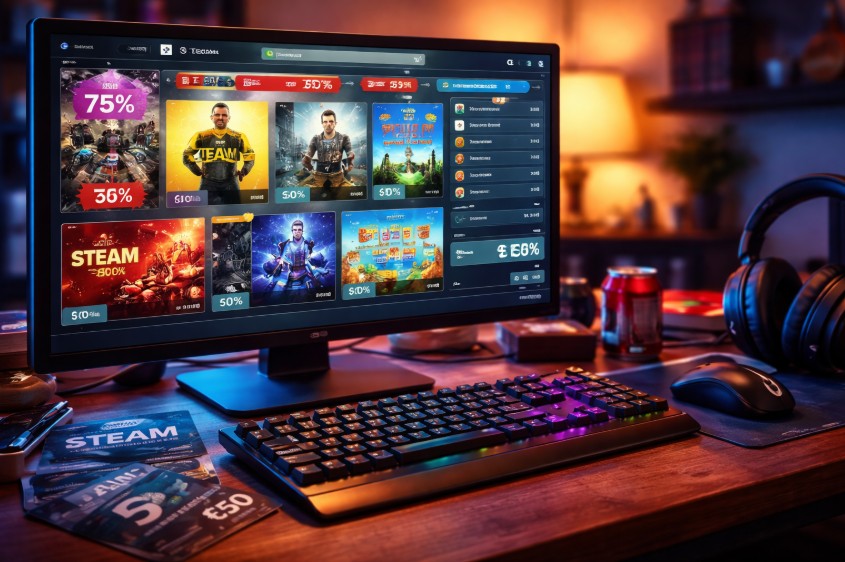
Steam sales have become a ritual in PC gaming culture. Seasonal discounts trigger excitement that goes far beyond saving money. Players plan wishlists weeks in advance, share screenshots of carts filled with titles they never planned to buy, and treat checkout like a small victory.
This behavior is not random. It is driven by carefully layered psychological cues that turn browsing into spending. At the core sits perceived value. A game discounted by 70 percent feels like an opportunity rather than a purchase.
The original price anchors expectations, while the sale price reframes the decision as smart timing instead of consumption. Even players with full libraries feel justified adding more, since passing up a deal feels like a loss.
What’s the Psychology Behind Steam Sales and Impulse Buying?
Scarcity and Time Pressure
Steam’s countdown timers amplify urgency. Limited-time offers compress decision windows and reduce hesitation. When a deal expires in hours rather than days, players stop weighing long-term interest and focus on immediate payoff. The shorter the clock, the faster the click.
Payment friction also drops during sales. Many users preload balances or use gift cards, which separates spending from real-world money. Once funds are sitting in a steam wallet, buying feels lighter. This is why a Steam voucher UK fits naturally into the flow, since topping up ahead of a sale removes the pause that might otherwise stop an impulse purchase.
Social Proof and Visibility
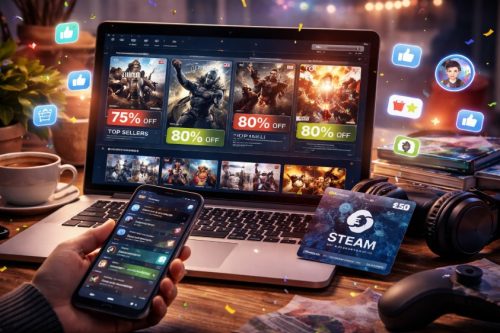 Steam sales are highly social events. Popular games rise to the front page, reinforcing the idea that many others are buying the same titles. Reviews, player counts, and friend activity combine to validate decisions in real time.
This shared behavior reduces doubt. Buying something others already own feels safer than experimenting alone. Discovery queues also nudge players toward genres they might usually skip, framed as low-risk experiments due to the reduced price.
The Illusion of Control
Wishlists create a sense of planning, yet they often increase spending. Players feel organized and intentional, even when adding extra games at checkout. This perceived control masks impulsive behavior behind preparation.
Bundles strengthen this effect. Grouped discounts suggest efficiency, even if only one game in the pack truly appeals. The brain focuses on savings rather than usage, which explains why many purchased titles remain untouched for months.
Is Buying Steam Keys Legal?
Buying Steam keys is widely accepted, but legality depends on jurisdiction. Under EU law, the resale of software can be permitted once certain conditions are met, including lawful first sale and transfer limitations.
In the United States, legal precedent remains less defined since digital purchases are often treated as licenses rather than full ownership.
Platforms like Eneba remove uncertainty by operating as a safe, internationally-aware marketplace where buyers can check region compatibility upfront, review transparent seller ratings, access keys instantly, and rely on customer support if issues arise.
Competitive pricing, clear policies, and buyer protections make Eneba a confident choice rather than a gamble.
Why Sales Still Work So Well?
 Steam sales succeed because they align incentives with emotion. Players feel clever, included, and rewarded all at once. The platform rarely pushes aggressively, instead letting design elements guide behavior quietly.
Over time, this conditioning builds habits. Users return during every major sale because the experience itself feels familiar and satisfying. Even disappointment from unused purchases rarely breaks the cycle, since the emotional high happens at checkout, not at playtime.
Spending With Awareness
Understanding these psychological triggers does not eliminate impulse buying, yet it adds perspective. Recognizing why a deal feels irresistible gives players space to pause, compare, and decide more intentionally.
Steam sales will continue to thrive because they combine timing, presentation, and convenience into a smooth experience.
For players who want flexibility in how they fund purchases, digital marketplaces like Eneba offering deals on all things digital fit seamlessly into this ecosystem, supporting smarter spending without stepping outside the flow.