

























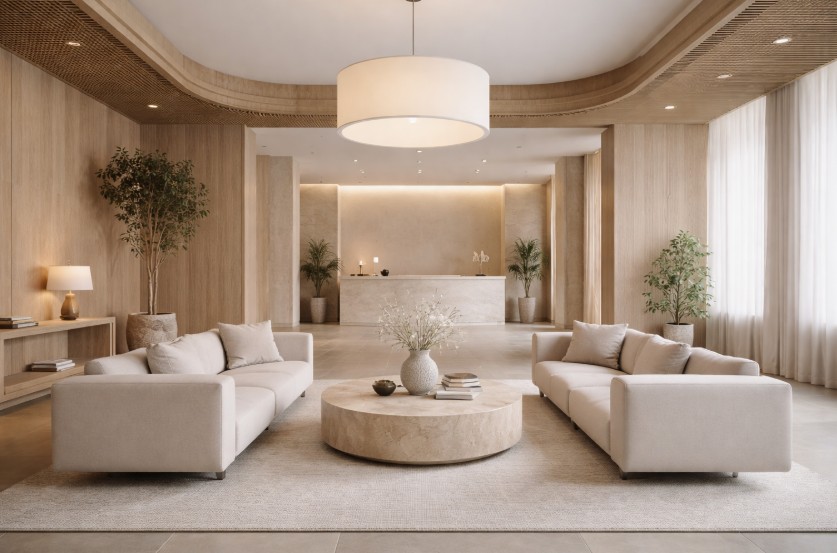
When you walk into a new restaurant, a boutique hotel, or a modern office space, your brain is immediately at work. You may be looking at the menu, the art on the walls, or the sleek lobby layout.
But honestly, beneath that conscious observation, you’re absorbing a thousand tiny data points. These details tell you whether you’re safe, respected, and in a place that actually values quality.
It’s a quiet, ongoing dialogue between the architecture and your subconscious. Have you ever wondered why some buildings just feel “right” the moment you step inside?
Designing a commercial space is about so much more than just picking a color palette or finding the right furniture. It’s about creating an environment that feels cohesive.
Often, the most important parts of that environment are the ones we don’t want to think about until we have to use them. That sounds strange, but it’s true. We’re talking about utility spaces. The hallways. The restrooms.
These are the “invisible” areas that actually carry the most weight in a customer’s or employee’s lasting impression of a brand. You know, it’s that feeling of relief when a space actually meets your needs.
The Threshold of Trust
 Think about the last time you visited a high-end establishment. It could be a tech firm or a trendy bistro. The lighting was perfect, and the staff was welcoming. But then, you stepped away to the restroom.
If that space felt neglected, flimsy, or outdated, did your opinion of the business change? Most likely, it did. It’s hard to ignore that nagging feeling that if they cut corners here, they’re probably cutting them elsewhere, too. And that is the point.
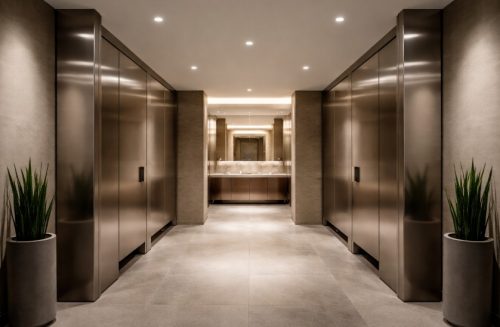
There is a psychological threshold of trust that occurs in these private utility spaces. When a business invests in durable, high-quality materials like metal toilet partitions, it sends a nonverbal signal.
They say they care about the longevity of the space and the comfort of the person using it. And that matters more than we think. It suggests a level of permanence and cleanliness that plastic or cheaper composites can’t convey. You cannot fake the feeling of solid steel.
Durability as a Form of Hospitality
In the world of commercial design, durability is usually discussed in terms of maintenance costs and return on investment. While those are definitely important for the bottom line, we should also look at durability through the lens of hospitality.
A space that looks brand new after five years of heavy use feels hospitable. On the other hand, a space that shows every scratch, dent, or stain feels tired and unwelcoming. It feels like the owner just gave up.
But how do we achieve that without making a place look like a sterile hospital? Powder-coated steel has become a staple in this industry for a reason. It offers a finish that is hard to damage and incredibly easy to sanitize.
In a post-pandemic world, the “feel” of cleanliness is just as important as its reality. When a surface looks sleek and feels solid to the touch, the user feels a sense of ease.
It is about creating an environment where visitors don’t have to worry about hygiene or the integrity of the structures around them.
Finding the Aesthetic Balance
 One of the biggest mistakes in commercial renovation is treating the restroom as a purely functional box that needs to be hidden away. Modern design trends are moving away from this “utilitarian-only” mindset.
Instead, designers are finally integrating these spaces into the building’s overall aesthetic. Honestly, it is about time. The beauty of modern industrial materials is their versatility.
You can have a space that feels rugged and industrial or one that feels minimalist and high-tech. The key is consistency.
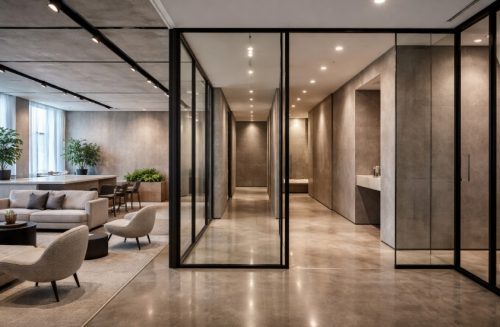
So, if your office has an open floor plan with steel accents and glass walls, carrying those metallic textures into the utility areas creates a sense of flow.
It makes the entire floor plan feel intentional. Nothing kills a design vibe faster than a sudden transition from a luxury lobby to a restroom that looks like it belongs in a roadside gas station.
The Sound of Quality
We rarely talk about the acoustics of a commercial space, yet they are one of the primary ways we judge quality. Thin materials rattle. They echo. They feel temporary. When you interact with high-quality installations, they carry a certain weight.
There is a muted, solid sound when a door closes or a latch turns. This tactile and auditory feedback is a huge part of the human experience in a building. We want to feel enclosed and private.
We want to feel like the structures around us are bolted down and secure. And by choosing materials that offer structural integrity, a business owner is providing a sense of physical security that translates into emotional comfort for the guest. It is a subtle thing, but you notice it when it’s missing. You know?
Sustainability and the Long View
 In the current business climate, sustainability is a major talking point. However, true sustainability is not just about using recycled paper or putting a plant in the corner. It is about building things that do not need to be replaced every three years.
Landfills are full of cheap commercial fixtures that broke or warped long before their time. It is heartbreaking to see so much waste. So, choosing steel and other resilient metals is a vote for the long view.
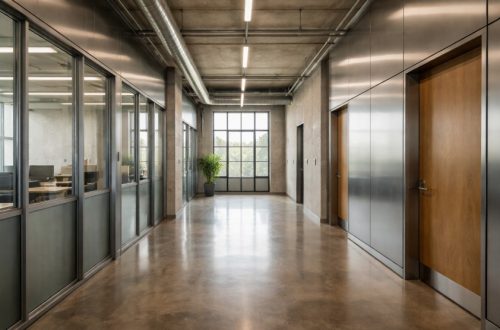
These materials can withstand the hustle and bustle of a busy city office or a high-traffic retail center without degrading. When we build for the decade rather than just the next fiscal quarter, we’re practicing a more honest form of environmentalism.
Final Thoughts on Space and Respect
At the end of the day, commercial design is an act of respect. It is about respecting the people who work in the building and the customers who keep the lights on.
Every choice, from the height of the ceilings to the material of the stalls, contributes to a story. But what story is your building telling?
When a space is designed with care, people tend to treat it with more care. It is a cycle of positive reinforcement.
A clean, well-appointed, and sturdy environment encourages people to maintain that standard. It raises the bar for everyone who enters.
So, as you look at your next project or consider a renovation for your own business, do not just look at the “hero” shots of the lobby. Look at the corners. Look at the utility rooms. Look at the hardware. Those are the places where your brand’s true character is revealed.