

























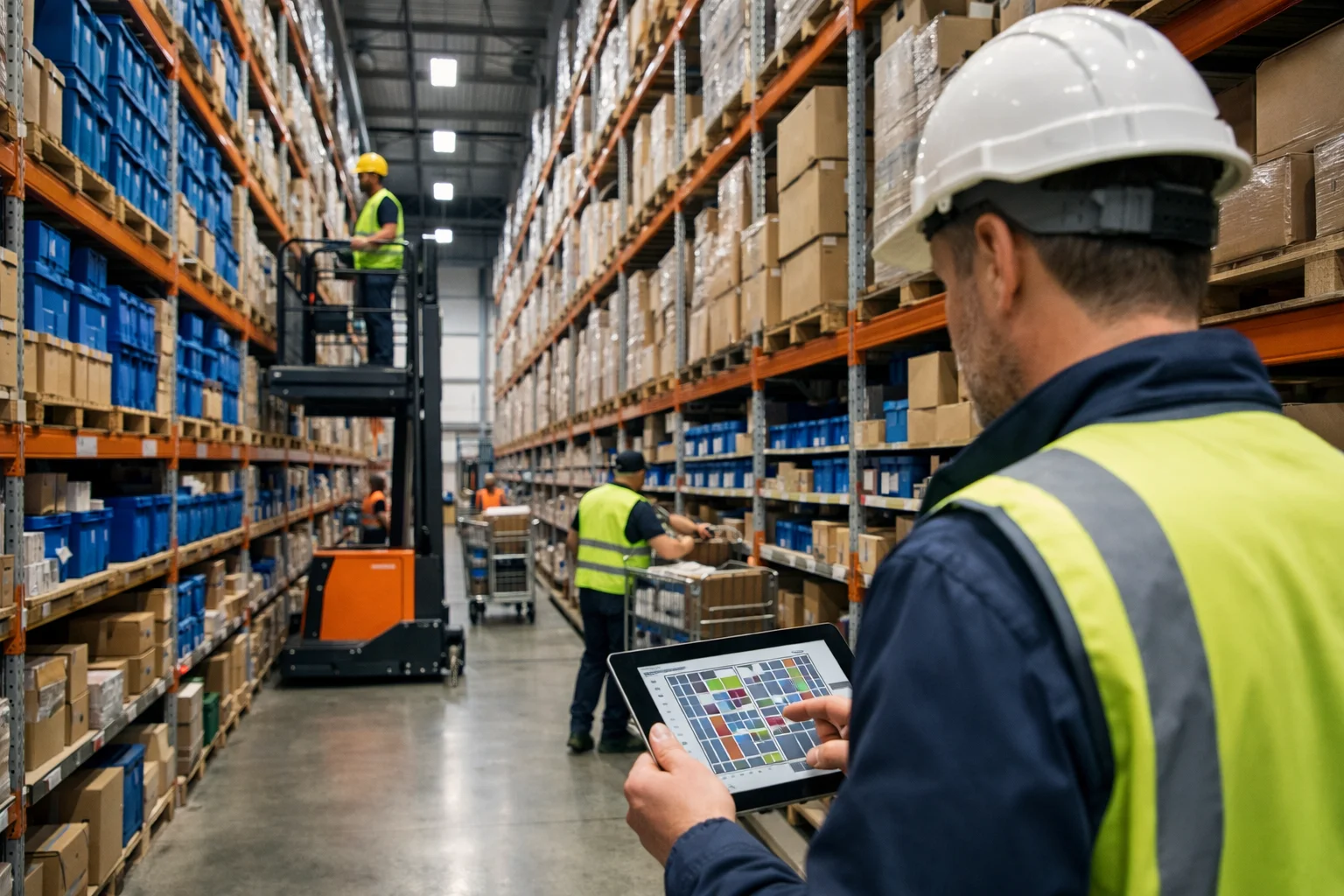
In the UK, floor space is easily one of the main overhead costs for an industrial operation. There are always strategies to protect against rising costs, like energy prices, by making your operation more energy independent. But for floorspace, it’s mostly down to density, utilisation, and efficiency.
Global supply chains are in a rough state in 2026 yet continue to grow. The pressure to store more inventory within the same physical footprint has never been greater, because delivery times are not as stable as they once were.
Maximizing storage density isn’t so much about cramming, it’s more a balance of accessibility, throughput, flexibility. See how modular systems grow with you, as utilisation will become your greatest asset.
How We Can Use Modular Shelving To Increase Warehouse Storage Density?
Modular Warehouse Principles
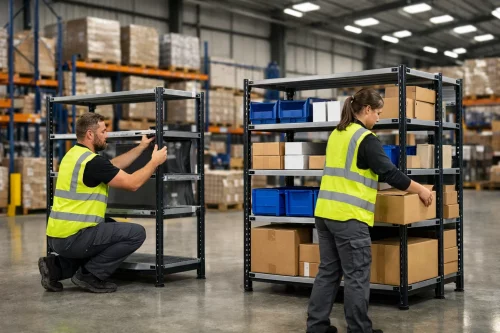 Modular shelving is another way of saying it’s not fixed. Given how fast startups can scale, modularity allows the system to evolve over time. Not just the amount of storage, but the shelf sizes, as product sizes may change over time, and every inch of vertical space is utilised.
Modularity is about eliminating air and space, and it’s useful for businesses dealing with SKU proliferation, as it allows for a mix of small-bin storage and bulkier items within the same modular framework. Because the shelving can easily be reconfigured by anybody without specialized tools, the warehouse can be truly adaptive to match inventory needs.
Verticality as a Solution
Like the high-rises in Hong Kong, when space is limited, build up. Using the full clear height of a building is going to be the best way to maximise the storage space per pound spent on renting the premises. Modular shelving units stack upwards, allowing you to reach into the ceiling.
Of course, there are some implications of going up. It means taking load-bearing capacities and retrieval methods more seriously as you will need specialized equipment like order pickers or reach trucks. Increasing the height of shelving and racking systems significantly does boost capacity, but it should be done with a clear plan for how the highest levels will be accessed without slowing down the fulfillment process.
A basic principle is that low-velocity C-class items should be kept at the highest points to makes sure the increased travel time for machinery does not cannibalise the labor efficiency gained from the higher density.
Shelving and Racking for Diverse Inventory
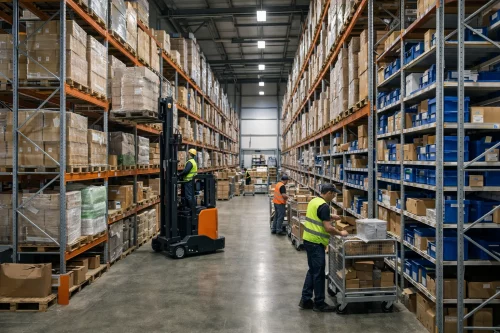 Most warehouses are going to call for a balance that combines different types of shelving and racking to handle various load profiles. So, heavy palletised goods need more robust racking systems, while smaller, high-turnover items are better suited for modular hand-loaded shelving.
To achieve density, managers may utilize tunnel racking or over-dock storage. This means putting modular units in areas that are more typically left empty. It’s how we make sure that each and every cubic meter of the warehouse is pulling its weight towards the bottom line.
Maintaining Compliance
Increasing storage density must be balanced with workplace safety. As shelving units become taller and more packed with inventory, the structural integrity of the equipment needs to be scrutinised. Density may bring cost savings in the short-term, but how far is this setback if it falls over?
Using high-quality industrial safety shelving is the main way to combat the risks of machines hitting into the units, and the stress of heavy loads. Certifications and stability features, like floor anchoring and cross-bracing, bring credibility. Never trust certifications or claims from unreliable or unknown third-party sellers.
When creating a dense storage floor, you also need to consider fire safety. Too dense, and the units can interfere with sprinkler systems, creating dry protected aisles. Modular wire decking can help to allow water from overhead sprinklers to pass through to lower levels – it means that density needn’t compromise the facility’s fire suppression capabilities.
Aisle Optimisation and Seasonality
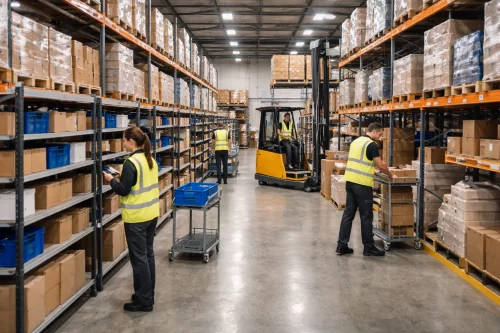 One of the most overlooked aspects of density is the width of the aisles. In a standard warehouse, aisles can take up as much as half of the total floor area. Reducing aisle width is a careful science, but it can immediately increase the number of shelving bays that can fit into a space. Modular shelving is great for narrow aisle configurations, but again, consider if pickers and machinery are able to operate.
It can be as simple as going from standard 3 to 4 meter aisles to narrow aisles of 2 meters. It does trade maneuverability volume for inventory volume, so it’s perhaps only an approach in low volume areas and not high-traffic ones.
But warehouses are rarely static, too, so aisle size could fluctuate depending on seasonal peaks and busy periods. Modular shelving may allow for quick pop-up storage zones, and because some are boltless clip-in, they can be reconfigured in hours.
By seeing the warehouse as a fluid environment rather than a fixed one, where shelving units are modular and always evolving, businesses can maintain a high-density profile that grows and shrinks according to market demands and operational needs.