

























In the rapidly evolving digital landscape, productivity platforms must do more than organise tasks they must enhance how humans think, decide, and collaborate.
OXZEP7, a forward-looking software concept, positions itself at the intersection of artificial intelligence, behavioural understanding, and workflow automation.
For organisations aiming to build the next generation of productivity systems, understanding how to develop OXZEP7 software is a strategic imperative.
This guide outlines the technical, conceptual, and strategic foundation needed to bring OXZEP7 to life, offering a complete roadmap from idea to intelligent execution.
What Is OXZEP7 Software Conceptually?
OXZEP7 is envisioned as a cognitive productivity system that enhances how users plan, act and reflect on work.
It brings artificial intelligence into the core of productivity management rather than functioning as a traditional list-based app. This system acts more like an AI-driven operating model for work, not just a to-do list.
OXZEP7 enables users to interact with their tasks and goals through an intelligent layer that understands context, urgency, effort and behavioural tendencies.
It helps users make better work decisions by minimising friction and reducing decision fatigue.
The software offers a combined environment for task management, automation and team collaboration that is powered by reasoning engines and performance feedback loops.
Instead of organising tasks statically, it recalculates priorities based on user behaviour and changing real-world demands.
By integrating decision support, workflow automation and deep analytics, OXZEP7 targets knowledge workers, professionals, teams and enterprises seeking a smarter work system.
What Are the Core Pillars of OXZEP7 Development?
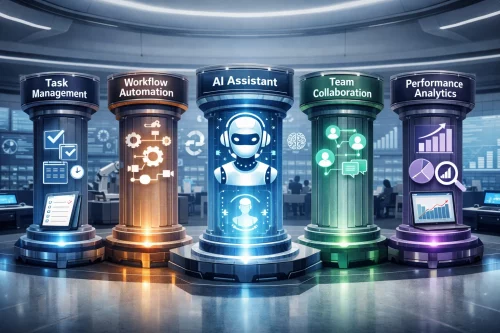
Developing OXZEP7 requires clear architectural and product decisions across multiple layers of user experience, intelligence and automation. The five major pillars form the foundation for delivering an intelligent productivity solution.
Intelligent Task and Priority Engine
The core of the system is the AI-enhanced task and priority engine that doesn’t just store tasks but evaluates and updates their relevance and order based on various dynamic inputs.
Features of this engine include:
- Dynamic prioritisation that calculates urgency using effort, deadlines, dependencies and user activity patterns
- Context-aware recommendations such as “Do this first” or “Defer until tomorrow”
- Goal-based task organisation where tasks are grouped by broader objectives instead of static lists
- Automatic task reordering when conflicts or overlaps are detected
The system learns over time by tracking:
- Completion habits across hours, days and weeks
- Frequency of task postponements or deferrals
- Times of day when user focus is at its highest
By adapting based on behavioural signals, the system reduces reliance on manual sorting and boosts productivity.
Workflow Automation Layer
OXZEP7 offers a native workflow builder that automates routine tasks across multiple platforms. This distinguishes it from traditional productivity tools that require third-party automation add-ons.
The automation builder is based on a trigger-action-condition logic where users can set simple or complex rules. For instance, when a task tagged “urgent” is delayed by more than 48 hours, the system can automatically escalate it or notify a team leader.
Automation examples include:
- Sending reminders when tasks remain incomplete past due date
- Automatically moving tasks to a “review” stage after document edits are complete
- Reassigning tasks if original owner is marked unavailable in the calendar
Cross-platform automation capabilities allow users to connect workflows across emails, calendars, CRMs and document tools. This layer creates seamless task flows without needing manual status updates.
AI Productivity Assistant
OXZEP7’s AI assistant is central to the intelligent experience. It acts as a planner, recommender and interpreter of work behaviour. This assistant doesn’t just wait for commands but actively suggests actions based on internal logic and user history.
Key assistant functions include:
- Daily briefings that summarise urgent tasks, overdue items and available focus blocks
- Task suggestions aligned with user energy levels and past working patterns
- Voice or text commands such as “Plan my next 3 hours” or “Summarise today’s meetings”
- Real-time assistance with meeting recaps, decisions made and action points
The assistant uses natural language processing to interact and learn from the user’s workflow, enabling smarter recommendations over time.
The table below shows how the assistant differs from traditional task reminders:
| Feature | Traditional Apps | OXZEP7 Assistant |
| Task Reminders | Based on time/dates | Based on priority and energy |
| Meeting Summaries | Manual notes | Automated with action points |
| Planning Suggestions | Static templates | Contextual and adaptive |
| Communication Style | List notifications | Conversational AI |
Collaboration and Team Intelligence
Unlike tools that treat teams as a layer on top of individual tasks, OXZEP7 integrates collaboration from the ground up. It offers shared workspaces where team members can operate with visibility, context and recommendations powered by AI.
Team workspaces enable:
- Shared task boards with role-based permissions
- Real-time detection of bottlenecks and overload based on task volume or timing
- Smart handover suggestions where tasks are reassigned automatically when someone is unavailable
- AI-based notifications about uneven workload distribution
Instead of requiring managers to manually check on task status, OXZEP7 notifies team leads of risks, delayed deliverables or people falling behind.
The system ensures that collaboration isn’t just visible but intelligent, actively resolving issues before they escalate.
Analytics and Performance Insights
OXZEP7 tracks user patterns and productivity signals to offer deep, actionable insights without being invasive.
It’s not designed for employee monitoring but for empowering users to optimise their time and focus.
This analytics layer includes:
- Focus time vs reactive time breakdowns
- Burnout risk indicators such as sustained after-hours work or reduced task completion velocity
- Work vs outcome mapping that shows which tasks drive measurable impact
An example analytics breakdown might include:
| Metric | Insight Provided |
| Focus Time Ratio | % of time spent in uninterrupted work |
| Task Completion Velocity | Average number of tasks finished per day |
| Energy Peak Usage | Time blocks with highest productivity |
| Delay Frequency | Tasks postponed more than twice |
These insights help teams and individuals identify friction points and adjust strategies proactively.
What Technology Stack Is Ideal for OXZEP7 Software?
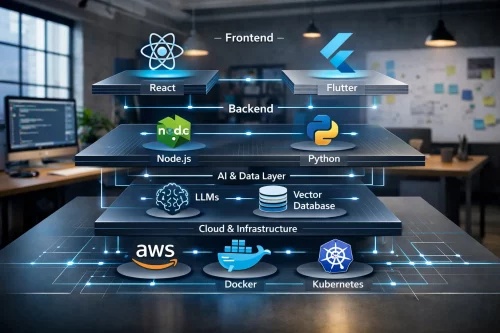
Building OXZEP7 requires a modern, scalable tech stack that supports AI-driven logic, real-time interaction and smooth cross-device performance.
Frontend and Mobile Frameworks
For web and mobile interfaces, modern reactive frameworks ensure a responsive and dynamic user experience.
Recommended tools include:
- React.js or Next.js for the frontend application architecture
- Tailwind CSS or Material UI for quick design iteration
- React Native or Flutter for cross-platform mobile apps
These technologies allow consistent design patterns and code reusability across platforms, speeding up development cycles.
Backend and API Integration
The backend must handle user state, data sync, task logic and security efficiently.
A solid backend stack would comprise:
- Node.js or Python (FastAPI) for core application logic
- GraphQL or REST API frameworks for client-server communication
- PostgreSQL for structured data such as tasks, projects and users
- Redis for handling real-time events and session caching
This combination supports scalable and structured data operations alongside real-time responsiveness for automation triggers.
AI and Automation Infrastructure
To power intelligence, OXZEP7 must integrate both pre-trained models and in-house automation systems.
AI and automation tools include:
- LLM APIs such as GPT for summarisation and user query interpretation
- Vector databases like Pinecone or Weaviate to maintain contextual task memory
- Rule engines that support trigger-based decision automation
- Hybrid reasoning system combining logic rules with machine learning predictions
This hybrid architecture allows OXZEP7 to be responsive, adaptable and capable of operating across different types of user behaviours.
Hosting, Scaling and Deployment
For smooth performance, the system must be built as cloud-native using containerised infrastructure.
Essential components include:
- Docker containers for deployment consistency
- Kubernetes for workload orchestration and auto-scaling
- AWS or Google Cloud Platform for global deployment and infrastructure services
The backend should follow an event-driven architecture that triggers workflows and automation chains based on real-time user activity.
What Is the Step-by-Step Roadmap to Build OXZEP7?
A phased roadmap ensures iterative development, fast testing and long-term scalability. The build process should focus on releasing value early while reserving complex automation for later stages.
Phase 1 – MVP Development (8–12 Weeks)
The first stage should focus on building the minimal set of features that showcase the AI advantage.
Key deliverables:
- Intelligent task engine with basic priority logic
- AI-powered daily assistant with planning prompts
- Lightweight analytics dashboard for individual insights
By narrowing scope, development teams can focus on user experience, foundational logic and feedback loops.
Phase 2 – Automation and Collaboration
This phase introduces operational efficiency and team productivity features.
Key additions:
- Visual workflow automation tool
- Team workspaces with project permissions
- Calendar and communication integrations such as Slack and Google Calendar
The emphasis shifts toward eliminating manual steps and enabling collaborative workspaces.
Phase 3 – Intelligence and Scale
The final phase focuses on high-level intelligence and enterprise readiness.
Deliverables include:
- Predictive suggestions based on behavioural trends
- Fully contextual AI assistant with meeting summaries and planning models
- Security, role management, audit logging and compliance features
- Public and partner API ecosystem for custom integrations
This phase sets the foundation for enterprise monetisation and long-term sustainability.
What Monetisation Strategies Suit OXZEP7 Software?
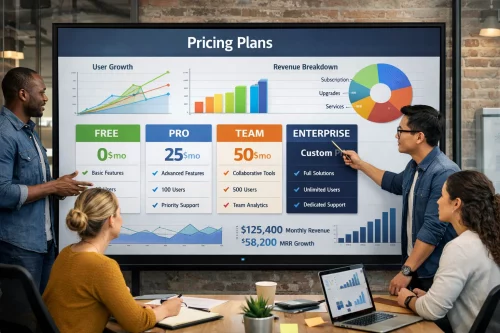
OXZEP7 is designed for a diverse user base, from solo professionals to large enterprises. A tiered pricing strategy ensures both accessibility and profitability.
The following table outlines the ideal pricing structure:
| Plan | Features Included | Ideal User Segment |
| Free | Task engine, basic planner, mobile access | Students, individuals |
| Pro | AI assistant, workflow automation, analytics | Freelancers, consultants |
| Team | Collaboration tools, workspace sharing | SMEs, project teams |
| Enterprise | Custom AI, compliance, SLA, SSO | Corporations, agencies |
Each tier should include upgrade paths and usage-based triggers that encourage users to unlock more value through automation and intelligence.
Conclusion
OXZEP7 represents a shift from traditional task management to intelligent productivity. By combining AI, automation, and behavioural insights, it creates a proactive system that adapts to how individuals and teams work.
Developing OXZEP7 software requires thoughtful planning across technology, user experience, and scalability.
With a well-structured roadmap and the right tech stack, businesses can build a future-ready platform that not only organises work but transforms how it’s executed, analysed, and optimised for better outcomes.
FAQs About Developing OXZEP7 Software
What makes OXZEP7 different from existing productivity tools?
OXZEP7 integrates AI decision support and behavioural intelligence into task management, making it proactive rather than reactive.
How long does it take to build a basic version of OXZEP7?
An MVP with core task management and AI planning features can typically be developed in 8 to 12 weeks.
Can OXZEP7 be used by both individuals and teams?
Yes, it’s designed to scale from solo use to enterprise-level collaboration with AI-assisted handovers and visibility controls.
Is OXZEP7 software cloud-based?
Yes, OXZEP7 is built using cloud-native infrastructure for scalability, flexibility, and cross-device accessibility.
What kind of AI is used in OXZEP7?
It uses a combination of large language models (LLMs), rule engines, and behavioural learning algorithms to assist and automate.
How secure is the OXZEP7 platform for enterprise use?
With role-based access, encryption, and compliance support, OXZEP7 can be deployed securely for enterprise teams.
Can OXZEP7 integrate with third-party apps?
Yes, through APIs and workflow automation layers, it can connect with email, calendars, CRMs, and other productivity platforms.