























Across UK manufacturing, warehousing, and logistics operations, business leaders are under increasing pressure to deliver more output with fewer bottlenecks, without compromising safety or quality.
Against this backdrop, lifting tables have become a strategic asset for organisations looking to optimise workflows, streamline material handling, and support lean operational models. Far from being simple mechanical aids, modern lifting tables are engineered to play a central role in creating more efficient, predictable, and scalable environments.
How Height-Adjustable Platforms Are Supporting Leaner, More Resilient Industrial Workflows?
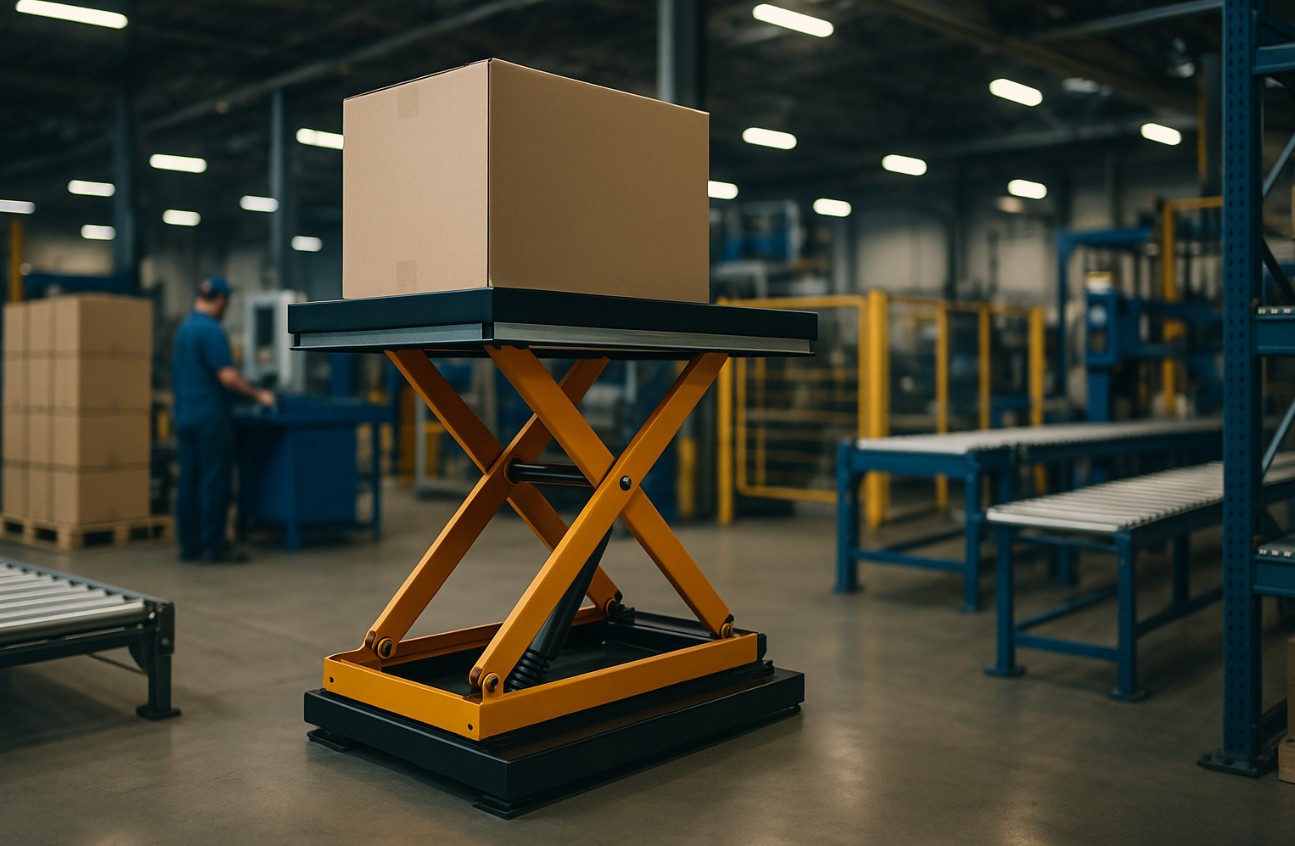
At their core, a lifting table enables the safe, controlled movement of goods to optimal working height. While the ergonomic benefits are widely recognised, their impact on overall workflow efficiency is equally significant.
Enhancing Process Flow in High-Demand Industrial Environments
In fast-moving industrial settings such as automotive assembly lines, distribution centres, packaging facilities, and metal fabrication plants lifting tables help create consistent, uninterrupted work processes by minimising manual handling and reducing the time spent repositioning loads.
One of the clearest examples of their value is in production line balancing. Many UK manufacturers face challenges maintaining steady throughput across stations due to variations in workload, operator height, or equipment limitations.
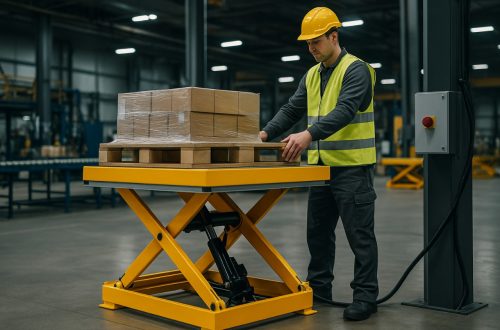
Height-adjustable lifting tables allow operators to maintain a constant working position, ensuring each station can operate at its designed pace. This stability reduces cycle-time variance, supporting lean initiatives and improving the predictability of output.
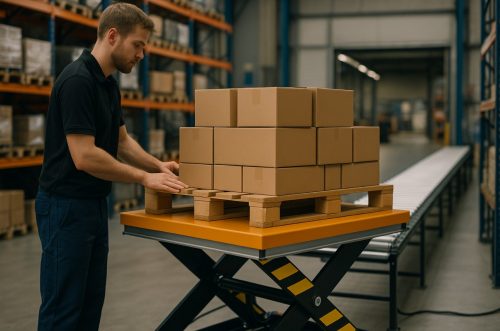
In warehousing and distribution, lifting tables streamline pallet handling, loading and unloading, and order assembly. They allow workers to maintain the pallet at waist height throughout the process, significantly reducing the time spent bending and reaching.
When integrated with conveyor systems or goods lifts, these tables support faster flow of materials and minimise delays caused by manual adjustments or inefficient load transitions. For operations dealing with heavy, bulky, or irregularly shaped goods, scissor lifts with tilting capabilities further reduce process friction by improving access to materials.
Lifting tables also support automation and semi-automation initiatives. As more UK businesses adopt robotics, automated conveyors, and intelligent handling systems, the ability to maintain precise and consistent load heights becomes crucial.
Lifting tables provide reliable interfaces between manual and automated stages of production, ensuring equipment compatibility and reducing integration downtime. Their flexibility allows them to be incorporated into both new installations and existing workflows without requiring major infrastructure changes.
From a cost perspective, lifting tables contribute to long-term operational resilience. By reducing strain on equipment and workers, they lower the likelihood of unplanned downtime and equipment damage.
When processes run more efficiently, businesses experience improved throughput without the need for additional labour or costly layout changes. Over time, the cumulative effect of small efficiency gains across multiple workstations can translate into substantial productivity improvements.
While many providers exist within the market, companies such as TRANSLYFT have influenced industrial expectations by engineering lifting tables that align with complex workflow requirements, high-duty cycles, and rigorous safety standards.
Ultimately, lifting tables are no longer viewed as optional ergonomic equipment, they are recognised as essential tools for UK businesses seeking to enhance operational flow, strengthen productivity, and build more resilient, efficient material-handling systems.
As industries continue to modernise and compete globally, well-designed lifting solutions will remain fundamental to dependable operations.