























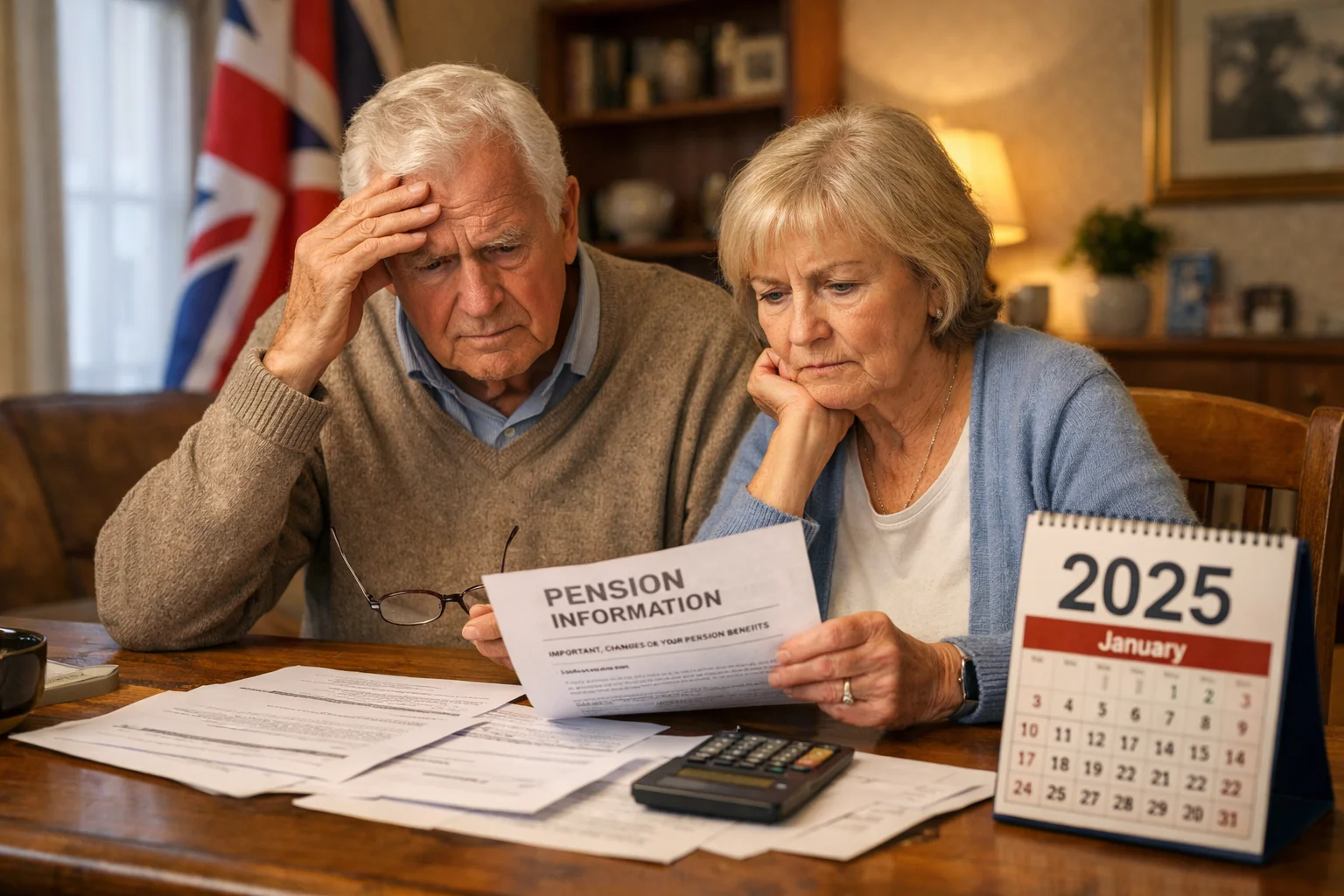
The UK State Pension has long been seen as a financial safety net for millions of retirees. However, as 2025 approaches, concerns are rising about whether payments are being cut, or if other changes are affecting how much individuals receive.
With debates around the Triple Lock, the rising State Pension Age (SPA), tax changes, and the impact of National Insurance contributions, the real picture is more complex than a simple cut.
This article breaks down the truth behind the headlines, explores what’s changing, and explains what pensioners and future retirees need to understand to secure their entitlements.
Why Are Some Pensioners Receiving Less Than the Full State Pension?
The perception of a state pension “cut” often stems from confusion around eligibility and entitlement rules.
In 2025, while the State Pension rate has technically increased, many individuals are still receiving less than the full amount due to legacy policies and gaps in their National Insurance (NI) contributions.
Contracting Out and Its Long-Term Impact
A significant number of pensioners reaching retirement in 2025 may have been part of workplace pension schemes that were contracted out of the additional State Pension before April 2016. This means:
- They paid reduced National Insurance contributions.
- In return, their workplace or occupational pension was expected to make up the difference.
- The result is a reduced State Pension entitlement, even though they might have decades of employment behind them.
People affected often only become aware of this when they request their pension forecast. Since the contracting-out arrangement ended in 2016, new members no longer enter this system, but the effects still apply to many retiring in the current period.
National Insurance Gaps and Contribution Years
Another primary reason for receiving less than the full new State Pension is insufficient NI years. As of 2025, to receive the full new State Pension amount, individuals must have:
- At least 35 qualifying years of National Insurance contributions.
- A minimum of 10 qualifying years to receive anything at all.
NI gaps may occur for a variety of reasons, such as:
- Periods of unemployment without claiming Jobseeker’s Allowance.
- Extended time abroad without voluntary contributions.
- Early career or education years where no NI was paid.
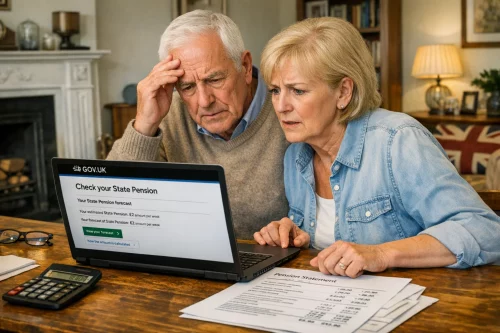
It’s possible to identify and fill these gaps by checking your NI record through the GOV.UK website.
Is the State Pension Age Rising in 2025 and Beyond?
The age at which a person becomes eligible to receive the State Pension is not static. In 2025, the SPA (State Pension Age) remains 66, but this is part of a larger timeline of gradual increases set by the government.
Timeline of State Pension Age Increases
Changes in State Pension Age affect retirement planning significantly, especially as people live longer and the cost of state support increases. Below is a timeline of current and proposed SPA changes:
| Date Range | State Pension Age |
| 2025 (Current) | 66 |
| 2026–2028 | 67 |
| 2044–2046 (planned) | 68 |
| Proposed (under review) | 68 by 2035 or earlier |
This progression means that individuals currently in their mid-50s may not be able to claim their pension until 67, and younger individuals may have to wait until 68 or more.
These delays often feel like a “cut” to pension value, particularly for those relying solely on state support during retirement.
Future Implications for Younger Workers
For workers born after April 1960, the increase in the SPA has tangible effects:
- Delayed access to pension funds.
- A need to save more privately to bridge the gap between retirement and pension eligibility.
- A heavier reliance on workplace pensions or personal savings.
Planning for these changes early is critical to maintaining financial stability during retirement.
What Role Does the Triple Lock Play in 2025 Pension Payments?
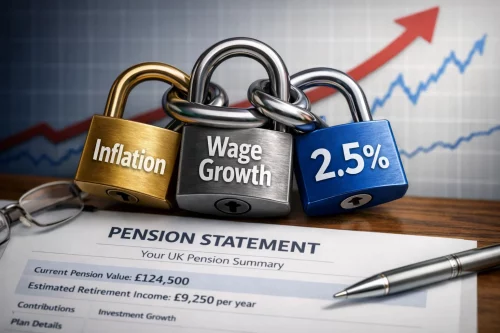
The Triple Lock mechanism was introduced to ensure that the State Pension would not lose value in real terms. It guarantees annual increases by the highest of:
- Average earnings growth
- Consumer Price Index (CPI) inflation
- A minimum of 2.5%
For the 2024–2025 tax year, the State Pension increased significantly due to higher-than-usual wage growth. This brought the full new State Pension to £221.20 per week.
While this may seem like a benefit rather than a cut, the broader debate around affordability has raised concerns about the Triple Lock’s long-term viability.
Although the mechanism remains in place for 2025, experts and think tanks continue to argue for reform.
The cost of maintaining the Triple Lock is becoming unsustainable, particularly during periods of economic volatility.
Its future could determine whether the State Pension continues to rise meaningfully in years to come.
The possible outcomes being considered include:
- Replacing the Triple Lock with a Double Lock (removing the 2.5% floor).
- Temporarily suspending the Triple Lock during high inflation years.
- Introducing means-testing to allocate higher payments to those with lower overall retirement income.
Any such reforms would significantly alter the way the State Pension grows and could affect long-term planning for both current and future retirees.
Is There an Actual Cut to the UK State Pension in 2025?
There is no formal announcement of a State Pension cut in 2025. The term “cut” is often used to describe individual circumstances where the actual amount received is less than expected.
This is typically due to pre-existing eligibility conditions rather than an across-the-board policy change.
Factors leading to reduced pensions include:
- Fewer than 35 qualifying NI years.
- History of being contracted out of the additional State Pension.
- Delayed access due to the increasing State Pension Age.
- A tax burden from rising pension income crossing frozen tax thresholds.
The perception of a cut may also stem from the fact that, while the gross State Pension amount has increased, pensioners are keeping less due to taxation.
| Issue | Impact on Pensioners |
| Insufficient NI contributions | Reduced or no pension entitlement |
| Contracting out history | Lower State Pension due to private pension offset |
| SPA increases | Delayed access to payments |
| Frozen tax thresholds | More pensioners paying income tax on what was once tax-free |
What Tax Changes Could Impact Pensioners in 2025?
The State Pension is classified as taxable income. As payments increase due to the Triple Lock, many pensioners are finding themselves crossing into taxable income brackets despite no additional income from other sources.
Budget 2025 Reforms on Pension Taxation
The Spring Budget 2025 introduced the following key changes:
- Continued freeze on the personal allowance at £12,570 until at least 2028.
- Higher State Pension amounts causing more retirees to exceed the tax-free threshold.
- A planned cap on tax relief for private pension contributions, effective from 2029.
This means:
- Pensioners with no private income may now owe tax.
- Those with both private pensions and a full State Pension will almost certainly be liable for income tax.
- The effective purchasing power of the State Pension is reduced, especially when inflation and living costs are factored in.
How Higher Payments Could Affect Low-Income Retirees?
While rising State Pension payments are generally welcomed, they can have unexpected tax consequences:
- Pensioners who rely solely on the State Pension may now need to complete a Self Assessment tax return.
- Income slightly above the personal allowance will be taxed at 20%, reducing real income.
- Tax is not automatically deducted from the State Pension, which can result in underpayment or surprise bills.
Pensioners should check their tax code, speak to HMRC if necessary, and consider budgeting for any future tax obligations.
What Can You Do If Your State Pension Is Lower Than Expected?
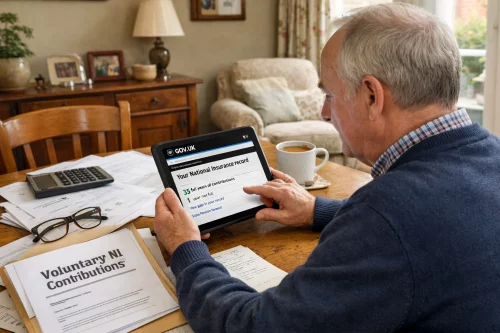
Identifying why your pension is lower than the full amount is the first step. Once the issue is identified, several options are available to either correct or improve your entitlement.
Checking Your NI Record and Forecast
You can view your NI contribution history and get a pension forecast online through GOV.UK. This service allows you to:
- Check how many qualifying years you have.
- View any missing years or gaps.
- Understand how many more years you may need for a full pension.
It also shows the estimated weekly payment you’ll receive based on current data.
Topping Up with Voluntary NI Contributions
If you find that you’re a few years short of the required 35, you may be eligible to pay voluntary contributions (known as Class 3 contributions) to fill the gaps.
Key points include:
- Each year of Class 3 contributions costs around £824.20.
- One added year can increase your pension by up to £302.45 annually.
- It’s generally considered good value if you expect to live at least five years past retirement.
In some cases, you may be able to go back more than six years, especially under temporary extension schemes announced by the government.
Are There Other Factors That May Reduce or Delay Pension Payments?

While NI years and contracting out are the most discussed reasons, other lesser-known factors can also impact when and how much you receive.
Marital Status and Living Abroad
Those who retire abroad in certain countries may not receive annual State Pension increases. This applies to nations that don’t have a social security agreement with the UK. Over time, this can significantly reduce the value of the pension.
Pensioners living in countries like Australia or Canada are among those affected, whereas those in the EU, USA, or certain Commonwealth countries still benefit from annual increases.
Employment Breaks and Non-Qualifying Years
Years spent out of work, raising children, or studying may result in gaps in your NI record. However, in many cases, automatic NI credits are awarded if you were:
- Claiming Jobseeker’s Allowance or Employment Support Allowance.
- Receiving Child Benefit for a child under 12.
- Acting as a full-time carer.
It’s worth reviewing your record to ensure these credits have been correctly applied.
Conclusion
While there’s no direct cut to the UK State Pension in 2025, several structural and historical factors can reduce how much individuals receive.
These include contracted-out contributions, missing NI years, and the rising SPA. The Triple Lock remains in place for now, offering annual increases, but its future is uncertain.
Taxation is also becoming a silent issue, with frozen allowances pushing more pensioners into the taxable bracket.
Rather than a straightforward cut, what we’re seeing in 2025 is a restructuring of how and when people can access their pension—and how much of it they ultimately keep. Awareness and action are key.
Frequently Asked Questions
Can I still get a full state pension if I was contracted out?
Yes, but only if you have enough qualifying NI years. Being contracted out reduces the amount, but you may still top it up with additional contributions.
How do I know if I was contracted out of the state pension?
Your annual NI record or your workplace pension provider can confirm this. You may also see a “Contracted Out Deduction” on old pension statements.
What happens if I have less than 10 years of National Insurance contributions?
You won’t qualify for any State Pension. You may be able to make voluntary contributions to reach the minimum threshold.
Will the Triple Lock continue beyond 2025?
As of now, yes. But due to cost concerns, it’s under review and may be changed or replaced by a different system after 2025.
Can pensioners be taxed on their state pension?
Yes. If your total income exceeds the personal allowance (£12,570), you’ll pay income tax on the excess.
How do voluntary NI contributions work and are they worth it?
You can buy missing NI years to increase your State Pension. It’s usually worth it if you’ll receive the pension for several years after retirement.
What is the new SPA for men and women in 2025?
As of 2025, both men and women qualify at age 66. This is set to rise to 67 between 2026 and 2028.