

























Growth in business is often treated like a race. Faster results, quicker scaling, and immediate returns are held up as proof that something is working.
But many of the most reliable and resilient businesses don’t grow that way. They take time, intention, and steady effort.
Gardening offers a useful perspective. When you plant vegetable seeds, nothing seems to happen at first. That delay isn’t failure – it’s part of the process. Business growth works much the same way.
A garden doesn’t respond to pressure or urgency. It responds to preparation, regular care, and time. Those same principles apply surprisingly well to running a business.
What Happens Before You Can See Anything?

One of the easiest things to overlook is how much growth happens out of sight. Before a plant shows itself above the soil, it’s building roots below the surface. Without that stage, it won’t last long.
Businesses go through a similar phase. Being with research and planning, discovering systems and processes that work well for the business to thrive.
This correlates in gardening understanding of a plant and how to make it flourish. This part can feel slow or even frustrating, especially when results are not immediately visible.
But skipping this stage usually leads to fragile growth. Businesses with strong foundations are better equipped to handle challenges later on, even if they take longer to get moving.
Learning to Trust Delayed Results
Gardeners are used to waiting. Days or weeks can pass before anything breaks through the soil, and during that time it’s easy to wonder if something went wrong.
Business owners understand this feeling. A new marketing strategy, product launch, or overall change rarely delivers immediate results. Early stages can feel flat, which often leads to doubt.
Understanding that delayed results are normal makes it easier to see the course out and watch your efforts pay off.
Patience Is an Underrated Skill
Patience doesn’t always get much attention in business conversations, but it matters more than most people admit. Gardening teaches you the valuable lessons of waiting and observing, allowing processes to take their natural course.
In business, reacting too quickly can lead to an interruption in momentum. While flexibility is important, excessive tweaking can prevent anything from working smoothly.
Knowing when to act and when to give something time is a quiet but valuable skill.
Working With Reality, Not Against It
Anyone who gardens quickly learns they don’t control everything. Seasonal cycles play a huge role, regardless of effort or planning.
In certain situations, businesses operate within conditions they cannot control; in market shifts, economic changes, and customer behaviour. Trying to force growth without acknowledging these factors often creates inefficiency.
Gardening encourages adaptability, essential for business owners when moving forward, reminding them to respond appropriately to reality.
Accepting That Not Everything Will Work
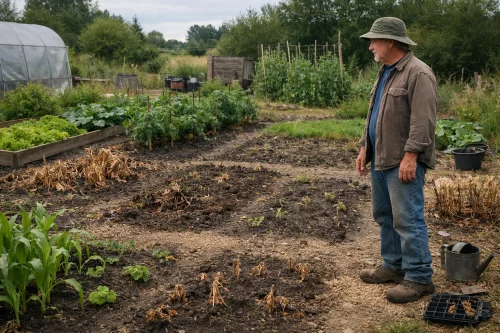
Even well-tended gardens don’t have all their plants thrive – that’s normal. Some seeds don’t germinate. Others struggle despite good conditions.
In business, failed ideas are often treated as something entirely negative. This mindset can discourage experimentation and lead to overly cautious decisions – which may not produce the best results.
Seeing setbacks as part of the process makes it easier to learn, adjust, and move forward without losing confidence.
Why Consistency Beats Intensity?
Gardens thrive on consistency. Watering once in a while or overdoing it occasionally doesn’t produce healthy plants that will grow and flourish.
The same is true in business. Regular communication, improvement, and engagement tends to deliver better results than short bursts of effort followed by long periods of neglect.
Showing up consistently matters.
Growing at the Right Pace
In gardening, planting too much too quickly can hurt growth. Crowded plants compete for space and resources, often weakening the whole garden.
Businesses face the same risk when they expand too fast. Scaling before systems, demand, or support are ready can strain operations and reduce quality.
Gardening offers a clear reminder that growth needs room to breathe.
Looking Beyond Immediate Metrics
Gardeners don’t judge success only by the final result – the harvest. Healthy leaves and steady development are signs that things are on track.
In business, focusing only on short-term numbers can hide important signals. Trust, loyalty, efficiency, and reputation often develop gradually and don’t always show up immediately in revenue. Broadening how progress is measured helps maintain perspective during slower phases.
Building for the Long Run
Gardens change with the seasons. Some years are better than others, and conditions are never completely predictable. The strongest gardens are built to endure change and inconsistency in its habitat.
Businesses face similar cycles. Long-term thinking makes it easier to navigate uncertainty without constantly reinventing everything.
Resilience comes from preparation, flexibility, and realistic expectations.
Growth Is Never “Done”
Perhaps the biggest lesson gardening offers is that growth isn’t a single moment. It’s an ongoing process that requires attention and patience.
Business success is often portrayed as a breakthrough or turning point, but most of the time it’s the result of steady effort over years, not weeks.
Final Thoughts
Gardening is a simple reminder that slow growth isn’t a problem – it’s often a sign that something solid is being built.
Whether in soil or in business, progress depends on preparation, consistency, and respect for natural timelines.
For business owners willing to take a longer view, these lessons can be reassuring. Even when nothing seems to be happening, meaningful work may be well underway.