


























The resignation of Angela Rayner from her senior government roles has sent shockwaves through British politics.
Once seen as one of Labour’s most influential voices, her decision to step down due to tax-related issues has ignited widespread debate across party lines and in the media.
But amid the mounting controversy, one pressing question remains: will Angela Rayner still be an MP?
This article takes a closer look at the origins of the controversy, the implications of her resignation, and whether Angela Rayner’s future in Parliament is truly at risk.
What Sparked the Angela Rayner Tax Controversy?

Misunderstood Property Classification
The core issue that led to the controversy was the classification of a flat Angela Rayner purchased in Hove for £800,000.
Initially believed by Rayner to be her primary residence, it was later determined that the property should have been treated as a second home due to the structure of a family trust she set up for her disabled son.
In the eyes of HMRC, ownership arrangements involving trusts can significantly impact property tax liability. Although Rayner and her legal advisers viewed the flat as her main home, the existence of the trust meant she had beneficial interest in another property.
As a result, the Hove flat fell under the higher-rate stamp duty bracket typically applied to additional homes.
The Role of Media Scrutiny
Although Rayner’s legal team maintained that all tax obligations had been met, the issue did not come to public attention until several national newspapers launched investigations into her property affairs.
The Daily Telegraph and the Daily Mail published reports suggesting discrepancies in how the property had been declared and taxed.
These reports created mounting public and political pressure. In response, Rayner took the step of seeking further legal clarification.
She hired a senior legal expert to review the transaction and assess the validity of the tax payments. The outcome revealed that she had underpaid stamp duty by £40,000.
This media-driven scrutiny pushed the matter from a private tax question into a full-scale political controversy.
Legal Advice vs Specialist Tax Guidance
A major factor contributing to the tax oversight was Rayner’s reliance on general legal advice rather than expert tax consultancy.
Although her legal team guided her through the property purchase, they reportedly failed to consider the unique implications of the family trust on the tax status of the home.
This distinction proved critical. Under UK tax regulations, specialist tax advice is often necessary for individuals with complex personal or financial circumstances.
Rayner later admitted that, given her position in government and the nature of the purchase, she should have sought more tailored guidance.
Her omission was characterised by Sir Laurie Magnus, the Prime Minister’s ethics adviser, as a “careless” oversight rather than deliberate misconduct.
Why Did Angela Rayner Resign from Her Government Positions?
Findings from the Ministerial Code Investigation
Angela Rayner’s resignation followed an official investigation by the Prime Minister’s independent adviser on ministerial standards, Sir Laurie Magnus.
The investigation concluded that Rayner had breached the ministerial code, a set of standards that apply to all individuals holding ministerial office in the UK.
Although Sir Laurie stated that Rayner had acted with integrity and had not intentionally misled anyone, he criticised her for failing to uphold the “highest standards” expected from senior government figures.
The breach was linked specifically to her decision not to seek expert tax advice before completing the property transaction.
The conclusion of the report placed significant pressure on both Rayner and the Labour leadership to take decisive action.
Resigning allowed Rayner to take responsibility and potentially shield the party from further reputational damage.
Scope of the Resignation
Rayner stepped down from three key positions:
- Deputy Prime Minister
- Secretary of State for Housing
- Deputy Leader of the Labour Party
These roles placed her at the heart of Labour’s government apparatus following the party’s victory in the 2024 general election.
Her decision to resign marked the most high-profile departure from the new government to date and was a significant political development.
Despite these resignations, it is important to note that she did not step down as a Member of Parliament. She continues to serve as the elected MP for Ashton-under-Lyne.
Rayner’s Public Statement and Apology
In her resignation letter to Prime Minister Keir Starmer, Rayner accepted the ethics adviser’s findings and acknowledged that she had not lived up to the expectations placed upon her.
She expressed regret over the decision not to obtain specialist tax advice, especially considering her role as Housing Secretary and the financial complexity of the situation.
She wrote that she took “full responsibility for this error” and stated that her intentions had always been to comply with the law and pay the correct amount of tax.
This public acknowledgment helped shape the narrative around her resignation as one driven by accountability and professional ethics.
Rayner also addressed the emotional toll of the decision, noting how difficult it was to step away from positions she had worked hard to attain.
Nonetheless, she emphasised the importance of transparency and taking ownership of mistakes made in public office.
Labour Leadership’s Reaction
Keir Starmer accepted her resignation and publicly praised her contributions to the Labour government.
In a handwritten letter, he commended Rayner’s role in shaping party policy and called her a “trusted colleague” and “true friend.”
He also acknowledged the personal difficulty of her decision and made it clear that she would remain a vital part of the Labour Party moving forward.
Starmer’s response was seen as an effort to show leadership while maintaining party unity during a potentially divisive moment.
Labour subsequently announced a cabinet reshuffle, appointing new individuals to fill the key roles vacated by Rayner, including David Lammy as Deputy Prime Minister and Justice Secretary.
What Role Did the Stamp Duty Miscalculation Play?
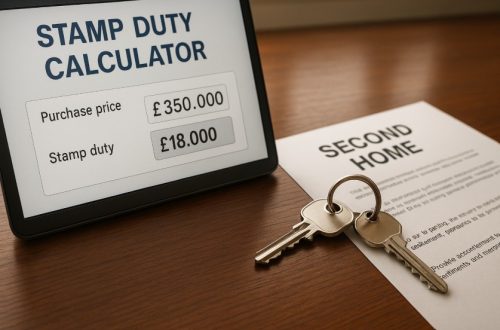
The stamp duty miscalculation was central to the controversy. Under UK tax laws, purchasing a second home attracts a higher rate of stamp duty than a main residence.
In this case, Rayner believed the Hove flat was her primary residence. However, the presence of a trust for her son disqualified the property from being treated as such. As a result, the correct (and higher) stamp duty rate was not applied.
Stamp Duty Rates for Additional Properties (England 2024–2025)
| Property Price Band | Standard Rate | Additional Home Rate |
| Up to £250,000 | 0% | 3% |
| £250,001 to £925,000 | 5% | 8% |
| £925,001 to £1.5 million | 10% | 13% |
Rayner should have paid the 8% rate on the applicable portion of the property price instead of 5%, leading to a £40,000 underpayment. She has since contacted HMRC to correct the error and repay the outstanding amount.
What Has Been the Reaction from Labour Party Leaders?
Labour’s leadership responded with a mix of disappointment and praise. Keir Starmer acknowledged Rayner’s contributions and expressed sadness over her resignation. He affirmed that her decision was correct but painful for both her and the party.
Rayner had been a prominent figure in the Labour government and was widely respected for her political instincts and working-class roots. Many party members have continued to support her, citing her commitment to social justice and housing reform.
Key points from the party’s response:
- Starmer called Rayner a trusted colleague and friend
- The party respects her decision and her accountability
- Her long-term role in Labour remains open and significant
How Have Other Political Figures and Parties Responded?
Reactions from political opponents have been sharply critical. The Conservative Party’s Kemi Badenoch said the resignation was overdue and questioned Keir Starmer’s leadership for not acting sooner. Reform UK leader Nigel Farage also criticised the Labour Party, citing the incident during his party’s conference.
These criticisms reflect broader political concerns:
- Public trust in elected officials and financial transparency
- The readiness of party leaders to address misconduct
- The use of personal controversies in broader electoral strategies
Such responses have amplified the issue, turning it into more than a tax dispute—it has become a symbol of accountability in British politics.
Is Angela Rayner Still an MP After Resigning from Government?
Angela Rayner remains the MP for Ashton-under-Lyne. Her resignation affected only her government and party leadership roles, not her elected parliamentary seat. She was re-elected in 2024 and continues to represent her constituency.
Important distinctions include:
- Ministerial roles are appointed, not elected
- MP status is granted through public elections
- Only serious legal or parliamentary action can remove an MP
As of now, no formal process has been initiated to remove Rayner from her position in Parliament.
Could the Tax Issue Lead to Further Penalties or Investigations?
Although Rayner has repaid the stamp duty owed, the possibility of further penalties remains. HMRC may impose a fine for what it classifies as a “careless” tax error.
Sir Laurie Magnus’s report stated that:
- The mistake could have been avoided with proper tax advice
- Legal advice did not account for her complex personal arrangements
- Rayner bore ultimate responsibility for tax compliance
Potential Financial Impact of Rayner’s Tax Error
| Component | Estimated Amount |
| Additional Stamp Duty Owed | £40,000 |
| Potential HMRC Penalty (careless) | £12,000 |
| Legal Costs (estimated) | £5,000–£10,000 |
| Total Estimated Impact | £57,000–£62,000 |
While this does not imply criminal conduct, any further developments could impact Rayner’s standing with the public and within the Labour Party.
What Does the Deputy Leadership Election Mean for Labour?
Angela Rayner’s departure as Deputy Leader necessitates a new leadership election within the Labour Party. This process will involve a vote by Labour members and affiliated groups, potentially reshaping the party’s internal dynamics.
Significance of the deputy leadership election:
- It may reflect internal divisions or shifts in party ideology
- A strong or unexpected candidate could challenge Starmer’s authority
- The outcome could influence policy priorities ahead of future elections
In the interim, Labour has initiated a cabinet reshuffle, appointing David Lammy as Deputy Prime Minister and Justice Secretary, and Steve Reed as the new Housing Secretary.
How Might This Controversy Affect Angela Rayner’s Political Future?

Despite her resignation, Angela Rayner is still regarded as a key figure in the Labour movement. Her popularity among grassroots members and trade unions remains intact, and many see her as a politician capable of returning to senior roles in the future.
Her future prospects may depend on:
- Whether additional fines or investigations arise
- How she maintains her constituency support
- The outcome of the Labour deputy leadership election
If she continues to engage in Parliamentary work and avoids further controversy, Rayner could potentially re-enter the cabinet in a future reshuffle.
Could Angela Rayner Face Pressure to Resign as an MP?
At present, there is no indication that Angela Rayner will face formal pressure to step down as an MP. Disqualification typically follows criminal conviction or parliamentary sanction, neither of which currently applies to her case.
Notable factors supporting her continued role as MP:
- The ethics report did not recommend removal
- HMRC has not confirmed any severe penalties
- The Labour leadership has shown continued support
Public and party sentiment may shift if new information emerges, but based on the current facts, Rayner is expected to serve the remainder of her term.
Conclusion
Angela Rayner’s resignation marks a dramatic chapter in recent British political history. Although she has stepped down from high-profile roles, she continues to serve as an MP—a position she has held for over a decade.
Her admission of error, willingness to cooperate with investigations, and decision to repay owed tax may help her preserve credibility among her constituents.
Whether Angela Rayner will return to frontline politics or face further scrutiny remains uncertain. However, as things stand, she is still an MP, and her political journey is far from over.
FAQs
What is the current status of Angela Rayner as an MP?
Angela Rayner remains the MP for Ashton-under-Lyne. Her resignation affected only her government and party leadership roles.
What ministerial positions did Angela Rayner resign from?
She resigned from her roles as Deputy Prime Minister, Housing Secretary, and Deputy Leader of the Labour Party.
Was Angela Rayner found guilty of intentional tax evasion?
No. The ethics adviser categorised the issue as a careless error rather than intentional wrongdoing.
What triggered the investigation into Angela Rayner’s tax affairs?
Media reports raised questions about the stamp duty paid on a property purchase, prompting further legal and ethical review.
Could Angela Rayner be disqualified as an MP over this issue?
There are no current grounds for disqualification. Disqualification typically requires criminal charges or formal censure.
Who replaced Angela Rayner in her government roles?
David Lammy has taken over as Deputy Prime Minister and Justice Secretary. Steve Reed is now the Housing Secretary.
Will there be a deputy leadership election in the Labour Party?
Yes. The Labour Party is expected to initiate a new election to replace Rayner as Deputy Leader.