

























Working in confined spaces requires a high level of trust in your equipment. When you are descending into a shaft or a tank, the winch is your primary lifeline.
It’s easy to take this mechanical device for granted when it works perfectly every day, but neglect can lead to dangerous failures. Regular maintenance is the only way to ensure that the internal components are functioning as they should.
You will need to perform thorough checks before every shift to spot potential hazards before they escalate. It’s better to retire gear early than to risk an accident on site. Keep on reading to find out the key warning signs to look out for during your pre-use checks.
The following advice applies to both manual rescue winches and self-retracting lifelines, as these are often used together during confined space entry and share many of the same inspection requirements.
What are the Warning Signs Your Confined Space Winch Needs Servicing?
1. Broken Wire Strands and Splinters
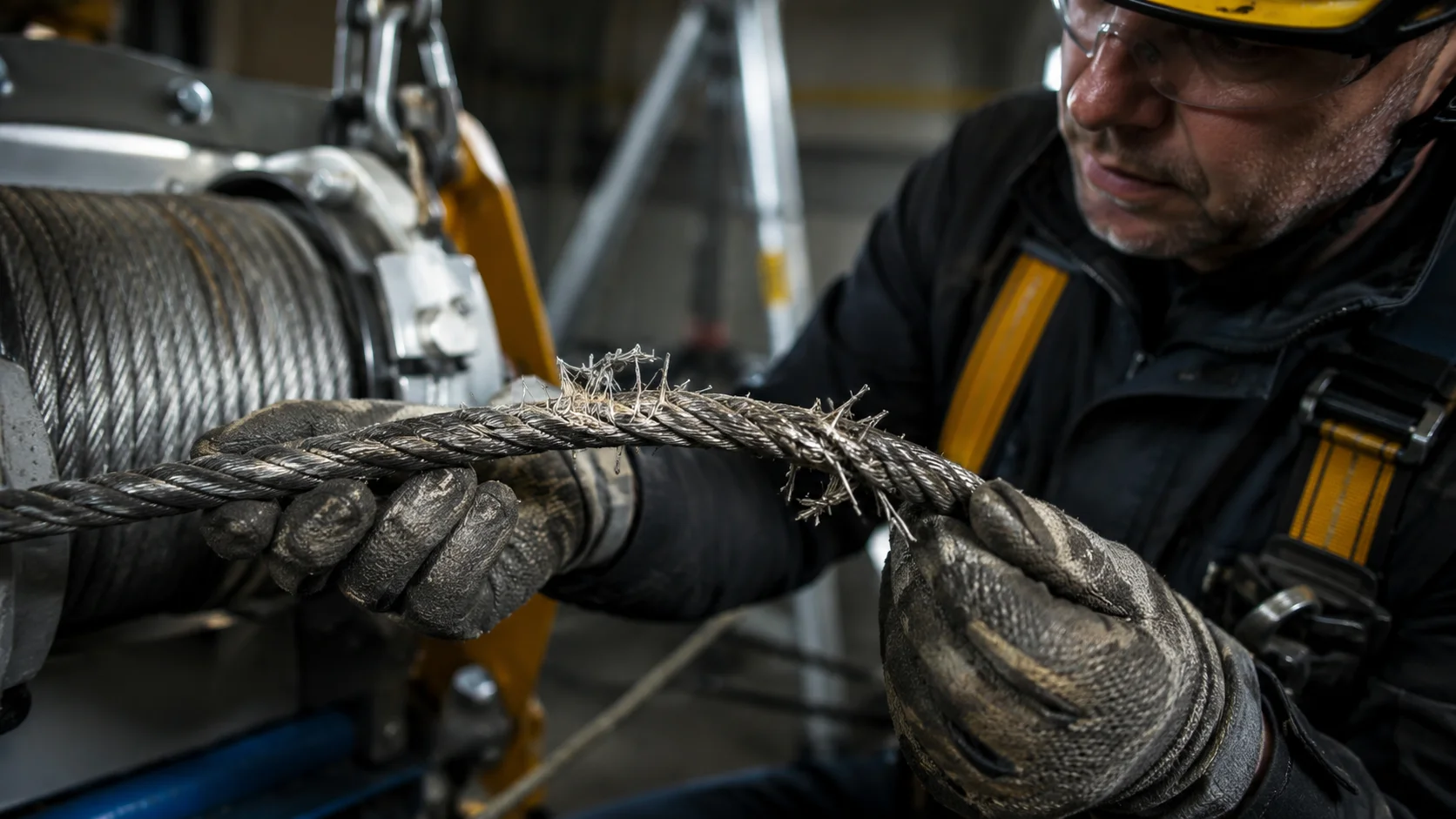
 The most common sign of wear on a winch is the appearance of broken wire strands, often called fishhooks. As the steel cable moves over pulleys and around the drum, individual wires can snap due to fatigue or abrasion. These tiny shards of metal are sharp enough to pierce through work gloves and can cause serious injury to your hands.
If you notice any broken wires in a short section of the cable, you must take the winch out of service immediately. These breaks indicate that the structural integrity of the cable is compromised. It won’t be long before the entire line becomes unsafe to hold a load.
2. Inconsistent Braking and Slippage
A winch must be able to hold a load securely without any creeping or slipping. If you find that the cable jerks or slides when it should be locked, there is likely a problem with the internal braking mechanism. This often happens because of oil contamination or worn-out friction plates inside the housing.
You should never ignore a brake that feels “spongy” or inconsistent during operation. It’s often necessary to consult experts in confined space equipment servicing to tear down the unit and inspect the safety pawls. Professional technicians will have the right tools to measure brake wear and ensure the unit meets the manufacturer’s specifications.
3. Bird-nesting and Tangled Cable Drums
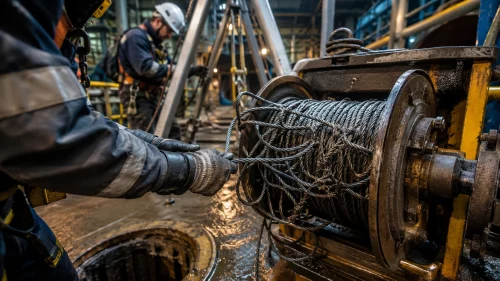
Bird-nesting occurs when the cable is wound onto the drum loosely or under uneven tension. This causes the top layers of the wire to bite into the layers underneath, creating a tangled mess that looks like a nest.
While it might seem like a simple cosmetic issue, it can actually crush the cable and cause permanent kinks. If the cable has coiled due to being overloaded, it will affect the strength and durability of the cable.
Once a cable has been severely kinked or flattened by bird-nesting, it will never run smoothly through the block again. You will find that the cable becomes prone to jumping out of its tracks. If the drum looks messy, you should pull the entire length out and rewind it under tension to check for deep-seated damage.
4. Retraction Issues on Self-Retracting Lifelines
A healthy self-retracting lifeline or winch should take up slack quickly and smoothly. If you feel excessive resistance when pulling the cable out, or if it struggles to retract without help, the internal spring might be failing. This is a major safety concern because the device may not lock quickly enough in the event of a fall.
Dust and grit often work their way into the casing during outdoor jobs, which creates friction on the moving parts. This buildup will eventually grind down the bearings and gears. If the retraction feels “gritty” or slow, it’s a clear sign that the internal grease has dried out or become contaminated.
5. Visible Corrosion and Structural Damage
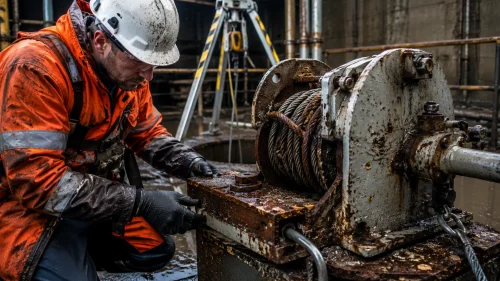
 Because confined spaces are often damp or chemically harsh environments, corrosion is a constant threat. Look for red rust on the cable or white oxidation on the aluminium housing. While surface rust can sometimes be cleaned, deep pitting into the metal weakens the entire structure.
You should also check the mounting points and the winch handle for any signs of bending or cracking. A winch that has been dropped or struck by heavy machinery can develop hairline fractures that aren’t immediately obvious. Inspect the snap hooks and carabiners to ensure the gates lock and unlock without sticking.
Essential Safety Inspections
In the UK, confined space winches used for lifting persons fall under the Lifting Operations and Lifting Equipment Regulations 1998 (LOLER) and the Provision and Use of Work Equipment Regulations 1998 (PUWER).
Under LOLER, this type of equipment must undergo a thorough examination by a competent person at least every six months. These formal inspections are separate from the daily pre-use checks that operators should carry out before each use.
There are several items you should verify every time you set up your equipment on a new site.
To keep your gear in top condition, you will need to perform these basic checks:
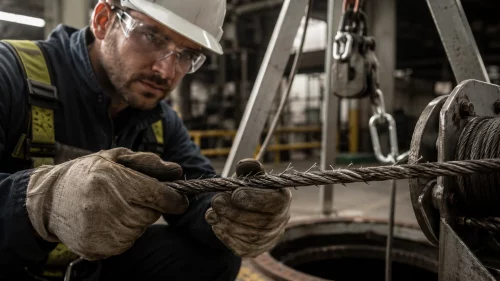
- Check the entire length of the cable for kinks, coiling, bird-caging or flat spots.
- Verify that the labels and serial numbers are still legible for inspection records.
- Test the braking action by giving the cable a sharp tug to ensure it locks.
- Ensure the mounting bracket is securely attached to the tripod or davit arm.
- Look for any missing bolts or damaged plastic covers on the main housing.
The Key Takeaways
Maintaining your winch is not just about compliance; it’s about making sure everyone goes home safely at the end of the day. By spotting these five warning signs early, you can prevent equipment failure and extend the life of your gear. Always trust your gut if a device feels “off” or sounds different than usual.
It is always cheaper to pay for a professional service than to deal with the consequences of a failed rescue. Keep your equipment clean, store it in a dry place, and never skip your pre-use inspections. Taking care of your winch will ensure it takes care of you when it matters most.