
























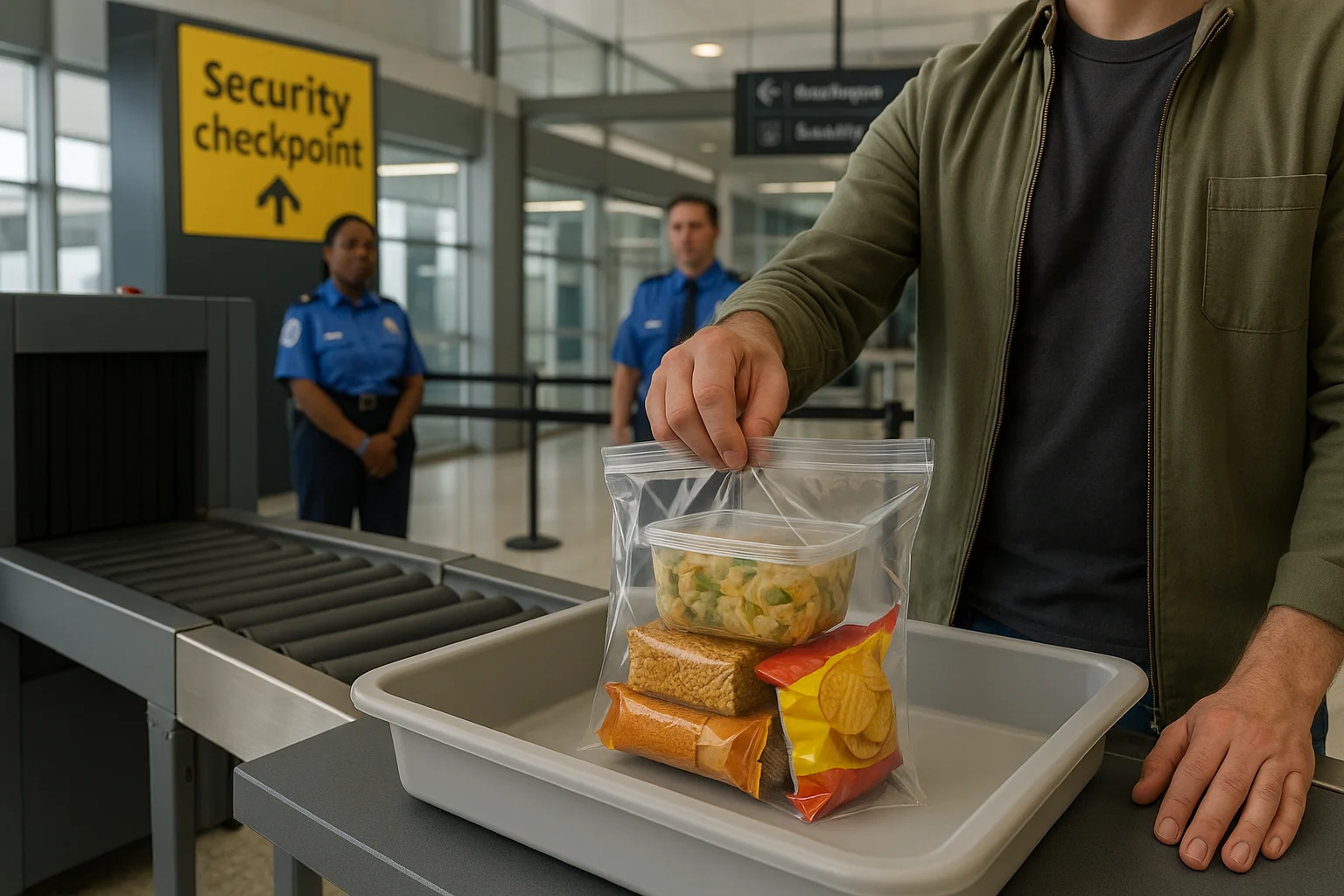
Travelling can be stressful, especially when it comes to airport security checks. One of the most frequently asked questions by UK travellers is: can you take food through security at the airport?
With the variety of hand luggage restrictions in place, particularly surrounding liquids and semi-liquids, it’s essential to understand what types of food are permitted and how best to pack them.
This article offers a complete guide based on official UK airport security regulations to ensure a smooth airport experience.
What Are the General Rules for Taking Food Through Airport Security?
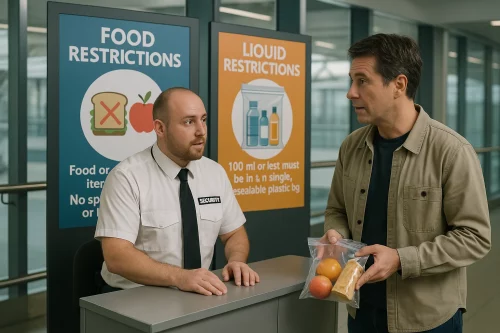
Taking food through UK airport security is allowed in many cases, but there are important restrictions to understand. These rules are in place to maintain safety and ensure efficient screening at security checkpoints.
Understanding UK Airport Security Procedures
All passengers must pass through a standard security screening process. This includes having hand luggage scanned by x-ray machines and sometimes searched manually. Food can often delay this process if it obstructs the scanner’s view or appears suspicious.
Security officers are trained to identify prohibited items and have the authority to confiscate anything they believe could pose a threat, regardless of whether it is typically allowed.
Therefore, even permitted food items may be removed if improperly packed or if they raise concerns during inspection.
How Food Impacts Security Screening?
Certain types of food are more likely to cause problems during screening:
- Dense or opaque foods like cheese or cake may block x-ray views
- Foods in foil or metal containers can trigger security alerts
- Homemade meals in unlabeled containers may be inspected more thoroughly
To minimise delays:
- Separate food items from electronics and other large objects
- Present food clearly when requested by security staff
- Avoid carrying excessive or unnecessary food in your hand luggage
The Difference Between Solid and Liquid Foods
UK security regulations draw a clear line between solid and liquid or semi-liquid food items. Solids are generally permitted with minimal restrictions, while liquid-based foods must follow the 100ml liquid rule.
Misunderstanding this distinction is one of the most common reasons food gets confiscated at checkpoints.
In general:
- Solid = Bread, biscuits, wrapped snacks
- Liquid = Soup, yoghurt, sauces
- Semi-liquid = Peanut butter, jam, soft cheese
Knowing how your food is classified is key to preparing your hand luggage correctly.
Which Foods Are Allowed in Hand Luggage at UK Airports?
Many travellers prefer to bring their own food on flights, especially for dietary, budget, or convenience reasons.
UK airport regulations do allow a wide variety of solid food items in hand luggage, but knowing which items qualify is essential to avoid delays or confiscation.
Solid Food Items That Are Permitted
The following items are typically allowed through security without restriction, as long as they are solid and properly packed:
- Sandwiches with solid fillings (e.g. cheese, ham, egg)
- Bread rolls, croissants, muffins, and other baked goods
- Crisps, crackers, rice cakes, and popcorn
- Hard cheese such as cheddar or gouda
- Wrapped chocolate bars and solid sweets
- Fresh fruit such as apples, bananas, or grapes
- Cereal bars and granola snacks
These items pass through x-ray machines without issue and don’t require special declaration at security.
Foods to Avoid in Hand Luggage (If Possible)
While technically allowed, some solid foods can still cause inconvenience or attract extra screening. These include:
- Foods with strong odours (e.g. garlic sausage or blue cheese)
- Items wrapped in foil (e.g. kebabs or burritos)
- Greasy or oily foods that may leak
- Large quantities of the same item that seem excessive for a personal meal
If you’re travelling on a short flight, it may be more practical to buy food after clearing security.
Packing Tips for Solid Foods
To ensure your food items pass through security smoothly:
- Wrap sandwiches and baked goods in cling film or place them in clear plastic containers
- Avoid using metal tins or foil as packaging
- Label homemade items if possible, especially if they resemble restricted products
- Keep all food in one section of your hand luggage so it’s easy to remove if required
Proper packing not only speeds up the security process but also ensures your food arrives intact and uncontaminated.
What Types of Food Are Considered Liquids or Semi-Liquids?
Airport security guidelines categorise certain foods as liquids due to their texture and consistency.
This classification includes any food item that can be poured, spread, or squeezed. These must comply with the UK’s liquid regulations.
Food items considered liquids or semi-liquids include:
- Yoghurt
- Peanut butter and other nut butters
- Jam, jelly, and marmalade
- Honey and syrup
- Dips such as hummus or guacamole
- Soft cheese (like cream cheese or brie)
- Sauces, gravy, and salad dressing
- Soups and stews
Each container must not exceed 100ml, and all such containers must be placed in a transparent resealable plastic bag.
The bag must not hold more than one litre in total and must measure roughly 20cm x 20cm. Only one such bag is allowed per passenger. If an item exceeds the 100ml limit, it will be confiscated during screening.
Can You Bring Baby Food and Milk Through Airport Security?
Special allowances are made for passengers travelling with babies or infants. Baby food and milk are not subject to the same strict 100ml restriction as other liquids, provided they are essential for the journey.
Permitted baby-related items include:
- Ready-to-drink formula milk
- Expressed breast milk (even if you are not travelling with the baby)
- Cow’s milk and soya milk (if the baby is present)
- Sterilised water for formula preparation
- Baby food in jars or pouches
- Ice packs and cooling gel packs to keep items at the right temperature
All containers must be presented for inspection, and security staff may open them for screening.
There is no legal quantity limit, but only a reasonable amount needed for the journey is allowed. It’s recommended to contact your airport ahead of time if travelling with large amounts.
Baby Food and Milk Allowances in Hand and Hold Luggage
| Item | Hand Luggage | Hold Luggage |
| Breast milk (up to 2,000ml) | Yes | Yes |
| Frozen breast milk | No | Yes |
| Formula, cow’s, or soya milk | Yes (baby must be present) | Yes |
| Sterilised water for baby | Yes (baby must be present) | Yes |
| Baby food | Yes (baby must be present) | Yes |
| Ice/cooling gel packs | Yes | Yes |
Containers of breast milk must not exceed 2,000ml each, and airport staff may screen them using special equipment.
Are There Exceptions for Medical or Dietary Food Requirements?
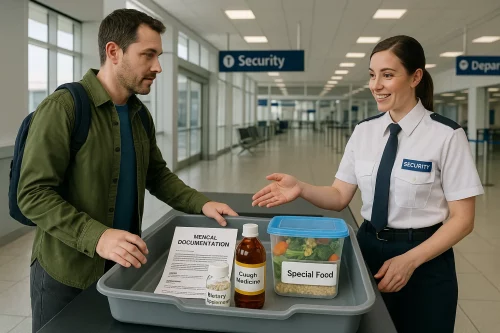
Passengers with medical conditions or specific dietary needs may carry food items and liquids that exceed standard liquid limits.
These exceptions are strictly regulated, and documentation may be required to verify necessity.
Examples of permitted items:
- Liquid medications over 100ml (such as insulin or nutritional drinks)
- Special dietary liquids or foodstuffs
- Medical equipment necessary for the journey, such as nebulisers or feeding pumps
- Cooling packs to maintain food or medication temperature
Security staff may ask for proof, such as a doctor’s letter or prescription, especially if the liquid exceeds the 100ml limit. Tablets, capsules, and other solid medications are generally not subject to these rules and can be carried without documentation.
Medical and Dietary Exemptions
| Item | Hand Luggage | Requires Documentation? |
| Tablets and capsules | Yes | No |
| Liquid medication over 100ml | Yes | Yes |
| Nutritional liquid supplements | Yes | Yes |
| Medical equipment (e.g. CPAP) | Yes | Sometimes |
| Cooling gel packs | Yes | If for medical use |
Pack these items separately and inform security officers at the checkpoint for smoother screening.
Can You Pack Frozen Food or Ice Packs in Your Hand Luggage?
Frozen food items, such as solid meals or frozen liquids, are generally not permitted in hand luggage. However, exceptions apply if the items are being carried for essential medical purposes or to preserve baby food or milk.
Ice packs and gel packs used to cool these items are allowed, provided they are:
- Frozen at the time of screening
- Declared during security checks
- Packed alongside the necessary food or medication
It’s advisable to contact the airport or airline in advance if you’re unsure about travelling with frozen items. Items like frozen soup, ice cream, or partially melted liquids are not typically allowed through security.
How Should You Pack Food to Pass Through Airport Security Smoothly?
Packing your food correctly can help you pass through security without unnecessary delays. Improper packing can result in extra screening, confiscation, or contamination of other items in your luggage.
Here are a few key tips:
- Use transparent containers for easier identification
- Avoid foil wrapping or metal containers that interfere with x-rays
- Group all food items together in one part of your bag
- Keep liquid and semi-liquid items in the required plastic bag
- Do not overpack your hand luggage, as cluttered bags are more likely to be flagged
Solid food items should be at the top of your bag or in an easily accessible pouch so they can be removed quickly if requested by security personnel.
What Foods Should You Avoid Bringing Through Security?
Even if certain food items are technically allowed, they may still pose a problem at security checkpoints due to their packaging, smell, or similarity to restricted substances. Foods to avoid include:
- Strong-smelling cheeses like blue cheese or camembert
- Food in tins or cans with liquid content
- Peanut butter or nut-based spreads over 100ml
- Unlabelled jars or containers
- Foods wrapped in foil or metal tins
- Sticky, runny, or oily items
Airport scanners can misread these items as suspicious, leading to manual bag searches. If a food item has the potential to leak, melt, or create a mess, it is best placed in checked luggage or left behind.
Can You Take Food Bought at the Airport or Duty-Free?
Any food items purchased after clearing security are allowed on the plane. These items have already passed through airport screening and are considered safe for travel.
However, if you are connecting through another airport or passing through additional security checks, rules may vary.
When buying liquid-based food products from duty-free shops, ensure:
- The item is sealed in a tamper-evident security bag
- The receipt is visible inside the sealed bag
- You do not open the bag until you reach your final destination
Failing to follow these rules could result in the item being confiscated during subsequent screenings at transfer airports.
What Happens If Security Deems Your Food Dangerous or Suspicious?
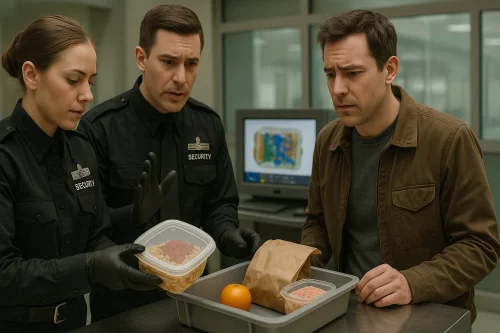
UK airport security staff have full discretion when it comes to confiscating items. Even if an item meets all guidelines, it may still be removed from your luggage if it:
- Obstructs the x-ray scanner
- Appears suspicious or unlabelled
- Is packed in an unusual container
- Leaks or is improperly sealed
To avoid issues, clearly label all food, use factory-sealed packaging where possible, and keep unfamiliar or unusual items in checked luggage rather than carry-on bags.
Conclusion
Bringing food through airport security in the UK is allowed, but only if it meets the regulations. Solid foods are typically fine, but liquid and semi-liquid foods are subject to the same rules as other liquids.
For baby food, dietary items, or medicine, special exemptions apply with documentation. Always check your airport’s specific guidelines and pack accordingly to ensure a hassle-free journey.
FAQs About Taking Food Through Airport Security
Can I take homemade sandwiches through airport security?
Yes, homemade sandwiches are allowed in hand luggage as they are solid and not classed as liquids.
Are sweets or chocolates allowed in hand luggage?
Yes, sweets, chocolates, and other solid treats are permitted, provided they are not liquid-filled or packed in restricted containers.
Is peanut butter considered a liquid by airport security?
Yes, peanut butter is classed as a liquid or gel and must be under 100ml if carried in hand luggage.
What happens if I pack restricted food in my carry-on?
If the food item exceeds the limit or is not compliant, it will be confiscated by airport security staff.
Can I bring food for someone else on an international flight?
You may bring food for others, but it must comply with UK and destination country rules, particularly regarding meat, dairy, and produce.
Are protein bars or supplements allowed through UK airport security?
Solid protein bars are allowed. Powdered supplements are also permitted, but may be subject to additional screening.
Do all UK airports follow the same hand luggage food rules?
While basic regulations are consistent, some UK airports have started trialling updated security systems. It’s always best to check with your departure airport before flying.
1. Can You Take Food Through Security at the Airport?
Prompt:
A realistic scene inside a UK airport security checkpoint showing a traveller placing a transparent bag with food containers and snacks onto a security conveyor belt for x-ray screening. Wide-angle view with uniformed security staff in the background and signage visible, natural lighting, modern airport environment.
2. What Are the General Rules for Taking Food Through Airport Security?
Prompt:
A realistic image of an airport security area with informational posters about food and liquid restrictions. A passenger is seen speaking with a security officer while holding a small bag with food items. Modern UK airport setting, wide composition, natural indoor lighting.
3. What Types of Food Are Considered Liquids or Semi-Liquids?
Prompt:
A close-up wide-angle image of various food items arranged on a tray, showing examples of liquids and semi-liquids: yoghurt, jam, soup, peanut butter, sauces. Clearly labelled with security-sized containers (100ml). Airport x-ray tray in background, realistic and educational style.
4. Are There Exceptions for Medical or Dietary Food Requirements?
Prompt:
A realistic airport scene showing a traveller at security with dietary supplements, liquid medicine, and special food items. Includes medical documentation and clear labelling. Security officer is assisting politely. Bright, clean, modern UK airport setting, wide frame.
5. What Happens If Security Deems Your Food Dangerous or Suspicious?
Prompt:
A realistic image of airport security staff inspecting a hand luggage tray with suspicious food items. One officer is explaining to a passenger while another opens a container. Expression of concern on the traveller’s face, official environment with x-ray monitor in the background. Wide aspect ratio, natural tones.