
























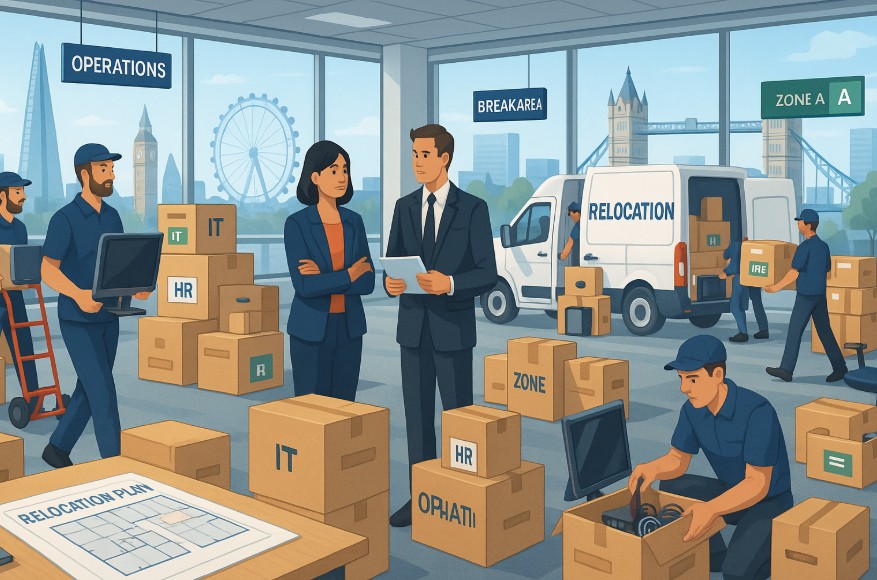
Are you planning to move your office to a new location in London? Do you feel overwhelmed thinking about logistics, downtime, or clearing out old equipment?
Office relocation is a major milestone for any company, but if it’s not planned correctly, it can lead to operational disruptions, productivity loss, and unnecessary costs.
Whether your business is expanding into a larger space or downsizing to reduce overheads, a smooth transition begins with effective planning, timely communication, and attention to practical details from IT coordination to furniture disposal.
This guide explores the essential steps every London business should follow when preparing for a relocation, along with a detailed action plan to help reduce stress and improve efficiency.
What Are the Step-by-Step Actions for a Smooth Office Move?
Successfully relocating an office involves breaking the process into clear, manageable stages. While every business is different, the following step-by-step approach covers the key actions needed for a smooth transition.
Step 1: Create a Detailed Relocation Plan
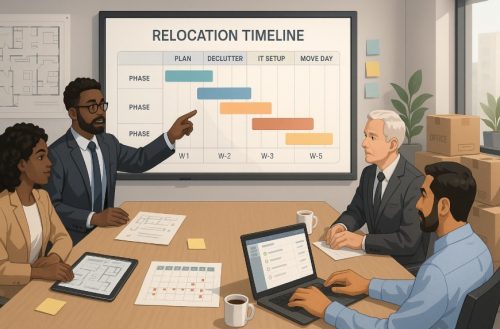 The very first step in preparing for an office move is establishing a robust relocation plan. Even a small office move can become chaotic without a clear timeline, defined milestones, and well-distributed roles.
Begin by confirming your new office location, lease terms, and move-in dates. Assign a relocation coordinator or a small team responsible for overseeing the move. This team should include individuals from key departments like IT, operations, HR, and facilities to represent different areas of the business.
Your relocation plan should outline:
- A realistic schedule from planning to execution
- An estimated budget for moving services, IT setup, and office setup
- A detailed floor plan of the new office to guide your packing strategy and assist in accurate equipment positioning.
- Key service providers you’ll need, including movers, cleaners, and clearance companies
Step 2: Audit, Declutter, and Dispose of Unnecessary Items
Once the plan is in place, the next phase involves auditing your current office. Walk through every department and make a list of what’s still usable, what’s outdated, and what’s broken or unnecessary.
Often, offices hold onto surplus items like unused monitors, extra chairs, and damaged desks, which take up space and are expensive to transport. Removing them before the move not only reduces costs but also makes the new space cleaner and more functional.
Encourage each team to assess their space. Items no longer required can be recycled, donated, sold, or removed with the help of commercial clearance services. For businesses in London needing professional help with waste and bulky item removal, www.londonrubbishremoval.co.uk offers tailored solutions, ideal for office clear-outs ahead of relocation.
Step 3: Coordinate With IT and Telecom Teams
 Your IT infrastructure is likely the most sensitive part of the move. If systems aren’t properly disconnected, transported, and reinstalled, it can lead to serious business interruptions. Begin by working with your internal IT team or managed service provider to create a technical moving plan.
Tasks should include:
- Backing up data securely in case of hardware damage during the move
- Labelling all devices, cables, and components for reassembly
- Identifying new network layouts at the new location
- Scheduling internet and phone line installation
- Testing systems before employees arrive
This step must begin well in advance of moving day to avoid unexpected downtime.
Step 4: Notify All Stakeholders and Update Business Information
Moving your office means more than just informing employees. You’ll need to notify all external stakeholders like clients, suppliers, couriers, insurers, service providers, and regulatory bodies. Draft a formal notice stating your new business address along with the effective date of the relocation.
Additionally, update your address across all digital touchpoints:
- Company website
- Email signatures
- Social media profiles
- Google Business Profile
- Invoicing and payment platforms
Neglecting to update these can result in missed communications, service interruptions, or lost business.
Step 5: Organise and Label Items for the Moving Day
 Organisation is the key to efficiency on moving day. Every box, piece of furniture, or IT device should be labelled according to its new location. Use a consistent format that includes the department name, item type, and the intended room or zone in the new office.
Design a floor plan of the new office and share it with the moving team so they know exactly where each item should go. This avoids confusion and speeds up the work setup process post-move.
Step 6: Plan for a Clean Exit From Your Current Office
Before handing the keys back to your landlord, it’s important to ensure the old office is completely cleared, cleaned, and restored to its original condition. This may include removing furniture, signage, cable installations, and doing a deep clean.
Many commercial landlords conduct an inspection to check for compliance with the lease exit terms. Failing to meet them could mean forfeiting part of your deposit or incurring additional fees. Pre-book clearance and cleaning services to handle the heavy lifting.
Step 7: Help Your Employees Settle into the New Workspace
 After the move, it’s vital to support your employees through the transition. Ensure that IT systems are functioning, desks are labelled, and departments are positioned according to plan. Provide orientation sessions to introduce staff to the new layout, common areas, emergency exits, and building facilities.
You may also want to schedule informal feedback sessions in the first week to gather input and address any issues. A welcome message or casual team gathering on the first day can ease the adjustment and help build a sense of community.
Quick Reference: Office Relocation Action Table
| Step | Key Task | Responsible Party | Ideal Timeline |
| Plan the Move | Set dates, assign roles, allocate budget | Management/Team Leads | 8–12 weeks before move |
| Declutter & Dispose | Audit inventory, remove unwanted items | Facilities/Admin + Removals | 6–8 weeks before move |
| Coordinate with IT | Backup data, schedule hardware migration | IT Department/IT Provider | 4–6 weeks before move |
| Notify Stakeholders | Inform clients, vendors, utilities | Communications/Operations | 3–4 weeks before move |
| Label & Organise | Pack and tag all boxes and equipment | All Departments + Movers | 1–2 weeks before move |
| Final Clean & Clearance | Remove signage, dispose of waste, deep clean | Facilities/Clearance Vendor | Final week before handover |
| Staff Transition | Provide orientation, settle in workstations | HR/Office Manager | Day of move and following week |
How Can Decluttering Improve the Relocation Process?
Clutter creates confusion both during and after a move. By decluttering in advance, businesses reduce moving costs, increase efficiency, and prevent unnecessary delays at both ends. Starting fresh in a clean, well-organised space allows staff to focus on their work rather than being distracted by piles of unused items or misplaced tools.
In addition, a clutter-free office projects a more professional image to visitors, clients, and new hires. It shows that the business is organised, forward-thinking, and intentional about its working environment.
When Should You Involve Your IT and Communications Teams?
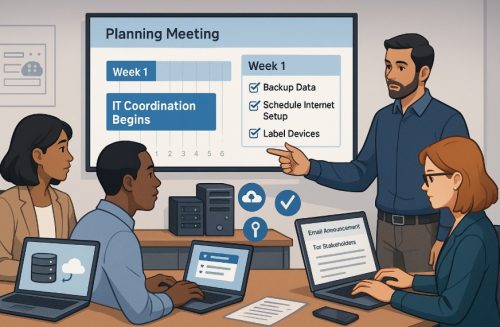 The answer is: as early as possible. IT and communication systems form the backbone of most modern businesses. Any delay or error during the transition can impact service delivery, internal communication, and security.
Engaging your IT teams from the very beginning ensures proper timelines for backup, dismantling, transportation, and reinstallation. It also allows for hardware upgrades or reconfiguration that might be long overdue, which can align with the fresh start at a new location.
Who Needs to Be Notified About the Office Move?
Every individual or organisation that interacts with your company should be notified. This includes customers, suppliers, freelancers, couriers, landlords, financial service providers, and utility companies.
It’s important to send written confirmation of your move, along with the updated business address and phone numbers if applicable. If your business is regulated, you may also need to inform industry bodies or associations of your change in address for compliance purposes.
How Can You Keep the Move Organised on the Day?
The actual move requires coordination between moving teams, office managers, and IT technicians. Start early in the day and ensure you have enough staff available to answer questions, provide guidance, and deal with any hiccups that arise.
Using professional office movers who understand the specific requirements of commercial relocations is often worth the investment. It reduces risk and ensures that your assets, especially expensive equipment, are handled with care.
Why Is a Clean Handover Important After Vacating the Old Office?
 Landlords typically inspect the premises after a tenant moves out to ensure it’s clean, clear, and damage-free. Any issues may lead to repair charges or deductions from your deposit. Cleaning the space thoroughly and removing everything left behind reflects well on your business and can help with future leasing references.
In many cases, businesses are also required to remove custom fittings or signage installed during the tenancy. Planning this in advance helps avoid last-minute problems and keeps the moving schedule on track.
How Can You Help Employees Settle into the New Workspace?
A move can be unsettling. Employees may feel disoriented, tired, or distracted in the first few days. By supporting them during this period, you reinforce a positive workplace culture. Offer resources, check in frequently, and create an open-door environment to address any concerns that come up.
Small gestures like welcome packs, organised desk setups, or simple signage can make a big difference in helping staff feel at home in the new office.
Conclusion
Relocating your office is a significant business decision that requires careful preparation, strong coordination, and a clear understanding of your operational needs.
By planning ahead, involving the right teams early, and streamlining everything from decluttering to IT migration, you can avoid common pitfalls and ensure a smooth transition.
A well-executed office move not only minimises disruption but can also enhance productivity, boost employee morale, and support the long-term growth of your business. With the right structure in place, your new workspace can offer a fresh start and new opportunities for your team.
FAQ
When should a business start planning an office move?
Ideally, planning should begin 8 to 12 weeks in advance to ensure proper coordination, especially for IT setup, clearance, and stakeholder communication.
What should be done with old office furniture during a move?
Old or unwanted furniture should be audited and removed before the move to reduce transport costs and avoid cluttering the new space.
How can a business minimise downtime during relocation?
Engage IT teams early, schedule systems setup ahead of reopening, and move in phases if possible to avoid operational delays.
Who needs to be notified when a business changes location?
Clients, suppliers, service providers, utility companies, and all digital platforms should be informed to ensure continuity and avoid missed communications.
What is the most common mistake businesses make during a move?
Underestimating the time needed for decluttering, IT coordination, and clearance leading to delays and increased costs.