
























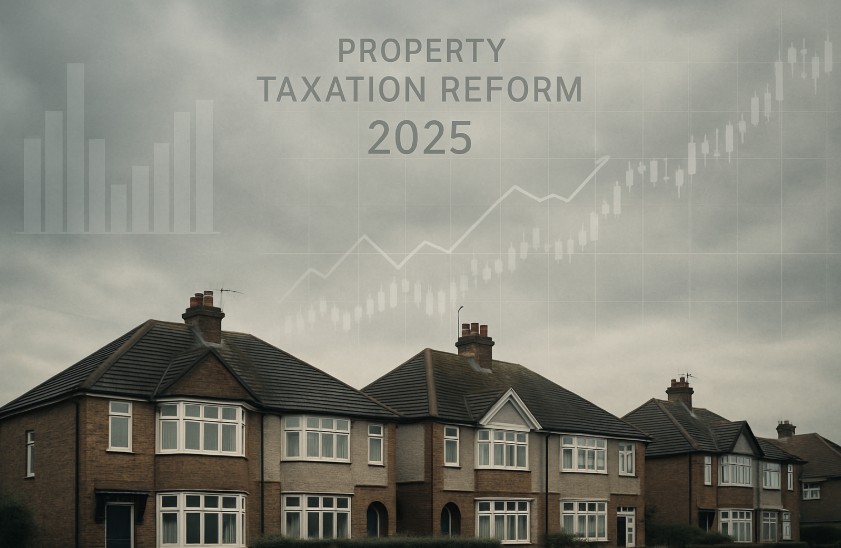
The UK property market is facing one of its most significant potential reforms in decades. As Labour positions itself for government, one of its boldest taxation proposals has emerged: replacing Council Tax and Stamp Duty with a House Value Tax (HVT).
The plan is positioned as a fairer, modernised approach but for property owners, particularly investors and landlords, it raises serious questions.
What Is Labour’s Proposed House Value Tax?
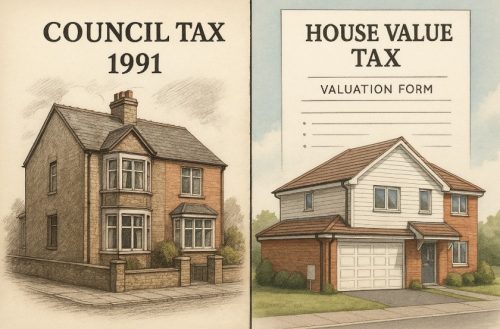
The Labour Party is evaluating a significant change in how property is taxed across the UK. The current system involves Council Tax, which is calculated based on outdated 1991 property values, and Stamp Duty Land Tax, a one-off payment made when a property is purchased.
Labour’s proposal is to replace both taxes with a House Value Tax (HVT), charged annually based on each property’s current market value.
This means property tax would no longer be fixed to historical bandings or depend on the timing of a property purchase.
The Institute for Fiscal Studies has consistently argued that a modern, value-based property tax system would be fairer and more efficient.
Labour seems to be aligning with this vision as part of its broader strategy to update tax policy and increase public revenue without raising income, corporate, or national insurance taxes.
Under this system, the annual tax would reflect real-time market fluctuations, potentially recalculated periodically through valuations or estimated using national property databases such as those from HM Land Registry.
How Will the Property Value Tax Be Calculated in 2025?
The calculation would involve applying a fixed tax rate to a property’s current market value. The valuation could be determined using automated systems backed by government data, third-party providers, or digital modelling tools.
This model would introduce a scalable system, ensuring high-value properties contribute more. For example, a home worth £800,000 would attract a higher tax charge than one valued at £200,000, regardless of location.
Labour has not yet proposed an exact rate, but economic think tanks have suggested a range of 0.5% to 1% annually.
This could result in significantly different tax burdens across the UK depending on property values.
Comparison of Tax Under Existing and Proposed System
| Property Value | Estimated HVT (0.8%) | Average Council Tax | Stamp Duty (One-Time) |
| £200,000 | £1,600 | £1,700 | £1,500 |
| £400,000 | £3,200 | £1,900 | £10,000 |
| £800,000 | £6,400 | £2,200 | £27,500 |
This transition would eliminate Stamp Duty as a purchase barrier, but introduce a continuous annual liability, which could impact long-term affordability and ownership decisions.
Why Is Labour Proposing This Tax Reform Now?

A Political Commitment to Avoid Income and Business Tax Rises
Labour has publicly committed to not increasing the rates of Income Tax, National Insurance, or Corporation Tax.
This leaves fewer options for raising substantial public revenue. In the current economic climate, the party is under pressure to fund critical services such as the NHS, housing, and education without burdening individuals’ earned income.
By shifting focus to property particularly property wealth Labour taps into a tax base that has expanded rapidly over the past few decades.
With UK house prices having more than doubled in some areas since the early 2000s, property is increasingly seen as an under-taxed form of wealth.
The Case for Modernising Council Tax
Council Tax is based on property valuations from 1991, a time when the UK housing market looked vastly different.
This outdated system means that two properties of equal current value may fall into very different Council Tax bands simply due to historical anomalies. Labour sees this as an unjust and regressive system that fails to reflect real household wealth.
By introducing a House Value Tax based on up-to-date market values, the party argues it can introduce a fairer, more progressive form of taxation.
This reform would ensure that those living in high-value homes contribute proportionately more, aligning tax liabilities with actual asset values.
Increasing Public Revenue Without Widespread Cuts
With growing demands on public infrastructure, healthcare, and housing, Labour is seeking revenue streams that do not require broad cuts or unpopular tax increases on wages.
Property offers a relatively untapped source of revenue, particularly from wealthier homeowners and large-scale landlords.
Economists supporting the proposal argue that taxing unearned wealth in the form of housing is more economically efficient than taxing income.
The House Value Tax is thus being promoted as a progressive and sustainable option that aligns with long-term fiscal goals.
Who Will Be Most Affected by the House Value Tax?
Property Owners in High-Value Areas
Homeowners in regions like London, Surrey, Oxford, and parts of the South East are likely to see the sharpest increase in their annual property tax bills.
Under the current system, these households may pay the same or only slightly more than those in far cheaper locations, due to the outdated Council Tax bands.
With the introduction of HVT, tax liability would be directly linked to current market value. This could result in thousands of pounds in additional annual taxes for owners of high-value properties.
Buy-to-Let Landlords and Portfolio Investors
Landlords who own multiple properties would be particularly exposed under HVT. Where Stamp Duty was a one-time cost, the new system would introduce a recurring annual liability on every unit they own.
This significantly increases the cost of holding property and could erode profit margins, especially for landlords with leveraged portfolios.
This may lead to widespread restructuring of portfolios, selective sales, or even a mass exodus of small landlords from the market.
The ripple effects could reduce rental stock, increase rents, or redirect investment towards other asset classes.
Homeowners on Fixed Incomes
Another group that could be adversely impacted is homeowners who are “asset rich but cash poor” especially retirees living in high-value homes with limited monthly income.
These individuals could face high annual tax bills without the cash flow to pay them easily.
Without specific protections such as deferrals or discounts, this group may be forced to downsize or release equity to cover new tax obligations.
This raises the issue of fairness and may prompt Labour to consider transitional relief mechanisms if the policy advances.
First-Time Buyers and Renters
Conversely, first-time buyers stand to benefit from the removal of Stamp Duty. Eliminating upfront tax costs could make it easier for them to get onto the property ladder, especially in lower-value regions.
Renters may also see indirect benefits if landlords in low-tax regions can pass on savings or are incentivised to improve housing supply.
However, in high-tax areas, the risk remains that landlords may offset higher liabilities by increasing rents.
What Are the Reactions from Property Owners and Investors?

Property owners and landlords have expressed concern over the potential for long-term financial burden.
The switch from one-off transaction taxes to an ongoing liability alters the economic model of property investment.
The cost of holding property will rise under HVT, particularly for those with portfolios acquired in high-value areas.
While Stamp Duty is currently paid once, HVT would be a recurring cost with no end date. Investors could see lower returns and face decisions about selling underperforming assets.
Some investors have already begun taking precautionary steps. Portfolio restructuring, moving assets into limited companies, or consolidating holdings are becoming more common as property professionals anticipate changes.
Could the New Tax Replace the Existing Council Tax?
The House Value Tax is intended to fully replace Council Tax, but this would involve significant changes to how local governments are funded.
Council Tax currently forms a substantial part of local authority revenue and any replacement system would need to ensure consistent cash flow for public services.
Key issues that need to be addressed include:
- How to fairly redistribute revenue among councils with vastly different property markets
- The administrative framework for regular property valuations
- Potential transitional relief schemes for households facing sharp tax increases
There is also the challenge of managing public perception and political opposition. Any system that increases liabilities for a large segment of the population risks backlash, especially from pensioners and homeowners in historically expensive areas.
How Will This Affect the UK Housing Market in 2025 and Beyond?
A significant tax overhaul could influence buyer behaviour, regional investment patterns, and overall market dynamics.
If implemented, HVT may cause a shift in demand toward more affordable regions, where annual liabilities are lower.
This could put downward pressure on prices in high-value areas while increasing interest in properties with lower taxation profiles.
Investors looking for better yield-to-tax ratios might redirect their purchasing power to areas like the North West or Yorkshire.
Regional Outlook Based on HVT Impact
| Region | Avg. Property Price | Potential HVT (0.8%) | Council Tax (Avg) | Forecasted Buyer Shift |
| London | £600,000 | £4,800 | £1,700 | Decrease |
| Birmingham | £250,000 | £2,000 | £1,600 | Stable or Increase |
| Leeds | £280,000 | £2,240 | £1,700 | Increase |
| Newcastle | £180,000 | £1,440 | £1,600 | Increase |
The overall effect may be a more balanced property market across regions, but also a period of volatility during transition.
Investors with larger portfolios may choose to exit the market or offload properties in high-tax locations.
What Can Property Owners Do to Prepare for the Tax Changes?

As the political debate continues and implementation details remain pending, property owners should take proactive steps to assess their exposure.
Recommended actions include:
- Conducting a portfolio stress test to model the annual cost of HVT on each property
- Avoiding knee-jerk reactions like mass sell-offs that could lead to losses or long-term regret
- Engaging with property tax advisors to explore structural changes that could improve efficiency or reduce tax liability
- Staying updated with announcements from Labour’s housing and finance teams to react quickly as details emerge
Advisors in the property sector suggest treating the proposal seriously but strategically. Historically, policy shifts create opportunities for those who prepare early while others are caught off guard.
Conclusion
The House Value Tax represents a potentially seismic change in UK property policy. For some, it offers hope of a fairer, more modern taxation system. For others, it raises the spectre of increased liabilities and market uncertainty.
One thing is clear: property owners, investors, and advisors need to stay alert, informed, and ready to adapt.
FAQs About Labour’s House Value Tax Proposal
Will tenants be affected by the House Value Tax?
While the tax targets property owners, many landlords may pass on increased costs to tenants in the form of higher rents, particularly in competitive rental markets.
Is this the same as a Land Value Tax?
No. A Land Value Tax is levied solely on land, whereas the House Value Tax would apply to the entire property’s current market value, including the building.
Can landlords reduce their exposure to the tax?
Landlords may consider restructuring ownership, selling underperforming assets, or moving into limited company structures. Professional tax advice is strongly recommended.
Will there be any exemptions or reliefs for pensioners or low-income homeowners?
This remains unclear. However, any fair implementation may require safeguards for fixed-income individuals or those with limited cash flow but high-value assets.
When will Labour announce the final details of the tax?
If Labour wins the next general election, details may be included in the first budget or fiscal event post-election. Watch the Labour Party Conference and official publications for updates.
How will properties be valued under the new system?
Valuation could be based on recent sales data, government algorithms, or third-party platforms like Land Registry or Zoopla. Formal guidance will be issued with the legislation.
Is the House Value Tax common in other countries?
Yes. Several OECD nations use annual property value taxes, including the USA, Canada, and parts of Europe. The UK’s current system is considered outdated in comparison.