























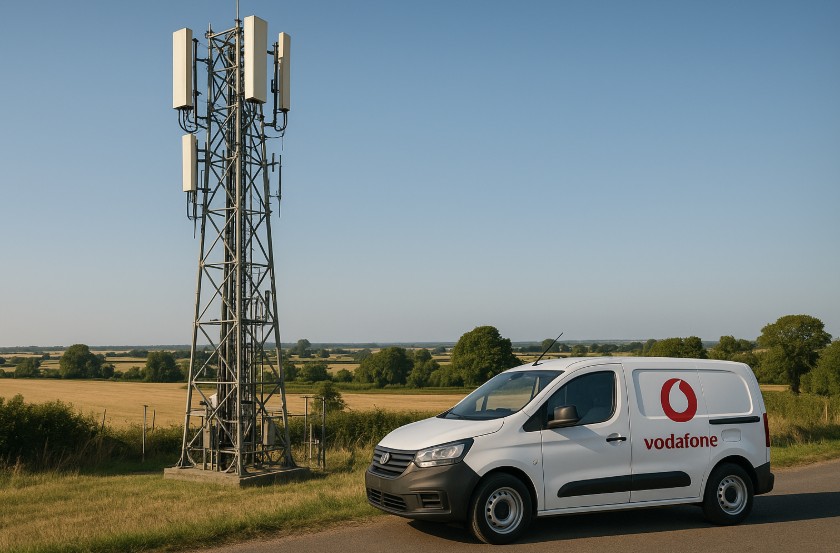
Vodafone UK has announced its plan to shut down its legacy 2G network by 2030, marking a pivotal move in the evolution of mobile connectivity.
This strategic decision supports the growing demand for faster, more reliable services by reallocating spectrum to enhance 4G and 5G performance.
As digital infrastructure continues to evolve, Vodafone aims to optimise its network capacity, reduce energy consumption, and prepare for future technologies while ensuring minimal disruption for customers and businesses across the UK.
Why Is Vodafone Shutting Down Its 2G Network in the UK by 2030?
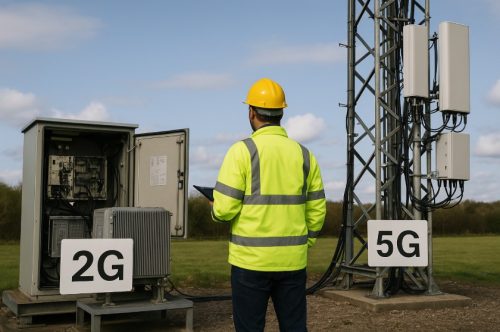
Vodafone’s decision to shut down its 2G network in the UK by 2030 reflects the ongoing evolution in mobile communications.
When 2G launched in 1991, it provided a major breakthrough by digitising voice calls and introducing SMS. However, its technological limitations make it unsuitable for the data-heavy services that users rely on today.
The demand for high-speed internet, mobile streaming, smart devices and connected applications has grown significantly.
Vodafone, like many other network providers, recognises that modern mobile usage patterns require much faster, more efficient, and scalable infrastructure.
2G’s data speed is significantly lower than more recent technologies. It transfers only 0.1 bits per second per hertz of spectrum, which is insufficient for modern-day apps and services that require robust connectivity.
By shutting down 2G, Vodafone aligns with industry-wide trends and global technological progress. According to the GSMA, 131 mobile networks are scheduled to shut down globally by 2030, with approximately half being 2G networks.
How Will Retiring 2G Improve Vodafone’s Network Performance?
Reallocating Spectrum for Higher-Speed Technologies
The most immediate benefit of retiring 2G is the ability to reallocate radio spectrum to faster technologies like 4G and 5G.
Mobile networks operate on specific frequency bands, and 2G occupies a portion of this limited spectrum.
By freeing up these frequencies, Vodafone can boost the performance of its existing 4G infrastructure and pave the way for a stronger, more reliable 5G rollout.
Modern applications such as video streaming, video conferencing, cloud-based software, and online gaming require higher bandwidth and speed than 2G can provide.
Allocating this bandwidth to 4G and 5G allows Vodafone to support these modern user needs more effectively.
Managing Increasing Mobile Data Traffic
Mobile data traffic in the UK is growing rapidly. Consumers are using more data than ever before across various applications, and this demand is expected to continue rising. Retiring 2G will help Vodafone increase the total network capacity by:
- Enhancing spectrum efficiency
- Supporting more simultaneous connections
- Reducing network congestion during peak hours
This upgrade means customers will experience better speeds, fewer dropped calls, and improved app performance — even in densely populated areas.
Reducing Infrastructure Complexity
Supporting multiple generations of mobile technology increases operational complexity. Each generation requires separate maintenance, hardware, software updates, and support teams. By decommissioning 2G, Vodafone can simplify its network architecture, which in turn:
- Reduces the number of legacy systems in operation
- Lowers maintenance and operational costs
- Improves uptime and performance consistency for users
With a streamlined network, Vodafone can focus its engineering and development efforts on expanding and enhancing 4G and 5G capabilities, which are more scalable and efficient.
Supporting the Transition to 5G-Enabled Use Cases
As Vodafone phases out 2G, it unlocks greater capacity to support emerging technologies that rely heavily on low-latency, high-speed connections. These include:
- Internet of Things (IoT) applications
- Smart city infrastructure
- AI-powered mobile apps
- Edge computing and cloud gaming
This modernisation is essential for Vodafone to stay competitive and meet future demands across consumer, enterprise, and public sector applications.
Here’s a comparative table to show how different mobile network generations utilise spectrum more efficiently:
| Technology | Spectrum Efficiency (bits/s/Hz) | Suitable For |
| 2G | 0.1 | Voice calls, SMS |
| 3G | 0.5 – 1.5 | Basic internet browsing |
| 4G | 2.4 | Streaming, online gaming |
| 5G | 5.0 – 10+ | Ultra-HD video, smart cities, IoT |
What Are the Environmental Benefits of Ending 2G Services?
Lower Energy Consumption with Modern Networks
One of the most significant environmental benefits of retiring 2G is the dramatic reduction in energy usage.
Older network technologies consume more electricity to transmit the same amount of data compared to newer systems. According to industry benchmarks:
- 2G consumes significantly more power per gigabyte than 4G or 5G
- 5G can be up to 100 times more energy-efficient than 2G in data transmission
This improvement supports Vodafone’s broader environmental strategy, helping reduce operational carbon emissions while still meeting increasing connectivity demands.
Reducing the Carbon Footprint of Mobile Operations
Telecommunications companies are under increasing pressure to reduce their environmental impact.
Vodafone is committed to achieving net-zero emissions across its operations, and decommissioning energy-hungry networks like 2G is a critical step.
By ending 2G services, Vodafone can:
- Retire outdated, power-intensive equipment
- Reduce reliance on diesel backup generators in rural locations
- Lower the overall carbon emissions associated with its network operations
This aligns with the GSMA’s industry-wide target of reducing mobile network energy usage by 90% per unit of data traffic.
Recycling and Repurposing Network Equipment
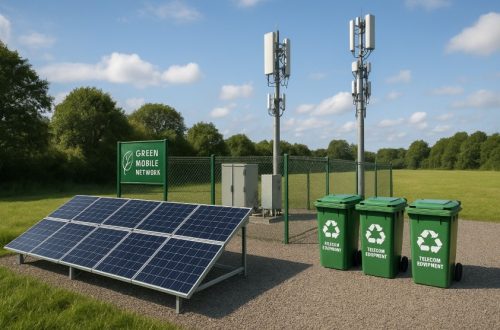
Once 2G infrastructure is shut down, Vodafone plans to dismantle and recycle the equipment in accordance with environmental and safety regulations.
Much of the older hardware, such as antennas, base stations, and circuit boards, can be reused or responsibly recycled.
This process contributes to:
- Waste reduction across Vodafone’s supply chain
- Improved sustainability in hardware procurement and deployment
- Creating physical space on towers and rooftops for new, energy-efficient 5G equipment
Enhancing Site Efficiency and Footprint Management
Decommissioning 2G infrastructure doesn’t just lower energy bills — it also improves the physical efficiency of mobile sites. Older equipment often takes up more space, requires additional cooling, and limits how many modern systems can be installed.
Once 2G equipment is removed, Vodafone can:
- Optimise cooling systems for reduced energy use
- Install compact, multi-band antennas for 4G and 5G
- Reduce the number of overall active components on-site
By focusing on streamlined site design, Vodafone is also reducing the long-term environmental impact of its physical infrastructure footprint across the UK.
The table below outlines the energy comparison between 2G and more modern networks:
| Network Type | Estimated Energy Usage per GB | Relative Energy Efficiency |
| 2G | High | Low |
| 4G | Medium | Medium |
| 5G | Very Low | High |
How Will This Transition Affect Vodafone Customers in the UK?
Vodafone’s approach to the 2G shutdown is carefully designed to avoid disrupting services for UK customers. The phase-out will be gradual, with ample time for users to migrate to compatible devices and services.
The company will provide clear guidance and support throughout the process. This includes:
- Notifying customers well in advance
- Offering device upgrade options
- Providing support for businesses with 2G-reliant operations
Vodafone is also investing in the expansion of its 4G and 5G networks, particularly in rural and underserved areas. This ensures that customers continue to have reliable access to mobile services even in locations where 2G was once the only available option.
The transition supports a broader goal of improving nationwide digital inclusion and accessibility.
What Will Happen to 2G IoT Devices and Legacy Systems?
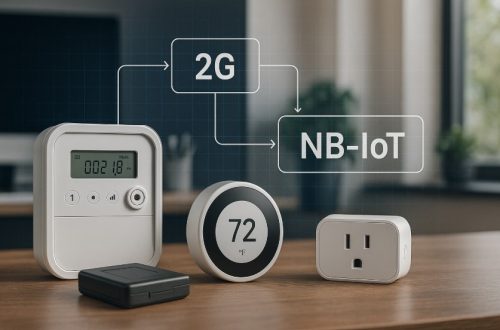
A significant number of IoT (Internet of Things) devices still operate on 2G networks due to their low data needs and long battery life. These include systems like:
- Smart utility meters
- Vehicle tracking devices
- Security and alarm systems
- Industrial monitoring equipment
To support the migration from 2G, Vodafone is deploying alternative connectivity technologies designed for IoT, such as CAT-M (Category M1) and NB-IoT (Narrowband IoT). These options retain the benefits of low power and wide-area coverage but operate on modern, efficient infrastructure.
Businesses that depend on legacy systems will need to assess their device fleets and develop migration strategies. Vodafone is already engaging with enterprise clients to plan this shift and avoid service disruption.
The availability of modern IoT standards ensures that functionality is preserved even as older networks are phased out.
Which Countries Are Leading the 2G Phase-Out Strategy?
Vodafone’s shutdown of its 2G services in the UK is part of a broader European and global trend. Other markets within Vodafone’s operational footprint are also transitioning away from 2G, but timelines differ.
In Germany, Vodafone has committed to completing the transition by 2028. The UK will follow in 2030, aligning with the company’s strategic roadmap and allowing time for businesses and consumers to adapt.
Globally, several countries have already completed or are nearing the end of their 2G shutdowns. Examples include:
- Australia: National 2G services shut down as early as 2018
- Singapore: Discontinued 2G in 2017
- Switzerland: 2G phased out to focus on 4G and 5G
The UK’s transition allows Vodafone to apply lessons learned from these markets while ensuring a smooth and customer-focused process.
What Challenges Might Arise During the Vodafone 2G Shutdown?
Despite its strategic benefits, the 2G phase-out poses several challenges. Customers who still use older handsets or devices that only support 2G will be most affected. These may include:
- Elderly individuals with basic feature phones
- Remote users relying on 2G as a fallback
- Businesses using legacy M2M (machine-to-machine) devices
Vodafone must manage communication effectively and provide suitable upgrade paths. This includes trade-in programmes and technical support for users and businesses.
Another concern is ensuring that emergency services and rural connectivity remain reliable as 2G coverage is reduced.
Some additional potential hurdles include:
- Supply chain issues in sourcing replacement devices
- Compatibility problems with IoT platforms
- Regulatory requirements for continuity of service
By proactively addressing these concerns, Vodafone can help ensure the success of the network upgrade while minimising inconvenience to end users.
What Does the Future of Vodafone’s Network Look Like Post-2030?
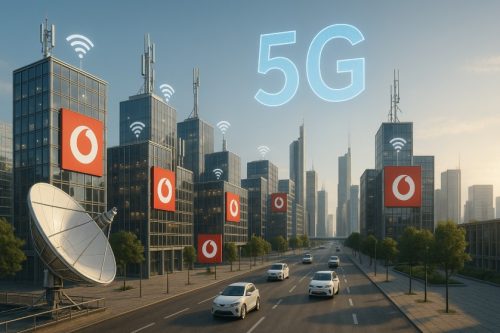
After the 2G network is completely phased out, Vodafone’s infrastructure will be focused entirely on advanced mobile and digital technologies.
The company’s investment strategy is aligned with improving 4G and 5G while preparing for 6G developments in the coming years.
Key priorities for Vodafone’s post-2030 network include:
- Expanding coverage for both 4G and 5G across urban and rural locations
- Introducing direct-to-device satellite broadband to eliminate coverage blackspots
- Supporting emerging technologies like edge computing, AI integration, and real-time analytics
The future network will support new digital applications, including:
- Connected vehicles and autonomous transport
- Smart cities and infrastructure management
- Enhanced public safety systems
- Seamless virtual and augmented reality experiences
Vodafone’s phased retirement of legacy systems is a foundational step in achieving these ambitious goals. The shift paves the way for a more connected, energy-efficient, and digitally inclusive future for the UK.
Conclusion
Absolutely. Vodafone’s decision to shut down its 2G network by 2030 is more than just a technological update it’s a move towards a more efficient, sustainable, and future-ready communication infrastructure.
By reallocating spectrum, investing in modern networks, and adopting a phased transition plan, Vodafone is ensuring customers and businesses are well-equipped to thrive in a rapidly evolving digital landscape.
It also marks a significant step towards meeting environmental targets and aligning with global industry standards.
As mobile usage continues to grow and evolve, removing outdated technology is necessary to make room for progress.
The 2G shutdown may mark the end of an era, but it’s also the beginning of a smarter, faster, and more connected future for Vodafone UK.
FAQs About Vodafone UK’s 2G Shutdown in 2030
What devices will stop working after Vodafone shuts down 2G?
Devices that rely solely on 2G connectivity, such as older mobile phones, alarm systems, and some IoT devices, will no longer function unless upgraded to support 3G, 4G, or 5G technologies.
Will Vodafone offer any support for customers affected by the shutdown?
Yes, Vodafone plans to provide guidance, device upgrade options, and assistance to both individual users and businesses during the transition from 2G to newer technologies.
What are CAT-M and NB-IoT, and how do they replace 2G?
CAT-M and NB-IoT are low-power, wide-area technologies designed for IoT use cases. They offer similar benefits to 2G but operate on modern 4G and 5G networks, making them ideal replacements.
Is the Vodafone 2G shutdown limited to the UK?
No, Vodafone is shutting down 2G networks across Europe. However, the timeline varies by country, with Germany targeting 2028 and the UK aiming for 2030.
How will this impact businesses using 2G-connected devices?
Businesses will need to upgrade or replace devices that rely on 2G. Vodafone is working closely with enterprise customers to ensure a smooth migration to modern connectivity solutions.
Can customers still make calls and send texts without 2G?
Yes. Voice and text services are fully supported over 3G, 4G (VoLTE), and 5G. Users with compatible devices should experience no disruption once 2G is decommissioned.
What happens if a region has no 4G or 5G coverage when 2G ends?
Vodafone is expanding its 4G and 5G networks and introducing satellite connectivity to reach underserved areas. The goal is to ensure universal coverage before the 2G shutdown is complete.