























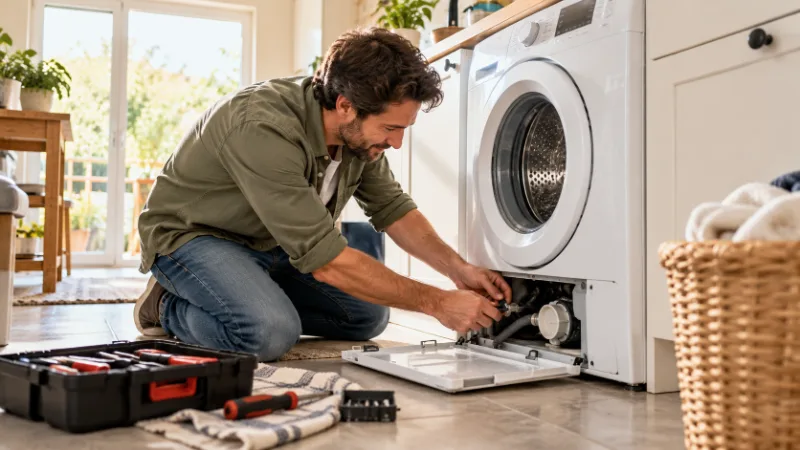
When a washing machine stops draining or a vacuum cleaner loses suction, replacing the appliance can be tempting. Often, the fault is a single worn component. Swapping that part can be quicker, cheaper, and far less wasteful than buying new.
Why Repairing Beats Replacing?
Buying a new appliance can cost hundreds of pounds, not including delivery and installation fees. A repair often costs a fraction of that, especially when the rest of the machine is still sound.
Repairing also supports sustainability. Extending the lifespan of household appliances helps cut down on electrical waste and reduces the need to manufacture new products.
Common fixes that are often just a part replacement include:
- Washing machine door seals that leak
- Tumble dryer belts that snap
- Dishwasher filters or spray arms that wear out
- Fridge drawers, shelves, and door bins that crack
How to Make Sure You Order the Right Part?
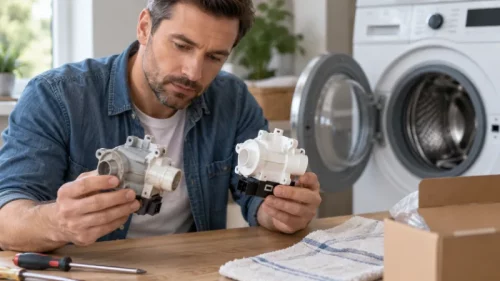 Compatibility depends mainly on the model number, which may also be referred to as the type number. It is different from the appliance’s serial number.
- The model number identifies the appliance version and helps you find compatible spare parts
- The serial number identifies your specific appliance and is seldom needed when finding replacement parts.
Where to look for the model number label:
- Inside the door frame of washing machines and dishwashers.
- Around the door opening or on the back of the door in tumble dryers
- Inside the fridge compartment, often behind a drawer
- On the back or underside of smaller appliances like vacuum cleaners
Copy it exactly, including letters, numbers, and symbols.
Finding Parts and Support in One Place
Once you have the model number, you can search by appliance type, brand, and model to narrow down the correct options. A specialist supplier like Fixpart is built for this, with a large catalogue of spare parts and accessories for household appliances.
When deciding where to purchase, check for benefits such as quick delivery, detailed product information, and a fit guarantee or money-back policy in case the part is unsuitable.
A Safe DIY Repair Checklist
Before getting started, take a few moments to minimise risks and prevent potential errors.
- Unplug the appliance or switch it off at the mains.
- Shut off the water supply before working on washing machines or dishwashers.
- Take photos of the wires, hoses, and panels before you begin disassembling the appliance.
- Gather tools first, such as screwdrivers, pliers, and Torx bits.
- Replace like for like and test carefully.
If a repair involves gas, major electrical work, or you feel uncertain, use a qualified professional.