

























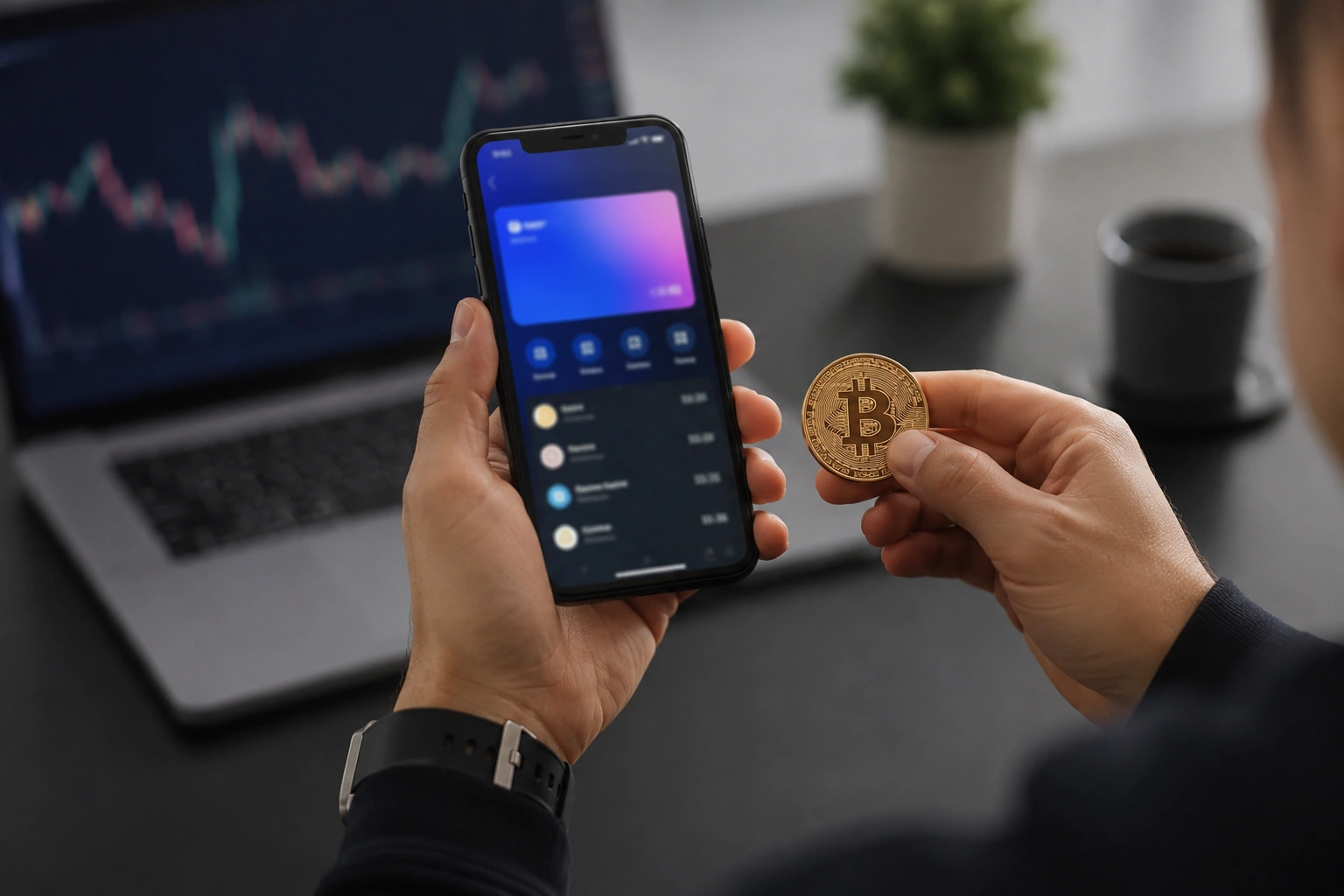
Tap to pay has become second nature for most people in the UK. The wallet stays in the pocket, the card barely comes out, and a quick thumbprint or face scan settles the bill. That same instinct for friction-free spending has spilled into online leisure, where a growing number of UK players now favour digital money over the old card-and-bank routine.
It is one reason a casino not on gamstop has drawn so much attention: these new sites, often licensed in Malta, Curaçao or Gibraltar, build their entire appeal around modern funding methods like Revolut and cryptocurrency, alongside fuller game libraries and bigger sign-up bonuses.
For UK players who want options outside the domestic system, including those under a Gamstop ban, the combination of offshore access and contemporary payment habits has proven a powerful draw.
A Habit That Started With the Morning Coffee
 The shift did not begin at the gaming table. It began with everyday spending. Splitting a restaurant bill through an app, sending a fiver to a friend before the night is out, topping up a holiday card in three taps, these small routines reshaped expectations about how money should move.
Revolut sits at the centre of that change for millions of British users. What started as a travel card has grown into a full money app, complete with budgeting tools, instant transfers and built-in crypto buying.
So when someone already manages their week through that app, using the same balance for an evening of entertainment feels like a natural extension rather than a leap. The behaviour was learned long before, ordering a flat white or paying for parking. Online leisure simply inherited it.
It also helps that the underlying idea is no longer a mystery to most. The Bank of England’s own explainer on cryptoassets lays out how these tokens work as a digital form of value that exists outside traditional banking rails. For people who already grasp that idea, spending a fraction of a holding online is less of a puzzle and more of a practical use case.
From Trading Apps to Spending Tokens
For a slice of the audience, the comfort runs even deeper. UK readers who follow forex, multi-asset trading and crypto exchanges have spent years watching Bitcoin and Ethereum move through their screens. Holding a small balance in a wallet is no longer exotic; it is part of a broader portfolio.
It also helps that the technology has matured. Faster networks and stablecoins pegged to the pound or dollar have stripped away a lot of the old volatility worries that once made crypto spending feel risky.
The appeal is not limited to die-hard enthusiasts, either. Recent figures from Pew Research show that around one in five adults have used cryptocurrency in some way, a sign of how far the idea has travelled from niche forums into ordinary financial life. As that share grows, so does the everyday willingness to treat tokens as something to spend rather than only something to stockpile.
Speed, Privacy and Fewer Hoops
 Ask people why they prefer crypto or app-based money over a debit card online, and the answers tend to cluster around three themes: speed, privacy and a sense of control.
Speed matters because traditional bank transfers carry their own delays and the occasional declined transaction, particularly when a high-street bank flags anything connected to gaming. A crypto transfer or a Revolut payment sidesteps much of that drama. Money moves, the balance updates, and the session continues without a phone call from the fraud team.
Privacy is the second pull. A blockchain transaction does not splash a player’s leisure spending across a monthly bank statement in plain English. For people who simply value discretion in how they spend their own after-tax money, that quiet is part of the attraction. None of this is about hiding anything; it is the same instinct that makes someone prefer a private browser tab when planning a surprise birthday gift.
Control rounds out the picture. Setting aside a fixed amount in a separate wallet creates a natural ceiling. Once that pot is gone, it is gone, which suits anyone who likes to keep entertainment money walled off from the household budget.
Why Businesses Are Listening?
This is not a one-sided story driven only by spenders. The operators on the receiving end have strong reasons to welcome digital money too, and the logic mirrors what is happening across UK small business more broadly.
Plenty of merchants beyond gaming now weigh up the same decision. Guidance from the U.S. Chamber of Commerce on accepting cryptocurrency payments highlights the familiar trade-offs: lower processing costs than card networks, faster settlement across borders, and access to a customer base that actively prefers paying this way.
For an online operator serving players in dozens of countries, skipping the tangle of currency conversion and card fees is a serious commercial advantage.
Where the Trend Settles Next?
 The bigger picture is that paying with crypto or an app like Revolut no longer feels like a statement. It feels ordinary, in the same way contactless once seemed novel and now barely registers. The technology has caught up with the habit, and the habit was built one small purchase at a time.
For UK readers tracking fintech, personal finance and the steady creep of digital money into daily life, online entertainment is simply one more arena where these tools have landed.
The momentum behind offshore sites that embrace Revolut and crypto reflects a wider truth: people gravitate towards whatever lets them move money quickly, quietly and on their own terms.
That preference is unlikely to reverse, and the spending methods built around it look set to keep spreading well beyond the screen where they first took hold.