



















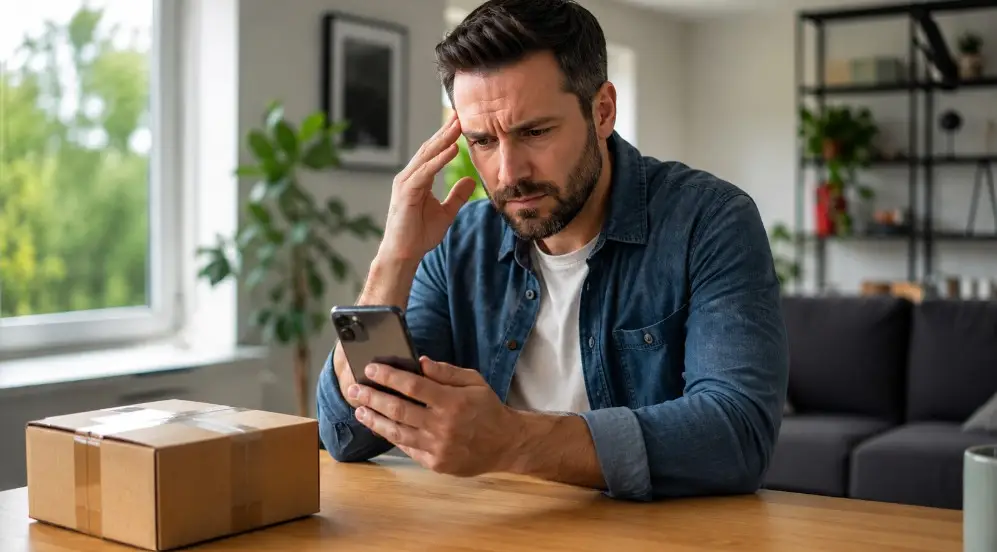
An unexpected message about an Evri informed delivery may be a scam, especially if you were not expecting a parcel, the wording looks unusual, or the message asks you to click a link, make a payment or provide personal information.
The safest response is simple do not use the contact details or links in a suspicious message. Instead, open the official website separately and verify the parcel through information you already trust.
A delivery message can look convincing, but a familiar brand name, logo or professional-looking page does not prove that it is genuine. The phrase “Evri informed delivery” can also cause confusion.
In published scam examples, wording such as “Delivery Informed” has been identified as poor or unnatural language. That does not mean every unusual phrase automatically proves fraud, but it is a reason to stop and check the full message carefully.
Key takeaways:
- An unexpected parcel message should be independently verified before you act.
- Poor language, generic greetings, unusual sender details and suspicious links are common warning signs.
- Genuine SMS messages are not supposed to ask you to pay or reschedule a delivery for a fee.
- A message showing a familiar tracking-style link should still be treated cautiously if you are unsure.
- If you have shared bank or payment details, contact your bank immediately.
- Suspicious texts can be forwarded to 7726, and suspicious emails can be forwarded to report@phishing.gov.uk.
Is the Evri Informed Delivery Message a Scam?
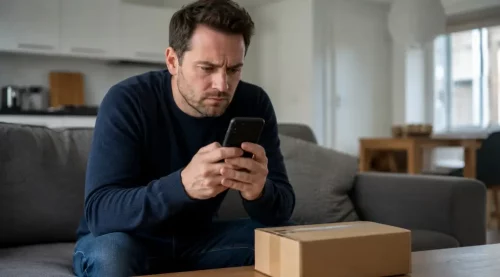 It could be. A message referring to an “Evri informed delivery”, “Delivery Informed”, a missed parcel or an urgent delivery problem deserves extra checking when it arrives unexpectedly.
Scam emails and texts are often unusual in some way. They may refer to a parcel you were not expecting, use awkward wording, contain an unfamiliar link or pressure you to act quickly.
When you have doubts about who sent a message, do not reply using the phone number, email address or contact details supplied inside it. Contact the organisation independently instead.
A genuine delivery notification may also arrive by email or text when a parcel enters the delivery network. In some cases, a legitimate communication can include a tracking link or relate to an ongoing claim.
This is why the correct test is not simply “Did I receive a delivery message?” but “Can I independently connect this message to a real parcel or claim?”
The most reliable approach is to verify the delivery separately. Official guidance says unexpected messages and parcels you do not recognise are warning signs worth checking. You can review the official message safety guidance before responding to a questionable communication.
What Does “Delivery Informed” Mean in a Suspicious Evri Message?
“Delivery Informed” is unusual wording rather than clear proof that a message is genuine. In a published scam example, this phrase was highlighted alongside other poorly written wording as an indication that the email was suspicious.
Why the Wording Can Be a Red Flag?
Scam messages may contain:
- Poor language: Badly written sentences, spelling mistakes or grammatical errors.
- No personal greeting: Wording such as “Dear Customer” or “Dear [your email address]” instead of the name associated with your account.
- Links or buttons: Prompts designed to make you click quickly and enter information.
- An unusual email address: A sender address that differs from the format you normally receive, sometimes by only a small misspelling or formatting change.
Before clicking a button or URL in an email, you can hover over it on supported devices to inspect the destination. An unrecognised address is a warning sign. However, criminals are becoming better at personalising messages, so seeing your name is not proof of authenticity.
The Difference Between a Phrase and an Official Evri Service
You should not assume that “Evri Informed Delivery” is the formal name of an official service simply because the words appear in a text or email.
The phrase may instead reflect wording used in a suspicious message. The wider context matters: whether you were expecting a parcel, whether the tracking information matches a genuine order, where the link leads and whether the sender requests money or sensitive information.
This distinction is important because searchers may type the exact wording they saw in a message. The safest interpretation is therefore: treat the phrase as something to verify, not as proof of either legitimacy or fraud.
How Does the Evri Informed Delivery Scam Usually Work?
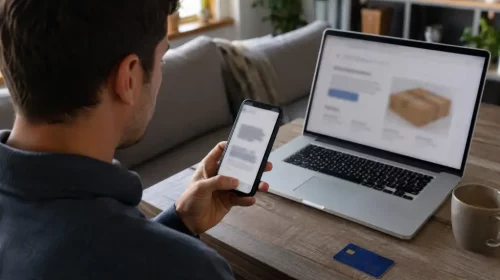 A parcel phishing scam typically tries to make you believe that a delivery needs immediate attention. The message may claim that a parcel was missed, your address is incomplete, a delivery must be rearranged or a small payment is required.
The Unexpected Delivery Message
Phishing is a form of fraud in which criminals use emails, texts, social media, messaging apps or phone calls to trick people.
The aim may be to send you to a fake website, obtain bank or personal information or, in some cases, encourage the installation of malicious software.
Delivery-themed messages are effective because many people regularly shop online and may genuinely be waiting for a parcel.
Urgency, Delivery Problems and Payment Requests
A scammer may tell you that:
- Your parcel cannot be delivered
- Your address needs updating
- A small redelivery payment is required
- The parcel will be returned unless you act
- You must click immediately to avoid losing the delivery.
Urgency is designed to reduce the time you spend checking the claim.
Fake Tracking and Redelivery Pages
A link may lead to a website that imitates a genuine parcel-tracking or payment page. It may ask for your name, address, telephone number, card details, passwords or other personal data.
A professional appearance is not enough to establish legitimacy. Criminals can copy branding and familiar page layouts. The safer route is to leave the message and open the genuine tracking service separately.
How Can You Tell Whether an Evri Text or Email Is Fake?
No single sign proves that every message is fraudulent, but several warning signs together should make you stop and verify before acting.
Warning signs to check:
- You are not expecting a parcel.
- The message contains poor grammar or unnatural wording.
- It uses a generic greeting rather than your name.
- The sender address looks unfamiliar, misspelled or oddly formatted.
- The message contains an unexpected button or link.
- You are pressured to act immediately.
- You are asked for payment through an unsolicited message.
- The delivery cannot be matched to a genuine order or tracking number.
Recognised Evri Email Domains
Genuine emails will typically come from addresses ending in:
- @evri.com
- @hermes-europe.co.uk
- @myhermes.co.uk
The broader published list of email domains also includes:
- @custhelp.com
- @globalco.uk
- @globaleco.app
Subdomains of these domains may also be used, such as:
- @international.evri.com
- @mailgb.custhelp.com
An address ending in a recognised domain is useful context, but you should still assess the message as a whole because sender information and visual presentation can sometimes be imitated.
Genuine-looking versus suspicious signals:
| Check | More reassuring sign | Possible scam warning |
| Parcel | You recognise the order | You expected no parcel |
| Message | Matches a known delivery | Unexpected or vague claim |
| Language | Clear and relevant | Poor or unusual wording |
| Sender | Matches a recognised format | Misspelt or unfamiliar address |
| Link | Independently verified | Unexpected destination |
| Payment | No unsolicited demand | Urgent fee request |
| Tracking | Matches your real order | Cannot be confirmed separately |
The best protection is not to rely on one visual clue. Verify the parcel independently before entering any information.
Does Evri Ask for Redelivery Payments or Personal Details by Message?
 According to the published customer security guidance, genuine SMS messages will not ask you for payment and will not ask you to reschedule a delivery and pay to do so. Delivery attempts may be made up to three times.
Official text messages:
- Should come from “Evri”, not appear as an ordinary mobile phone number
- Should never ask you to pay
- Should never prompt you to install an app
- Should contain only a tracking link, rather than unrelated links
The published FAQ also states that a genuine SMS may include a tracking link in the https://evri.link/… format. Importantly, the guidance warns that even seeing this format is not a guarantee that the message is genuine. When you are unsure, do not click and do not enter personal details.
For claim-related communication, you may be asked to reply “yes” by SMS or use response buttons to confirm a parcel’s status. The sender should still appear as “Evri”.
This means an unexpected text demanding a small redelivery payment is a strong warning sign. A small amount may feel harmless, but the real objective of a phishing page can be to obtain card or personal information.
What Should You Do Before Clicking an Evri Delivery Link?
Pause before interacting with the message. A few checks can prevent an urgent-looking notification from turning into a larger problem.
First, ask whether you are genuinely expecting a parcel. Check recent orders, retailer emails and tracking details you already possess. Do not assume a message is genuine simply because its timing happens to coincide with an online purchase.
Next, open the official website separately rather than following the message link. Enter your tracking information directly or use a trusted order confirmation.
You should also avoid using phone numbers, email addresses or web addresses supplied inside a message you already suspect. Security guidance recommends contacting the organisation through details obtained independently.
For missed-parcel scams, UK cyber-security advice specifically says not to click the link and not to install an app if prompted. The missed parcel safety advice also explains the reporting route for suspicious texts.
These checks take longer than tapping a message, but they allow you to verify the delivery without depending on information controlled by the sender.
What Should You Do If You Clicked an Evri Scam Link?
Your next step depends on what happened after you clicked.
If You Clicked but Entered Nothing
Close the page. Do not install anything it recommends and do not return to provide information. If you downloaded an app or file, follow current device-security guidance and remove anything suspicious.
Continue watching for unusual account behaviour or follow-up messages. Clicking alone does not necessarily mean money has been stolen, but the risk depends on what the page or download did.
If You Entered Personal Details or a Password
Change any password you entered, especially when you use the same password elsewhere. Reused passwords should also be changed on other important accounts.
Enable multi-factor or two-step authentication where available and stay alert for further phishing attempts. Criminals may use information already collected to make later messages appear more convincing.
If You Entered Card or Banking Information
Contact your bank or card provider immediately and explain that you may have entered payment information into a fraudulent website. Follow the provider’s fraud instructions and monitor your account for transactions you do not recognise.
Do not delay because the requested payment was small. The exposure of payment information can matter more than the original amount requested.
How Should You Report an Evri Informed Delivery Scam in the UK?
 Reporting a suspicious message can help investigators, communications providers and security teams identify malicious senders or websites. You can report an attempt even when you spotted the scam and did not provide information.
Reporting routes:
- Suspicious text: Forward it to 7726. This is free on participating UK mobile networks.
- Suspicious email: Forward it to report@phishing.gov.uk.
- Message mentioning Evri: Use the company’s reporting process so the impersonation and any related fraudulent website can be investigated.
- Fraud or financial loss: Make a report through the national fraud and cybercrime reporting service for England, Wales and Northern Ireland. In Scotland, contact Police Scotland on 101.
- Bank details shared: Contact your bank or payment provider immediately.
The national reporting service states that it is the place to report cybercrime and fraud in England, Wales and Northern Ireland. You can use the official fraud reporting service when you believe you have become a victim.
Keep useful evidence, such as screenshots, sender details and relevant transaction information, before deleting the message. However, do not continue interacting with a suspicious sender merely to collect more evidence.
What Should You Remember About Evri Delivery Scam Messages?
The key point is that scammers can imitate trusted delivery companies, and their methods can change. A familiar logo, your real name or a message arriving while you are genuinely expecting a parcel does not prove that the communication is authentic. You should always consider the full context and verify suspicious messages independently.
Important points to remember:
- Poor wording such as “Delivery Informed”, generic greetings and unexpected links can be warning signs.
- A professional-looking website or social media profile may still be fake.
- Genuine-looking sender details should not replace independent parcel verification.
- Unexpected requests for payment, app installation or redelivery fees deserve particular caution.
- Scam formats can evolve, so one known example will not cover every future attempt.
The safest habit is to pause, avoid acting through the message itself and confirm the parcel through trusted details you access independently.
Conclusion
An Evri informed delivery scam may use an unexpected parcel notification, wording such as “Delivery Informed”, a fake tracking link, an urgent redelivery claim or a request for payment or personal information.
The safest response is to pause and verify. Do not use a suspicious message as your only source of contact or tracking information. Check whether you really have a parcel coming, open the official website independently and avoid entering sensitive information through an unsolicited link.
If you have already shared a password, payment information or bank details, act promptly. Change compromised credentials where necessary and contact your bank or payment provider immediately when financial information may have been exposed.
FAQs About Evri Informed Delivery Scam
Is “Evri Informed Delivery” the name of an official Evri service?
The wording should not automatically be treated as the name of an official service. “Delivery Informed” has appeared as an example of poor language in published scam guidance. Verify the complete message and the parcel independently.
Why did I receive an Evri message when I am not expecting a parcel?
It may be a bulk scam message, an incorrectly entered phone number or a genuine delivery you do not yet recognise. Do not click immediately. Check recent orders and verify the parcel independently.
Can a fake Evri website look almost identical to the real one?
Yes. Phishing pages can copy branding, colours and page layouts. A professional appearance is not proof of authenticity, so check the address carefully and access tracking independently.
Can an Evri scam message contain your real name or address?
Yes. A personalised message is not automatically genuine. Criminals may already possess some personal information, and official guidance notes that scam messages are becoming better at personalisation.
Is it safe to reply to a suspicious Evri text?
Do not reply when you doubt the sender’s identity. Use contact information obtained independently rather than a number, email address or link supplied in the suspicious message.
Should you delete a suspected Evri scam message straight away?
Report it first when practical, preserving a screenshot or other relevant evidence if needed. After reporting it and recording necessary information, you can delete the message and avoid further interaction.
Can Evri impersonation scams arrive by text, email or iMessage?
Yes. Phishing and impersonation attempts can use texts, emails, social media, messaging apps and other communications. Scam techniques evolve, so do not rely on recognising only one message format.
Editorial Note
This article is for general informational and online-safety purposes and is not financial or legal advice. Scam methods and official guidance can change, so check current sources and contact your financial provider promptly if you shared sensitive information or lost money.
How We Checked?
We reviewed official cyber-security guidance, genuine-message information and UK scam-reporting advice. We also checked the phrase “Delivery Informed” against published scam examples and used only sourced, verified information.