
























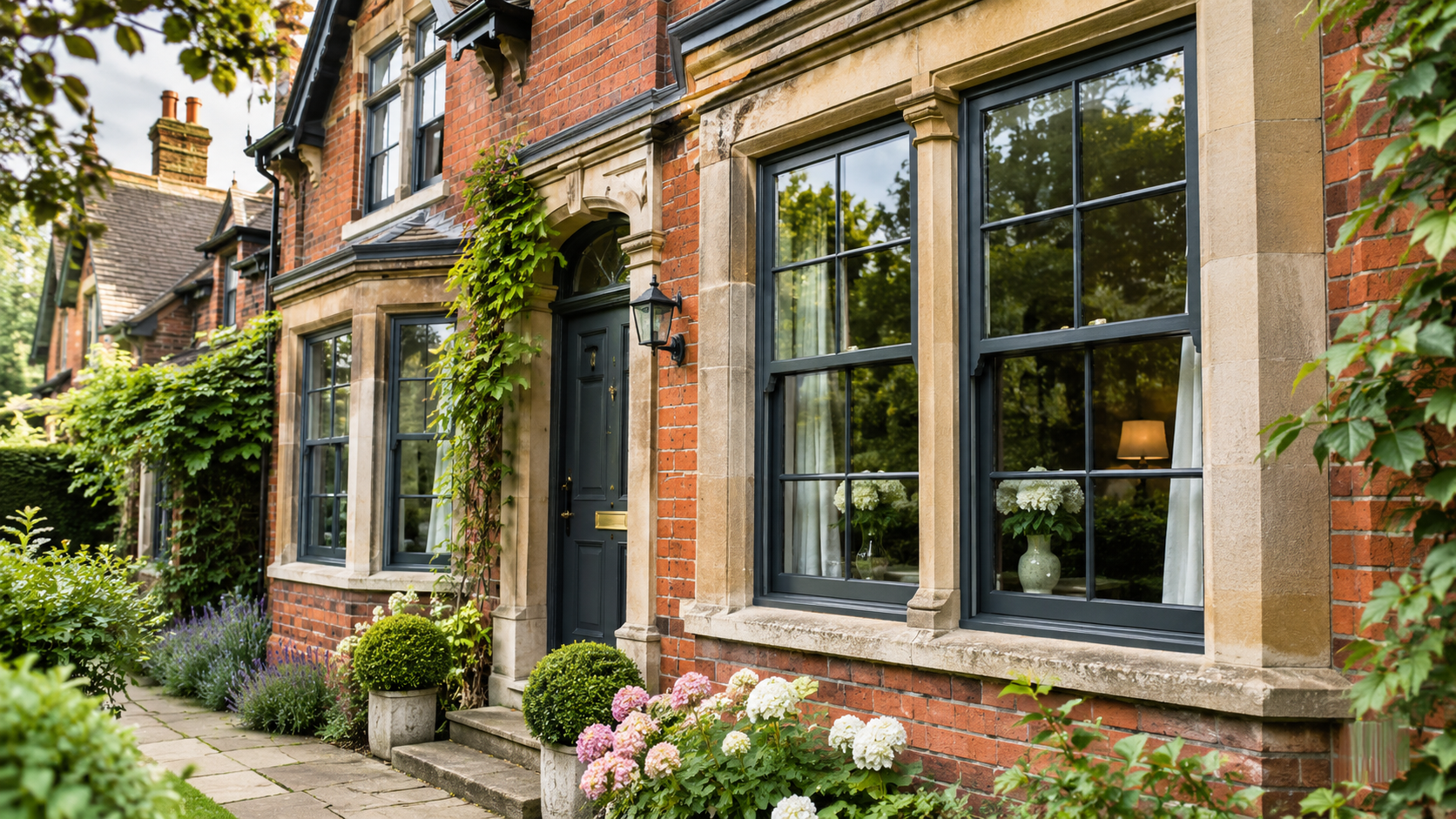
Older homes have plenty of character, from sash windows and glazing bars to well-balanced proportions.
However, with age, windows can become draughty and require more and more maintenance.
Naturally, this often leads homeowners to consider replacement. Homeowners will want a replacement that not only keeps their home warmer but also preserves the period features that make these properties so desirable.
Aluminium is considered by many to be modern and not suited to replacing the traditional windows of period properties. However, modern aluminium window systems offer a wider variety of style options than most people would expect.
With careful thought when choosing aluminum windows, including profiles and finishes, you’d be surprised how sympathetic an aluminium window can be to the exterior of a period property.
Why Original Windows Matter?
Windows are an integral part of a property’s aesthetic appearance, especially for Victorian, Edwardian and Georgian properties, with proportions, opening design, materials used and glazing bar designs all adding to the property’s character.
It’s this important, easily lost character that is often carelessly compromised by poorly planned window replacements.
Of course, there are instances where a replacement window might not be the best choice. Retaining original windows using historic repair methods and materials can be a cheaper solution than replacement.
Draughtproofing and secondary glazing are also ways to create a more comfortable environment without replacing original windows.
Before you consider doing anything, it is important that you are familiar with your local planning regulations.
Properties located within a conservation area are often subject to more stringent controls, meaning that fitting an unsympathetic replacement could land you in trouble with the council.
It’s best to speak with your local planning office before making any changes to confirm what you can and can’t do.
A quick phone call now could save you a whole lot of money down the line by correcting any mistakes before they’re made.
 Can Aluminium Fit a Traditional Home?
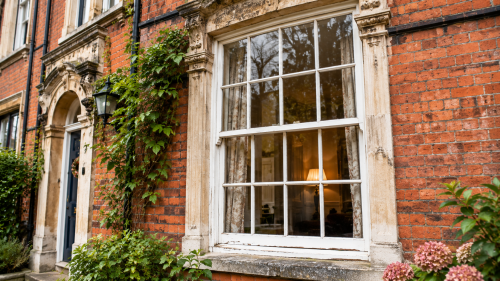
Although aluminium is often linked with modern extensions, the metal itself doesn’t necessarily have to convey that appearance.
Slim frames can create the perfect balance when installed on a traditional façade, and with the right finish, aluminium windows can marry beautifully with brick and stone.
One major benefit of aluminium for traditional homes, particularly for the front, is the slim frame it can create.
Thanks to aluminium’s strength, windows and doors can be created with slim frames, maximising the glazed area and giving them an appearance that doesn’t look bulky or overpowering.
The colour and finish of your window or door also make a difference. Selecting a colour finish that works in harmony with your brick or stone walls is always recommended to create something that blends in rather than stands out.
The overall aesthetic achieved with aluminium will vary depending on the glass you choose, the grid designs, and the colour finish. It’s a good idea to request samples first before committing to anything.
As well as the frame itself, it’s important to consider the effect different glazing patterns will have on your property’s overall appearance.
Replacing the window with a plain glazed unit can look odd if the property has a traditional sash window or small-paned design.
Discuss the opening style, sightlines, and use of glazing bars with your supplier to ensure the new window mimics the proportions of the original design as closely as possible.
What to Check Before You Replace?
First, you must check the status of your property. Listed buildings are often subject to listed building consent where works affect the building’s special interest.
Properties within conservation areas often also have additional restrictions. Rules differ from place to place, so speak to your local planning authority before ordering windows or starting work.
Think about performance as well as looks. Aluminium window frames incorporate a thermal break, which will help prevent loss of heat; in combination with the correct glass and precision installation, a well-insulated finished window can be achieved.
Don’t forget to request documented performance values and ensure it’s suitable for your property.
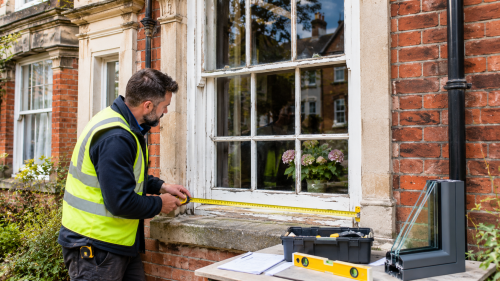
Use an installer who has experience working on period properties. Structural openings often aren’t square, and the masonry or stone that they sit in can be very delicate.
Precise measurement and the use of the correct fixings are essential to ensuring your building is not compromised.
 Finding the Right Balance
Aluminium windows can work in an older home when the design is chosen with care and the planning rules are followed. They aren’t the best answer for every property.
Where original features matter, repairing the old windows or adding secondary glazing may suit better.
Before you decide, look at the condition of your current windows, the character of the building and the comfort you want. A well-planned upgrade should make the home warmer and easier to live in, while keeping what makes it special.