

























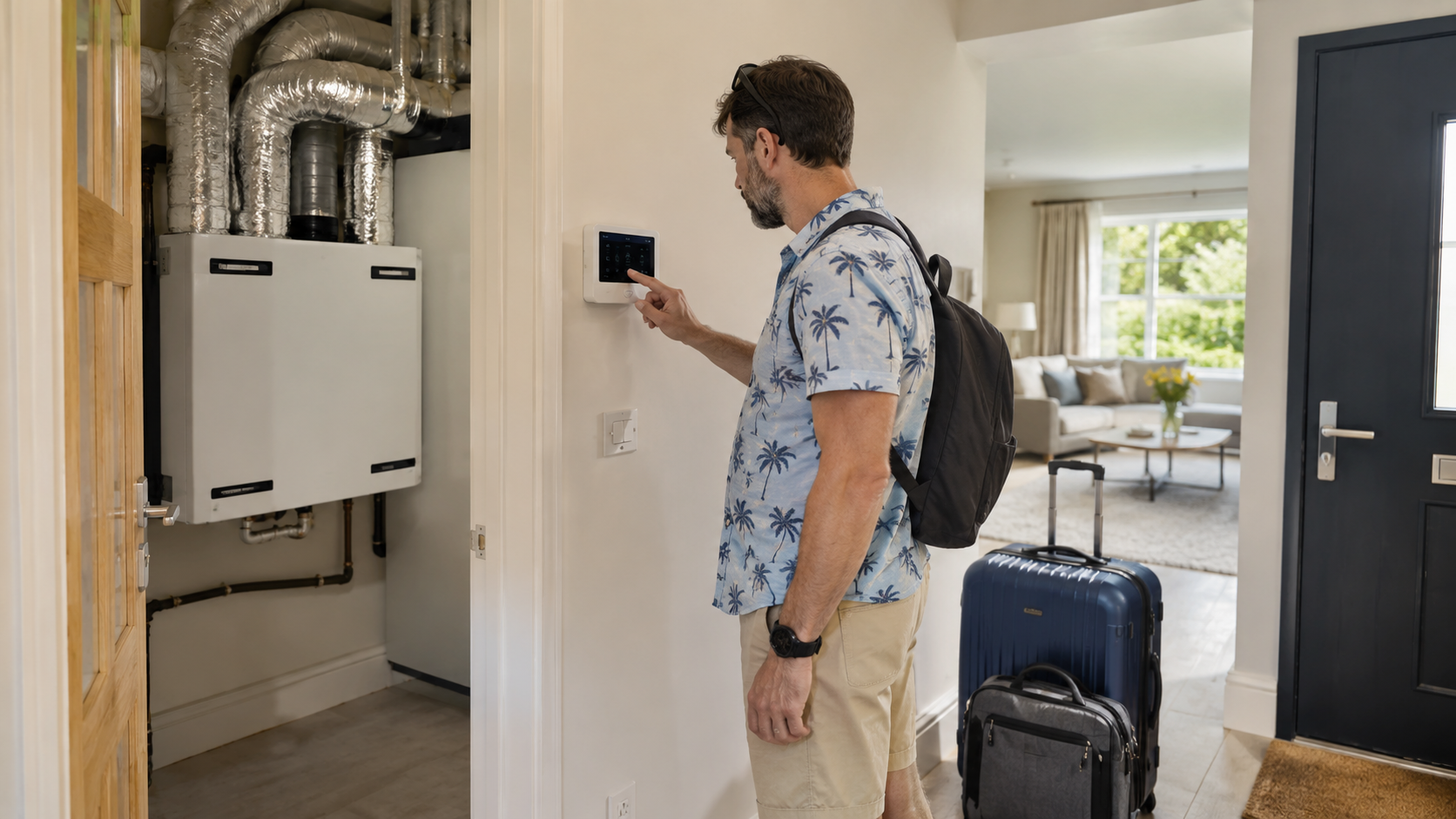
Before leaving for a holiday, it is natural to switch off appliances that nobody will use. Your mechanical ventilation with heat recovery (MVHR) system deserves a different approach.
It is designed to manage ventilation throughout the home, and an empty property does not necessarily need the system disconnected. The better starting point is understanding the settings intended for your absence.
Check the Basics Before You Leave
A few days before departure, check the controller for maintenance messages and review any filter care that is due. If replacements are needed, confirm the complete model name before ordering.
Homeowners comparing brink filters at Filter Express should check compatibility with their particular unit, rather than choosing by brand name alone.
Follow the manual when inspecting or replacing filters, and keep access to the unit clear.
Avoid leaving an unresolved warning until departure day. If something needs professional attention, allowing time beforehand makes it easier to arrange.
An Empty Home Still Needs Ventilation
Without showers, cooking and people breathing indoors, the household’s moisture and pollutant load usually falls. However, it does not disappear immediately when the front door closes.
Damp towels or washing left to dry can continue releasing moisture. Furnishings, finishes and building materials can also release substances into indoor air, even while rooms are unoccupied.
This does not mean ventilation must remain at the same setting used by a busy household. It means the decision should reflect the property and the system’s instructions.
Before leaving, deal with obvious moisture sources rather than expecting ventilation to compensate for wet laundry or an existing damp problem.
 Understand Your Holiday or Away Setting
Some MVHR controls offer a holiday, absence or reduced ventilation setting. Where provided, this gives you a defined option to consider instead of using the electrical isolator as a holiday switch.
Read the instructions for both the unit and its controller. Similar labels can describe different behaviour, and a displayed “0” should not be interpreted without checking what it means on your equipment.
Check how the setting ends, too. Some controls use a specified duration, while others require you to select another mode when you return.
Also confirm whether choosing holiday mode changes the response to connected sensors or external controls. Do not assume automatic features will behave exactly as they do during normal operation.
Avoid Last-Minute Changes to the System
Holiday preparation is not the time to experiment with installer menus or adjust room valves. Their positions and the commissioned airflow settings form part of the ventilation arrangement.
Leave these alone unless a qualified professional has advised otherwise. If you cannot identify an appropriate absence setting, ask the installer or manufacturer how your system should operate while the home is empty.
Keep ordinary holiday operation separate from instructions for maintenance, faults or emergencies, which may require isolation. There is also no universal fan percentage suitable for every property or every length of trip.
 Return to Your Normal Routine
When you arrive home, check the controller and restore the usual operating mode if necessary. Remember that a holiday setting may remain active until you cancel it, even after everyone has returned.
Look into any new warning or unexpected change in operation. Once showers, cooking and laundry tricks resume, use the normal controls and boost functions as instructed.
Adding ventilation to your departure and return checklist makes the process straightforward.
A suitable operating mode, completed maintenance and a clear understanding of the controls are more useful than simply switching the system off.