























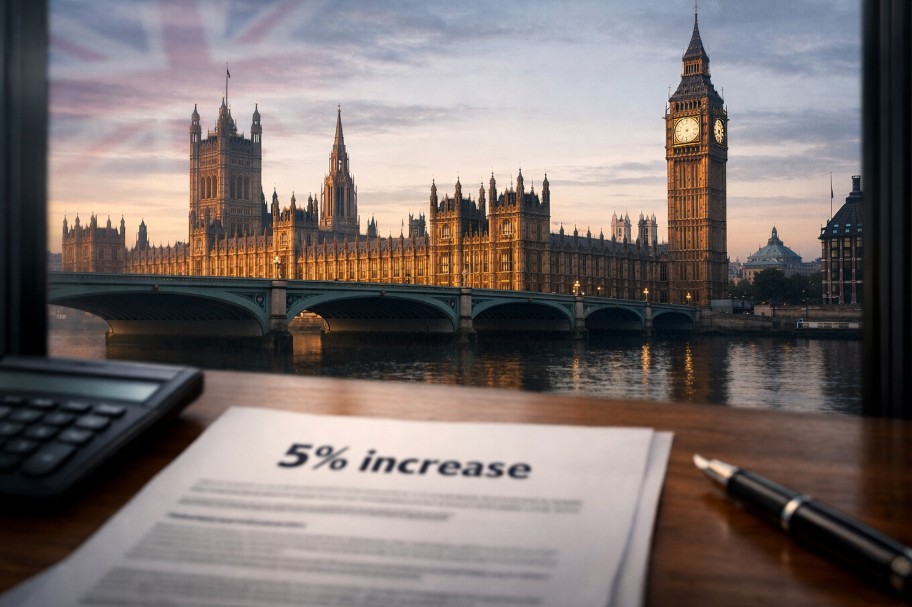
Yes, MPs are getting a pay rise. From April, MPs’ basic salary will increase by 5% to £98,599 a year following a decision by the Independent Parliamentary Standards Authority.
The rise is higher than the current inflation rate of 3% and forms part of a longer term plan that could see salaries move towards £110,000 by 2029.
While IPSA says the increase reflects benchmarking and cost of living adjustments, critics argue it is poorly timed during ongoing economic pressures.
Below are the key points explained in this article:
- MPs’ salary will rise to £98,599 from April
- The increase totals 5%
- IPSA made the decision independently
- Inflation currently stands at 3%
- Pay is benchmarked against senior public roles
- International comparisons were considered
- Some groups strongly criticise the rise
What Has Been Announced About MPs’ 5% Pay Rise from April?
 MPs are getting a pay rise. From April, their basic annual salary will increase by 5% to £98,599.
The decision has been confirmed by the Independent Parliamentary Standards Authority, commonly known as IPSA, which is responsible for regulating MPs’ pay and expenses.
This increase applies to the 2026 to 2027 financial year. It represents a noticeable uplift from the previous salary level and comes at a time when inflation is around 3% according to the most recent official data.
Because the pay rise is higher than the inflation rate, it has attracted both attention and criticism. IPSA has also indicated that it intends to gradually move MPs’ salaries towards approximately £110,000 by the end of this Parliament in 2029.
That figure is not automatic but reflects a longer term direction based on benchmarking and structural adjustments. To understand the scale of the increase, it helps to look at the change numerically.
| Item | Previous Salary | New Salary | Percentage Increase |
| MP Basic Salary | £93,904 approx | £98,599 | 5% |
The rise adds several thousand pounds annually to each MP’s income. Across 650 MPs, the total increase represents a measurable but relatively small fraction of overall public spending.
When asking are MPs getting a pay rise, the factual position is straightforward. Yes, they are, and the new salary level has been formally approved and published.
Why is MPs’ Pay Increasing by 5% in the Current Economic Climate?
 The broader economic climate makes this decision particularly sensitive. Many households are still adjusting to higher energy bills, food costs and mortgage payments.
Public sector workers across health, education and civil service departments are negotiating their own pay settlements.
IPSA has explained that the 5% increase is made up of two distinct elements.
How is the 5% Increase Calculated?
The 5% rise consists of:
- A 1.5% benchmarking adjustment
- A 3.5% cost of living increase
The benchmarking adjustment is designed to bring MPs’ salaries closer in line with comparable senior public roles. The cost of living component reflects general economic conditions, including inflation and wage trends.
The structure of the increase can be illustrated clearly:
| Component | Percentage | Purpose |
| Benchmarking Adjustment | 1.5% | Align pay with comparable senior roles |
| Cost of Living Increase | 3.5% | Reflect economic conditions and inflation |
| Total Increase | 5% | Combined uplift |
This structured approach is typical of public sector pay frameworks. It attempts to separate long term structural alignment from short term economic pressures.
Is the Rise Higher Than Inflation?
With inflation currently around 3%, the 5% increase is above the headline rate. This is one of the main reasons critics have described it as an inflation beating rise.
However, comparisons with other public sector awards show a mixed picture.
| Sector | Announced Increase |
| NHS Staff England and Wales | 3.3% |
| Resident Doctors Proposed | 2.5% |
| Civil Service Departments | Up to 3.25% |
| MPs | 5% |
This comparison highlights why the debate has intensified. Many public sector workers are receiving smaller percentage increases.
At the same time, IPSA argues that MPs’ roles should be benchmarked against senior leadership positions rather than general public sector averages.
The economic climate adds political tension. Public expectations are shaped not only by data but also by perception.
When people see the figure £98,599, it can appear disconnected from everyday financial struggles.
Who Decides MPs’ Salaries and What Role Does IPSA Play?
IPSA was created in 2009 following the parliamentary expenses scandal. Its purpose is to restore public confidence by ensuring that MPs’ pay and expenses are regulated independently of Parliament itself.
MPs do not vote on their own pay. This is an important distinction. The authority conducts annual reviews, considers evidence and publishes its reasoning.
The main responsibilities of IPSA include:
- Setting MPs’ basic salary
- Regulating expenses and allowances
- Publishing transparency data
- Reviewing pay annually
IPSA has stated that the role of an MP has evolved significantly. MPs now handle higher volumes of complex casework and face increased levels of abuse and intimidation.
In a conversation with a public sector remuneration specialist, he told me clearly, “When I evaluate parliamentary pay, I do not compare it to the average wage.
I compare it to senior leadership positions in public administration. From that standpoint, the alignment is consistent with other roles that carry national responsibility.”
His perspective focused on structural fairness rather than public sentiment.
He added, “If you want Parliament to attract experienced professionals, pay has to be competitive within the public sector leadership bracket.”
This explanation reflects IPSA’s stated methodology. Whether the public agrees with that framework is a separate matter.
How Does MPs’ Salary Compare to Other UK Public Sector Roles?
 To assess whether MPs are getting a pay rise that is disproportionate, it is useful to compare their new salary with other public sector roles.
| Role | Average or Starting Salary |
| MP | £98,599 |
| Senior Civil Service | £88,049 |
| NHS Consultant Starting Salary | £106,242 |
| Police Chief Officers | Varies often above £100,000 |
| Secondary School Headteacher | Often £70,000 to £110,000 depending on school size |
This comparison shows that MPs’ salaries are not the highest in the public sector.
NHS consultants at entry level can earn more. Senior headteachers in large schools can also earn similar or higher amounts.
However, the comparison does not remove political sensitivity. MPs are elected officials. Their pay is funded directly by taxpayers. This creates a higher level of scrutiny compared to appointed public sector roles.
The salary level also sits significantly above the median UK full time wage. That gap reinforces perceptions of inequality, even if benchmarking supports the increase.
How Do UK MPs’ Salaries Compare Internationally?
IPSA has also benchmarked MPs’ pay against comparable democracies.
International comparisons are often used to ensure that parliamentary roles remain competitive and attractive to candidates from diverse professional backgrounds.
| Country | Approximate Annual Salary Equivalent |
| United Kingdom | £98,599 |
| France | Slightly lower than UK |
| Japan | Slightly lower than UK |
| New Zealand | Slightly lower than UK |
| Ireland | Higher than UK |
| Italy | Higher than UK |
| Canada | Higher than £100,000 equivalent |
| Australia | Higher than £100,000 equivalent |
| Germany | Higher than UK |
| United States | Higher than £100,000 equivalent |
The UK sits in the middle of this range. It is not among the highest paying democracies but it is above some European and Pacific nations.
International benchmarking can be controversial. Some argue that MPs’ salaries should reflect domestic economic conditions only.
Others believe that global comparisons are relevant because Parliament is a senior national leadership body.
IPSA’s position is that benchmarking must include both domestic and international factors.
What Additional Pay and Expenses Do MPs Receive?
The £98,599 figure represents the basic salary only. MPs are also entitled to claim expenses that support them in carrying out their duties.
These expenses cover:
- Staffing costs for constituency offices
- Office rent and operational costs
- Accommodation in London if required
- Travel between Westminster and their constituency
Some MPs receive additional salary supplements if they hold specific roles.
| Additional Role | Extra Pay Received |
| Select Committee Chair | Additional salary supplement |
| Minister | Higher ministerial salary |
| Prime Minister | Significantly higher combined salary |
These additional payments vary depending on seniority and responsibility.
It is important to separate salary from expenses. Expenses are reimbursed to enable MPs to perform their work. They are regulated by IPSA and subject to transparency requirements.
However, public confusion sometimes arises because overall cost figures can combine salary and expenses in media reporting.
Why Are Some Groups Criticising the MPs’ Pay Rise?
 Criticism has come from advocacy groups and sections of the public who believe the increase is poorly timed.
The Taxpayers’ Alliance argued that many citizens are facing what they describe as a personal recession.
They claim that public services have deteriorated and that living standards have fallen in recent years.
The core arguments from critics include:
- The increase exceeds current inflation
- Other public sector workers are receiving smaller awards
- Living costs remain high for ordinary households
- Trust in politicians is fragile
These criticisms are largely centred on perception and fairness.
From my own perspective, I find this debate complex. When I look at the question are MPs getting a pay rise, I see two competing narratives.
On one hand, benchmarking and structured pay reviews suggest a rational administrative process. On the other hand, public trust depends heavily on timing and symbolism.
I said in a recent discussion, “I can understand the logic behind benchmarking, but I also recognise that perception shapes public confidence. If people feel left behind, even a technically justified rise can feel unfair.”
That tension between technical reasoning and public feeling defines much of this debate.
Could MPs’ Salaries Reach £110,000 by 2029?
IPSA has indicated that it intends to move MPs’ salaries towards approximately £110,000 by the end of this Parliament. This does not mean automatic annual 5% increases.
Future adjustments will depend on:
- Economic performance
- Inflation trends
- Public sector pay frameworks
- Fiscal sustainability
The projected pathway can be understood as a gradual structural alignment rather than a guaranteed trajectory.
If the salary does reach around £110,000 by 2029, it would place MPs more firmly within the senior leadership pay bracket of the UK public sector.
However, each annual review will be conducted independently. IPSA has emphasised that it will continue to consider the experience of people outside Parliament when making future decisions.
The debate over whether MPs are getting a pay rise is therefore not limited to this year. It extends into a broader discussion about how elected representatives should be compensated in a modern democracy.
As economic conditions evolve, public expectations may also shift. The balance between competitive remuneration and public accountability will remain central to the conversation.
This issue is not simply about a 5% increase. It reflects larger questions about governance, fairness and the relationship between Parliament and the public it serves.
The structure of the increase, the benchmarking process and the long term salary direction all suggest that the rise is part of a managed framework rather than a sudden political decision.
Whether that framework commands widespread public support is likely to depend on economic recovery, wage growth across other sectors and continued transparency in how decisions are made.
Final Thoughts: Are MPs Getting a Pay Rise and Is It Justified?
To summarise, yes, MPs are getting a pay rise to £98,599 a year from April, representing a 5% increase. The rise has been determined by IPSA and is based on benchmarking and cost-of-living considerations.
Whether it is justified depends largely on perspective. From a structural and benchmarking viewpoint, the increase aligns MPs’ pay with comparable senior roles.
From a public perception standpoint, the decision may feel difficult during ongoing economic pressures.
Ultimately, the debate around whether MPs are getting a pay rise is not just about numbers. It is about fairness, accountability and trust in public institutions.
FAQs
How often is MPs’ pay reviewed?
MPs’ pay is reviewed annually by the Independent Parliamentary Standards Authority. IPSA considers economic conditions, benchmarking data and fiscal factors before confirming each year’s salary.
Do MPs vote on their own pay rises?
No, MPs do not vote on their own salaries. Pay decisions are made independently by IPSA to avoid conflicts of interest.
Is MPs’ salary linked directly to inflation?
Not directly. While cost-of-living and inflation data are considered, IPSA also uses benchmarking against comparable roles and international standards.
When will the new £98,599 salary take effect?
The new salary will take effect from April in the 2026–27 financial year.
Can MPs refuse the pay rise?
In theory, individual MPs could choose not to accept the additional income, but the official salary rate is set nationally and applies to the role.
How does MPs’ pay compare to the average UK salary?
MPs earn significantly more than the average UK full-time salary, which is considerably lower than £98,599 per year. However, IPSA compares MPs’ pay to senior public roles rather than national averages.
Are MPs’ expenses included in the £98,599 figure?
No. The £98,599 is the basic salary. Expenses for staff, office costs, accommodation and travel are claimed separately and are regulated by IPSA.