
























Claire’s Accessories suffered a major UK and Ireland collapse in 2026, but the story has developed significantly since the retailer first entered administration in January.
On 27 April 2026, all 154 remaining standalone Claire’s stores across the UK and Ireland ceased trading, resulting in around 1,300 redundancies.
The closures followed the company’s second administration in less than a year. However, the closure announcement did not affect 356 concessions, including many within Asda stores, or the head-office operation at that stage.
The Claire’s brand may not have disappeared from Britain permanently. French entrepreneur Julien Jarjoura subsequently announced plans to bring Claire’s back to UK high streets through a new operation, with around 50 shops initially proposed.
Companies House records also show Claire’s Nouveau Limited, incorporated on 20 March 2026 with Jarjoura as its director, remains an active company.
As of August 2026, the safest position is therefore that the former standalone Claire’s estate has closed, while a separate UK revival has been planned. The full proposed 50-store rollout should not yet be presented as completed unless individual openings are independently confirmed.
Last Updated: 26.08.2026
What Happened to Claire’s Accessories in the UK in 2026?

Claire’s UK and Ireland entered administration for the second time on 26 January 2026, when Philip Dakin, Benjamin Wiles and Janet Burt of Kroll Advisory were appointed joint administrators of CAUKI Limited, trading as Claire’s UK & Ireland. The appointment is recorded in the official Gazette and Companies House records.
The business initially continued trading while administrators considered possible solutions. That position changed during the following months.
On 27 April 2026, Kroll confirmed that all 154 remaining standalone Claire’s stores in the UK and Ireland had ceased trading. Around 1,300 store employees were informed that they were being made redundant.
The former operating company, CAUKI Limited, remains recorded by Companies House as in administration.
Therefore, the collapse was no longer simply a period of uncertainty. It resulted in the closure of the entire remaining standalone store estate operated by that company.
Why Did Claire’s Accessories Go Into Administration Again?
The collapse did not happen overnight. It was the result of mounting financial pressure combined with structural shifts in retail.
What Caused Claire’s Second Administration?
Claire’s second UK and Ireland administration followed only months after Modella Capital rescued part of the business from its previous insolvency.
Modella had acquired 156 stores in September 2025 after the earlier Claire’s UK administration. However, difficult trading continued through the crucial Christmas period.
By January 2026, Modella said attempts to rescue the business had failed and that Claire’s no longer had a realistic prospect of trading profitably under the existing structure.
Several pressures were reported around the collapse:
- Weak Christmas 2025 trading
- Continued cost inflation
- Weak consumer confidence
- Higher employment and operating costs
- Competition from lower-cost online retailers
- A costly physical store network
These pressures followed longer-term problems within Claire’s international business and its first UK administration in August 2025.
The 2025 references should therefore remain in the blog because they form an important part of the verified timeline rather than representing outdated information.
Did Online Retailers Like SHEIN, Temu and TikTok Shop Contribute?
Competition from online platforms significantly intensified in recent years. Fast fashion giants such as SHEIN and Temu offer jewellery and accessories at prices often lower than traditional high street retailers can match.
TikTok Shop has introduced a new dynamic where trends spread rapidly and purchasing happens instantly through social content. This particularly affects younger audiences, which historically formed Claire’s core customer base.
Online competitors operate with structural advantages:
- Lower property overheads
- Direct-to-consumer supply chains
- Real-time trend responsiveness
- Heavy social media integration
These advantages create pricing pressure and reduce the uniqueness of high street accessory retailers.
I have observed that younger consumers increasingly prioritise speed and affordability over brand loyalty. The emotional connection many people have with Claire’s does not necessarily translate into sustained purchasing behaviour when cheaper alternatives are available online.
The table below compares business models.
| Feature | Claire’s Physical Model | Online Fast Fashion Model |
| Store Rent | High fixed cost | None |
| Staffing | In store employees | Warehouse based |
| Trend Cycle | Seasonal | Weekly or daily |
| Pricing Flexibility | Limited | Highly aggressive |
| Customer Reach | Shopping centres | Global digital |
The Claire’s Accessories collapse must be viewed within this competitive landscape. It is not solely a management failure but a reflection of a retail environment that has changed dramatically.
How Many Claire’s Stores Closed and How Many Jobs Were Lost?
The risks outlined when Claire’s entered administration became actual closures during April 2026.
By 27 April 2026, all 154 remaining standalone Claire’s shops across the UK and Ireland had ceased trading, and approximately 1,300 store employees were made redundant.
This followed significant reductions during the earlier 2025 administration. Claire’s had operated more than 300 UK and Ireland stores before that restructuring, with Modella Capital acquiring 156 stores in September 2025.
Importantly, the April closure announcement distinguished standalone shops from Claire’s concession business. At the time, 356 concessions, including many operating inside Asda stores, and the company’s head office were not included in the mass standalone-store closure announcement.
Therefore, remove the existing “probability” and “risk level” tables. Store closures and redundancies are now known outcomes rather than hypothetical scenarios.
What Role Did Landlord Support and Rent Pressures Play?
Property costs are often a hidden factor behind retail insolvencies. In the case of the Claire’s Accessories collapse, landlord negotiations reportedly failed to deliver sufficient relief.
Shopping centre leases frequently involve long term commitments with fixed rent obligations. When footfall drops, rent does not automatically adjust. Without landlord flexibility, retailers can become trapped in loss making agreements.
In this case, reports indicate that landlord support was insufficient to sustain a viable footprint. If landlords refuse rent reductions or revised terms, the business cannot reduce fixed costs quickly enough.
A simplified breakdown of a typical store cost structure highlights the issue.
| Cost Category | Percentage of Revenue | Flexibility |
| Rent and Service Charges | 20 to 30 percent | Low |
| Staffing | 15 to 20 percent | Medium |
| Inventory | 30 to 40 percent | Medium |
| Utilities and Miscellaneous | 5 to 10 percent | Low |
When revenue declines but rent remains constant, profitability deteriorates rapidly.
The wider high street has experienced similar challenges. Landlords face their own financial pressures, including debt obligations and property valuations. This tension can create an environment where cooperation becomes difficult.
Is This the First Time Claire’s Has Faced Financial Trouble?
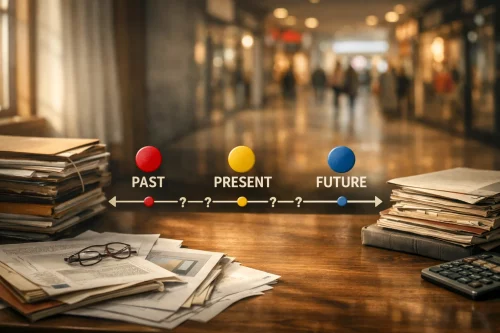
The Claire’s Accessories collapse in 2026 is not an isolated incident. The brand previously entered administration in 2025 and underwent restructuring in earlier years internationally.
Repeated insolvency events often indicate deeper structural problems rather than temporary downturns. Debt burdens, evolving consumer behaviour, and intense competition can accumulate over time.
Historical restructuring attempts included:
- Debt renegotiation
- Cost cutting measures
- Store closures
- Ownership changes
Each restructuring can stabilise the business temporarily, but if core profitability does not improve, financial distress may reappear.
This pattern has been seen across multiple high street brands in recent years. Retail models built around heavy physical footprints have struggled to adapt quickly enough to digital transformation.
Can Claire’s Accessories Be Saved or Is Shutting Down Inevitable?
A potential Claire’s comeback emerged almost immediately after the old standalone estate closed.
In May 2026, French entrepreneur Julien Jarjoura, who operates Claire’s stores in several European markets, said he had secured backing from US brand owner Ames Watson to establish a new UK operation. The reported proposal involved reopening approximately 50 stores, with new leases being negotiated directly with landlords.
The proposed business is materially different from simply rescuing the company that entered administration. Companies House shows Claire’s Nouveau Limited was incorporated on 20 March 2026 and remains active, with Jarjoura listed as director.
Plans reported in May included:
- A much smaller UK store estate
- New leases rather than inheriting the entire old estate
- Revised products and pricing
- Continued ear-piercing services
- Less dependence on constant discount promotions
- A more selective approach to store locations
The original plan envisaged openings beginning from June 2026. However, as of 26 August 2026, there is not sufficiently clear reliable reporting to state that all 50 proposed locations have opened.
The article should therefore describe the 50-store figure as a revival plan, not as the confirmed current number of operating Claire’s stores.
What Does the Claire’s Collapse Mean for the UK High Street?
The Claire’s Accessories collapse forms part of a broader trend affecting UK retail. High street brands have faced mounting pressure from online competition, rising business rates, and shifting consumer behaviour.
Shopping centres in particular have experienced declining footfall outside peak seasons. Younger consumers increasingly discover trends through social media rather than traditional retail browsing.
The broader implications include:
- Continued reduction in store numbers nationwide
- Greater emphasis on experiential retail
- Increased integration of online and offline channels
- More flexible leasing models
The high street is evolving rather than disappearing. Retailers that adapt to hybrid models combining physical presence with strong digital capability are more likely to survive.
The collapse also highlights how quickly financial distress can escalate in a competitive environment. When margins are thin and fixed costs are high, even a single weak trading season can trigger insolvency.
Has Claire’s Accessories Completely Shut Down in the UK?
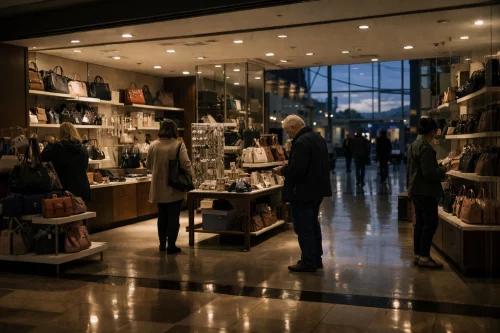
The answer now requires an important distinction between the collapsed operating company and the Claire’s brand.
All 154 standalone stores operated by the failed UK and Ireland business had ceased trading by 27 April 2026, and around 1,300 store employees were made redundant.
Therefore, readers should no longer be told that the old standalone Claire’s estate is continuing to trade under administration.
However, the Claire’s brand itself has not necessarily disappeared from the UK permanently. Concessions were excluded from the April standalone-store shutdown, while Julien Jarjoura subsequently announced plans for a smaller UK high-street comeback under a new operation.
The most accurate description is that Claire’s former UK and Ireland standalone operation collapsed and closed, while efforts to establish a new Claire’s UK retail business have followed.
Conclusion
Claire’s Accessories experienced a genuine collapse of its former UK and Ireland standalone retail operation in 2026. After entering administration for the second time on 26 January, all 154 remaining standalone stores had closed by 27 April, resulting in approximately 1,300 redundancies.
That does not necessarily mark the end of Claire’s as a brand in Britain. A separate comeback plan led by Julien Jarjoura emerged after the closures, with around 50 UK shops originally proposed alongside revised pricing, products and a smaller store model.
The key distinction for readers is therefore clear: the previous Claire’s standalone UK and Ireland business closed, but the brand has been targeted for a new, smaller UK retail operatio
FAQs About Claire’s Accessories Collapse
1. Has Claire’s closed all its UK stores?
The previous Claire’s operation closed all 154 remaining standalone UK and Ireland stores on 27 April 2026. A separate plan has since been announced to bring the brand back through a smaller store network.
2. How many Claire’s employees lost their jobs?
Around 1,300 employees were made redundant when the remaining standalone UK and Ireland stores ceased trading in April 2026.
3. Is Claire’s still in administration?
CAUKI Limited, which traded as Claire’s UK & Ireland under Modella, remains recorded by Companies House as being in administration.
4. Is Claire’s coming back to the UK?
A new operation led by Julien Jarjoura announced plans to return Claire’s to UK high streets, initially targeting around 50 stores. The proposed figure should still be described as a plan rather than a confirmed current store count.
5. Are Claire’s concessions still affected by the collapse?
The April 2026 closure announcement specifically excluded 356 concessions, including many in Asda stores. Their current status should be checked individually rather than assuming every concession remains open.
6. Why did Claire’s collapse again in 2026?
The second administration followed weak Christmas trading, cost inflation, difficult high-street conditions and continuing profitability problems after the 2025 rescue.
7. Who is behind the planned Claire’s UK comeback?
French entrepreneur Julien Jarjoura is leading the reported revival. Companies House lists him as director of the active Claire’s Nouveau Limited, incorporated in March 2026.