

























Flexible workspace is increasingly vital in commercial buildings, reflecting changing business needs and hybrid working patterns. Installing movable wall systems is a strategic financial decision that involves multiple cost and benefit factors specific to these partitions.
This article details what decision makers should assess to ensure value over the entire lifecycle of movable wall systems for commercial environments.
Businesses experiencing growing teams, operational change, or space constraints often look beyond traditional static layouts for agile solutions, considering specialist providers such as Avant Movable Walls.
Movable wall systems may improve efficiency, but entail a range of considerations beyond aesthetic factors. When assessed as part of an overall workplace strategy, movable partitions can influence long-term budgets and productivity.
Understanding the full spectrum of cost-benefit considerations is important before proceeding with installation.
What Are the Main Cost Benefits of Movable Wall Systems for Commercial Spaces?
Initial Investment and Specification Choices Affect Cost
The upfront costs for movable wall systems depend on various factors, starting with the type of system selected. Operable partitions, which provide more flexibility, generally involve higher expenditure than simpler folding screens or demountable options.
Careful budgeting requires clarity regarding the intended use and adaptability requirements of each space, along with the structural status of the existing building.
The system’s technical specification also significantly affects the final price. Acoustic ratings indicate the effectiveness for sound control, and improved fire performance can enhance safety while increasing cost. Choices regarding finish durability, integrated glazing, and panel design impact cost as well.
Track configuration, whether ceiling or floor mounted, may affect installation complexity and introduce further costs if structural reinforcements or other modifications are required.
Project Phases and Operational Disruption Drive Hidden Costs
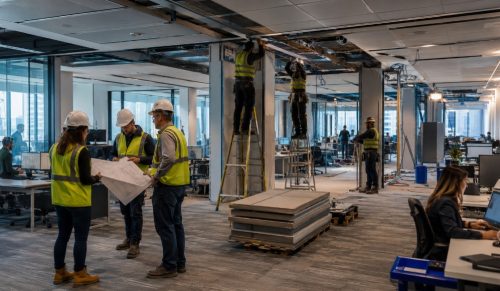 Installing movable walls typically follows a sequence that includes site surveys, design, procurement, and fit-out. Additional costs may emerge if initial surveys identify the need for structural adaptations, or if modifications to ceiling or floor supports are necessary. Enabling works, such as changes to HVAC, fire detection, or lighting, can add expenses that may be missed in early planning.
Throughout the project, minimising disruption is important as most businesses need to continue operations. Organisations should evaluate their continuity risk if temporary lack of access to space would affect daily functions.
Planning phased installations outside of core working hours can help reduce productivity losses and keep overall expenditure within expectations.
Long-term Savings and Productivity Gains Support Payback
Assessing the longer-term value of movable wall systems means looking beyond initial expenditure. Maximising space utilisation can deliver savings by enabling multiple functions within the same footprint, potentially delaying or avoiding the need to lease more premises.
With thoughtful planning, movable solutions can reduce the frequency of major refurbishments needed to accommodate new teams or working patterns, as these partitions allow space to be reconfigured quickly with minimal impact on normal activities.
Flexibility in space layout can also affect daily business performance. Improvements in noise control, privacy, and meeting accessibility may result from adaptable office layouts, potentially supporting better discussions or teamwork.
Some organisations find that meeting spaces are more accessible and that employees experience greater satisfaction when the environment can be customised for different activities.
Ongoing Maintenance, Compliance, and Risk Management Matter
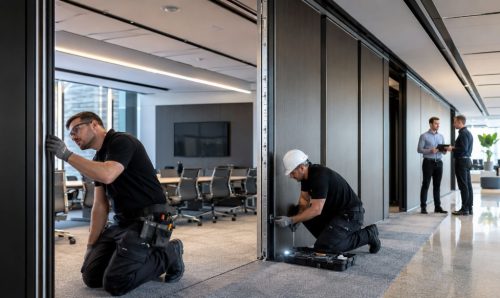 Once in operation, movable wall systems require regular maintenance to ensure acoustic performance, ease of movement, and safety. The rate of wear on seals, bearings, and track components depends on usage frequency, so it is necessary to consider expected service intervals and the availability of replacement parts.
Systems designed for frequent, heavy use often include reinforced hardware and may offer a longer operational lifespan, though this can increase the initial investment.
After installation, compliance with acoustic and fire safety standards is important for the total cost of ownership. Meeting building regulations helps reduce legal risk and safeguard occupants, while well-documented warranties and proactive service agreements can reduce the likelihood of unexpected repair costs.
When comparing different movable partition solutions, it is important to evaluate not just initial price, but also the strength of compliance features and support arrangements.
Objective Decision Frameworks for Evaluating Proposals
A thorough approach to comparing movable wall system proposals involves considering both direct and indirect costs. Evaluators should determine whether each option meets business needs for flexibility, acoustic separation, and ease of reconfiguration, while also accounting for the impact of installation on ongoing operations.
Reviewing how spaces could be configured in multiple ways, and comparing these benefits against alternative, more permanent solutions, can clarify operational value.
Movable wall systems are likely to be most cost effective where there is frequent need for space reconfiguration, high utilisation, or significant collaboration. Where these conditions do not exist, more straightforward division methods might be as effective.
Using a checklist that covers specification quality, risk of disruption, maintenance support, and compliance credentials can help select a system with greater long-term value for an organisation.
By evaluating movable wall systems through the lens of total cost of ownership and operational needs, organisations can achieve flexible space management and potential financial returns that last beyond initial installation.