
























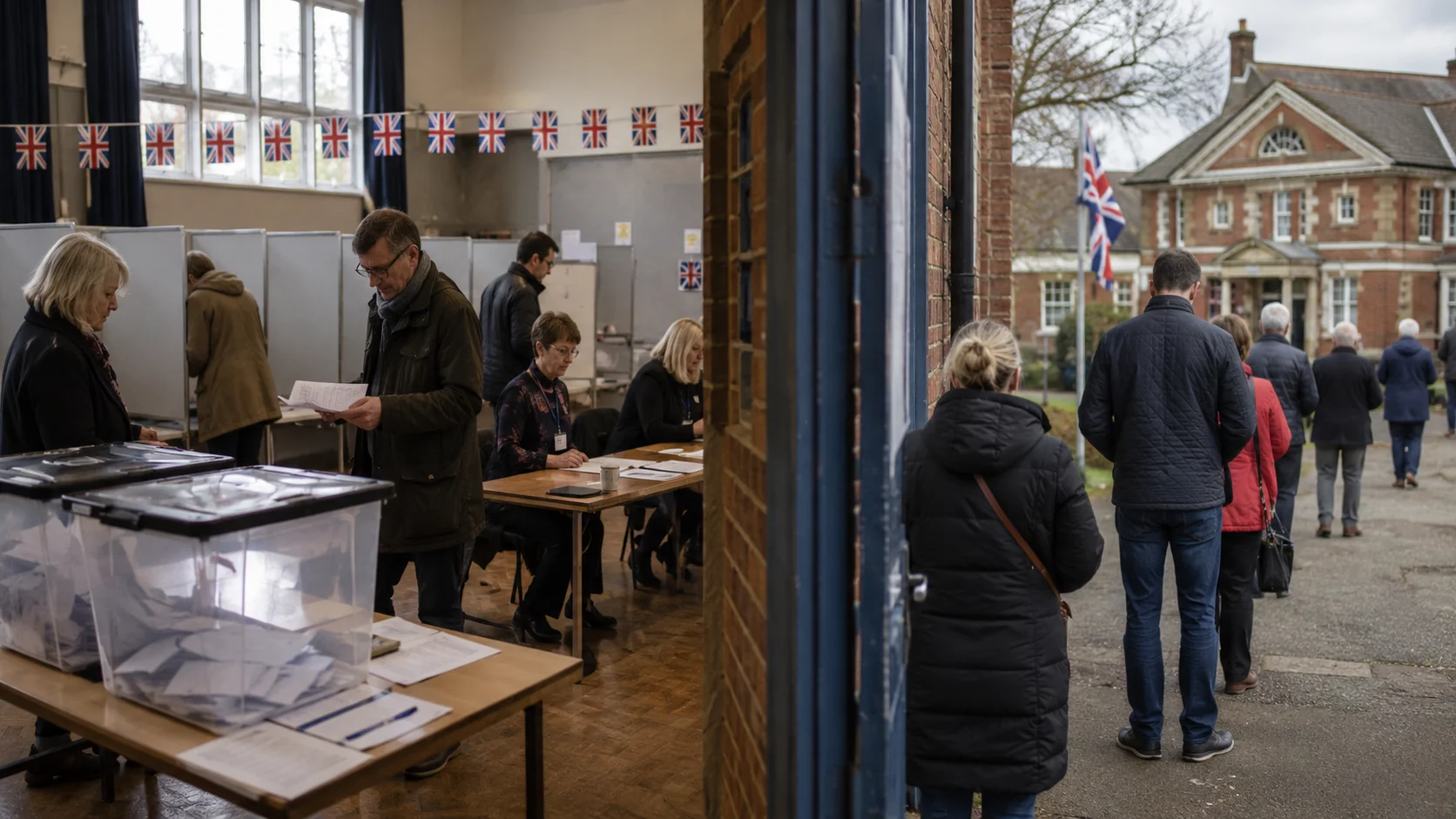
No, people in the UK do not get fined for choosing not to vote. Voting in Britain is voluntary, which means eligible citizens have the right to take part in elections but are not legally required to cast a ballot.
However, many people confuse not voting with failing to respond to electoral registration requests, which can sometimes lead to penalties from local councils.
Understanding this difference is important because UK election laws focus more on maintaining accurate voter records than forcing political participation.
Key Takeaways
- The UK does not fine people for not voting
- Voting in Britain is voluntary, not compulsory
- Electoral registration rules are separate from voting laws
- Ignoring official registration requests may lead to penalties
- Several countries outside the UK use compulsory voting systems
- Low voter turnout can still affect political representation
- UK citizens can vote in person, by post, or by proxy
How Does Voting Work in the United Kingdom?

The United Kingdom operates under a democratic electoral system where eligible citizens can vote to choose representatives at national, regional, and local levels.
Elections play a central role in shaping government decisions, public policy, taxation, healthcare, education, transport, and many other areas of daily life.
The UK does not use a compulsory voting system. Instead, it follows a voluntary approach that gives citizens the freedom to decide whether they want to participate in elections. This system has existed for generations and is considered an important part of British democratic tradition.
In the UK, people may vote in several types of elections, including:
| Election Type | Purpose |
| General Elections | Elect Members of Parliament (MPs) |
| Local Elections | Elect local councillors |
| Mayoral Elections | Choose regional or city mayors |
| Devolved Elections | Elect representatives in Scotland, Wales, and Northern Ireland |
| Referendums | Vote on specific national or regional issues |
To take part in elections, individuals must first be registered to vote. Registration is handled through the electoral register, which is maintained by local councils across the country.
A person is generally eligible to vote if they:
| Requirement | Details |
| Age | Must usually be 18 or older |
| Citizenship | British, Irish, or qualifying Commonwealth citizen |
| Residency | Must live in the UK and meet local registration rules |
| Registration Status | Must appear on the electoral register |
The UK electoral system places strong emphasis on individual choice. Citizens are encouraged to participate, but the government does not force them to cast a ballot.
This differs significantly from countries where voting is legally enforced. In compulsory voting systems, governments may issue penalties to those who fail to vote without a valid excuse. Britain has chosen not to adopt this model because many policymakers believe democratic participation should remain voluntary.
The UK also provides multiple methods for voting to improve accessibility and convenience. Voters can attend polling stations in person, apply for postal voting, or use proxy voting arrangements if they cannot vote themselves.
Polling stations are normally open from 7am until 10pm on election day, allowing flexibility for workers, students, and families.
Recent elections have also introduced voter identification requirements in many areas. Accepted forms of photo ID are now required at polling stations for several elections across the UK. These rules were introduced to improve electoral security and public confidence in the voting process.
Although turnout levels vary between elections, voting remains one of the primary ways citizens can influence national and local decisions.
Is It Illegal Not to Vote in the UK?
One of the most common election-related questions in Britain is whether it is illegal not to vote. The answer is straightforward. Choosing not to vote is completely legal in the United Kingdom.
A person who stays home on election day will not receive:
- A criminal conviction
- A prison sentence
- A fine
- A warning from the police
This often surprises people who have heard about compulsory voting laws in countries such as Australia or Belgium.
In the UK, voting is treated as a democratic right rather than a legal duty. Citizens can freely decide whether they want to participate in political processes.
Many people choose not to vote for personal reasons, including:
| Common Reasons for Not Voting | Explanation |
| Lack of political interest | Some people feel disconnected from politics |
| Dissatisfaction with candidates | Voters may dislike available choices |
| Illness or disability | Health issues can prevent participation |
| Travel commitments | Being away during elections |
| Lack of information | Some individuals feel uninformed |
None of these reasons lead to punishment under British law.
Despite this, confusion still exists because election-related letters from councils sometimes appear official or threatening. Many residents incorrectly assume these letters mean voting itself is mandatory.
A university politics lecturer explained this misunderstanding clearly during a public discussion about voter participation.
“I regularly speak with people who genuinely believe they can be fined for not voting because they have seen examples from Australia online. In Britain, the law does not punish people for deciding not to take part in elections.”
This confusion has increased in recent years due to social media posts spreading inaccurate information about election rules.
Another reason for misunderstanding comes from the close connection between voting and voter registration. While voting is voluntary, electoral registration carries certain legal responsibilities.
The UK government encourages participation in elections through campaigns, advertising, and public awareness initiatives rather than through legal enforcement.
Political analysts often argue that voluntary voting reflects democratic freedom more accurately because citizens retain full control over whether they participate.
Others believe compulsory voting could improve turnout and make election results more representative of the entire population.
These debates continue within British politics, but compulsory voting has never been introduced nationwide.
What Happens if Someone Decides Not to Vote?
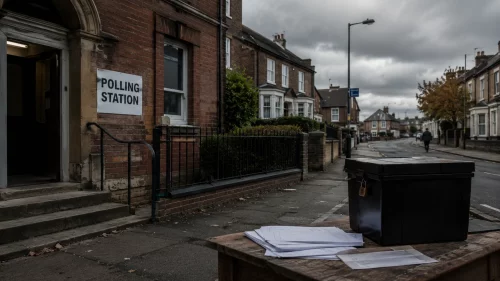
Although there is no legal penalty for not voting, choosing not to participate can still have wider effects on democracy and representation.
When individuals decide not to vote, their opinions are absent from the electoral process. Election outcomes are then determined entirely by those who do participate.
Low turnout can affect:
| Area Affected | Impact |
| Representation | Certain groups may become underrepresented |
| Government Priorities | Policies may focus on regular voters |
| Local Services | Community concerns may receive less attention |
| Political Campaigns | Parties target areas with higher turnout |
Political parties often concentrate resources on communities with strong voting participation because those areas are more likely to influence election results.
This means areas with consistently low turnout may receive less campaign attention over time.
No Legal Punishment for Non-Voters
Non-voters face no direct legal consequences for staying away from polling stations.
The government does not monitor whether a registered voter actually casts a ballot. Voting records are secret, and no authority tracks individual political participation in this way.
Someone may remain on the electoral register for years without voting in a single election.
This legal freedom is considered an important democratic principle in Britain.
Political and Social Impact of Not Voting
While non-voters avoid legal penalties, some experts argue that widespread non-participation weakens democratic accountability.
Governments are elected based on the preferences of active voters. If certain age groups or communities participate less frequently, their priorities may receive less political attention.
For example, younger voters often have lower turnout rates than older generations in UK elections. Analysts sometimes argue this influences which policies political parties prioritise during campaigns.
A public policy researcher described the issue in practical terms.
“When politicians know certain groups rarely vote, those groups naturally become less important during election planning. High-turnout communities usually receive greater political focus.”
This does not mean non-voters lose rights or services, but turnout patterns can influence political strategies.
How Low Voter Turnout Affects Elections?
Low turnout can significantly shape election outcomes.
In some local elections, turnout may fall below 40 percent. This means decisions affecting entire communities are sometimes made by a relatively small percentage of eligible voters.
The issue becomes particularly important during:
- Close elections
- Referendums
- Local council races
- Regional mayoral contests
Even small increases in turnout can occasionally change results.
Political scientists often examine turnout rates because they help measure public trust, engagement, and confidence in democratic institutions.
Can People Be Fined for Not Registering to Vote?

This area creates the greatest confusion for many people.
While there is no fine for refusing to vote, there can be penalties linked to electoral registration obligations.
Local councils are responsible for maintaining accurate electoral registers. To do this, they regularly contact households asking residents to confirm who lives at the property.
These requests are legally important because electoral records help maintain accurate voting systems.
Understanding Electoral Registration Rules
Every year, councils send communications asking households to update voter details.
Residents may need to:
- Confirm current occupants
- Add eligible voters
- Remove outdated information
- Correct inaccurate records
Ignoring repeated requests may result in enforcement action from the local authority.
The law focuses on maintaining accurate electoral records rather than forcing political participation.
Situations Where Fines May Apply
The following situations may lead to penalties:
| Situation | Possible Outcome |
| Ignoring registration notices | Civil fine |
| Providing false information | Criminal offence |
| Refusing to complete required forms | Financial penalty |
| Deliberately misleading authorities | Legal prosecution |
In many cases, councils first send reminders before issuing penalties.
The amount of any fine can vary depending on local authority procedures and the seriousness of the issue.
An electoral registration officer explained the confusion during a council awareness campaign.
“Most people who contact us think the fine relates to not voting. In reality, the issue is usually about failing to respond to official registration requests.”
This distinction is extremely important because registration and voting are treated separately under UK law.
Registering to Vote vs Actually Voting
Registering to vote does not create a legal obligation to cast a ballot.
A person can legally:
| Action | Legal Status |
| Register and vote | Fully legal |
| Register and not vote | Fully legal |
| Ignore registration requests | May lead to penalties |
| Provide false registration information | Illegal |
Many people mistakenly assume registration automatically requires participation in elections. This is incorrect.
The purpose of registration laws is to maintain accurate democratic records rather than enforce compulsory voting.
Why Does the UK Allow Voluntary Voting?
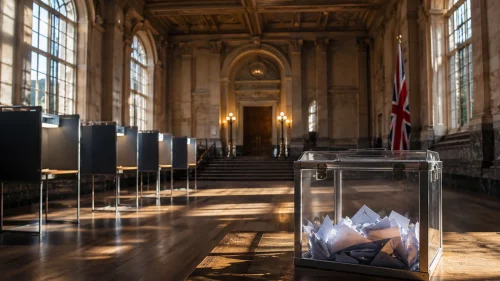
Britain’s voluntary voting system is rooted in longstanding democratic traditions and political freedoms.
Supporters of voluntary voting believe democracy works best when citizens choose to participate willingly rather than under threat of punishment.
Several key arguments are commonly made in support of the current system.
| Argument for Voluntary Voting | Explanation |
| Freedom of choice | Citizens should decide whether to participate |
| Protection of political freedom | Non-participation can also be a political statement |
| Avoiding uninformed voting | Forced participation may produce random voting |
| Reduced government control | The state should not compel political behaviour |
Critics of compulsory voting argue that forcing citizens to vote may encourage disengaged individuals to submit random or uninformed ballots simply to avoid penalties.
Others believe non-voting can itself represent political dissatisfaction or protest.
Despite these arguments, some experts support compulsory voting because they believe higher turnout creates fairer representation.
Countries with mandatory voting laws often report turnout levels above 85 percent, while UK general election turnout typically ranges lower.
Debates around compulsory voting usually increase after elections with particularly low turnout.
However, no major UK government has introduced nationwide compulsory voting legislation.
Which Countries Have Fines for Not Voting?
Compulsory voting exists in several countries around the world.
Under these systems, eligible citizens are expected by law to participate in elections unless they provide valid reasons for absence.
Countries using compulsory voting include:
| Country | Compulsory Voting | Potential Penalty |
| Australia | Yes | Financial fine |
| Belgium | Yes | Monetary penalties |
| Brazil | Yes | Administrative restrictions |
| Singapore | Yes | Removal from voter register |
| Peru | Yes | Financial sanctions |
| United Kingdom | No | No penalty |
Australia is frequently referenced during UK discussions about compulsory voting.
Australian citizens who fail to vote in federal elections may receive official notices and fines if they cannot provide acceptable reasons.
Supporters of compulsory voting argue these systems create:
- Higher turnout
- Greater political participation
- More representative election outcomes
Opponents argue that compulsory voting reduces personal freedom and forces political participation.
The UK continues to favour voluntary democratic engagement rather than legal enforcement.
What Are the Different Ways to Vote in UK Elections?
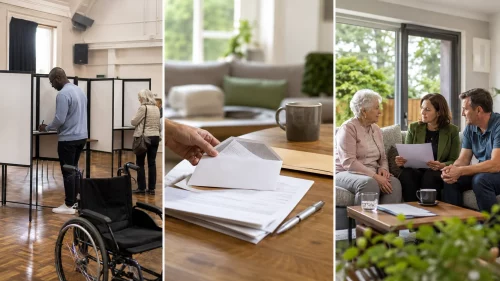
The UK provides several voting methods to make elections more accessible to different groups of people.
Voting in Person at a Polling Station
Most voters still cast ballots at local polling stations.
Polling stations are organised within communities and usually located in:
- Schools
- Community centres
- Church halls
- Public buildings
Voters receive polling cards before elections explaining where and when they can vote.
Recent changes have introduced voter ID requirements in many elections.
Applying for a Postal Vote
Postal voting allows people to vote remotely by mail.
This option is useful for individuals who:
| Common Postal Vote Users | Reason |
| Elderly voters | Mobility difficulties |
| Travellers | Away during election day |
| Disabled individuals | Accessibility needs |
| Shift workers | Scheduling conflicts |
Completed ballot papers must be returned before official deadlines.
Using a Proxy Vote
Proxy voting allows another trusted person to vote on someone’s behalf.
This method is commonly used when individuals are:
- Overseas
- Hospitalised
- Physically unable to attend polling stations
Applications for proxy voting must usually be submitted in advance.
These alternative voting methods help improve participation while preserving the voluntary nature of the UK electoral system.
Final Thoughts
So, do you get a fine if you don’t vote in the UK?
No — the UK does not fine citizens simply for choosing not to vote. Voting remains voluntary, and people are free to decide whether they want to participate in elections.
However, confusion often arises because electoral registration rules can sometimes involve penalties if official requests are ignored. Registering to vote is different from actually casting a ballot.
Although there is no legal punishment for non-voters, elections still influence major decisions affecting communities, public services, and national policies. For many people, voting remains an important way to participate in democracy and shape the future of the country.
FAQs
Can someone be arrested for not voting in the UK?
No. A person cannot be arrested simply for choosing not to vote in UK elections.
Do local elections have compulsory voting rules?
No. Local elections in the UK are also voluntary, just like general elections.
Is registering to vote mandatory in Britain?
People are legally expected to provide accurate electoral registration information when requested by local authorities.
Can employers stop workers from voting in the UK?
Employers generally cannot prevent employees from voting, although there is no automatic legal right to paid time off for elections.
Why do some countries introduce compulsory voting?
Some governments believe compulsory voting increases democratic participation and improves voter turnout.
Is online voting available in UK elections?
The UK does not currently use widespread online voting for general public elections.
What should someone do if they miss election day?
Missing election day does not result in punishment in the UK. People can participate in future elections if they remain registered.