


























| Detail | Quick Answer |
| Became Prime Minister | 5 July 2024 |
| Political Background | Former Director of Public Prosecutions, MP from 2015 and Labour leader from 2020 |
| Time as Prime Minister | 5 July 2024 to 20 July 2026, a total of 745 days |
| Major Achievements | Renters’ rights, employment protections, removal of the two-child Universal Credit limit and improvements in NHS waiting lists |
| Major Failures | Welfare policy reversals, weak public confidence, an unfinished housing target and continuing economic pressures |
| Resignation Announced | 22 June 2026 |
| Final Day in Office | 20 July 2026 |
| Successor | Andy Burnham |
According to GOV.UK’s official record of Keir Starmer’s premiership, Starmer served as Prime Minister from 5 July 2024 until 20 July 2026, meaning his premiership lasted just over two years.
- Rise To Power: Starmer became Prime Minister after Labour won 411 seats in the July 2024 general election, ending 14 years of Conservative-led government.
- Major Failures: His government struggled to turn promises of rapid economic growth, housing expansion and public service recovery into changes that were consistently felt by voters.
- Main Criticisms: Critics focused on welfare policy U-turns, communication problems, falling popularity and controversial political appointments.
- Resignation Pressure: Poor political results in 2026 and growing dissatisfaction among Labour MPs intensified questions about whether he could lead the party into the next general election.
- Resignation Timeline: Starmer announced his intention to step down on 22 June 2026, remained Prime Minister during Labour’s leadership transition and finally left Downing Street on 20 July.
His short premiership therefore produced an unusual record. Significant legislation was passed in areas such as employment and renting, but political instability eventually overwhelmed those achievements.
Last Updated: 22.08.2026
Why Did Keir Starmer Resign as Prime Minister?
 Starmer’s resignation was not caused by one policy or event. It followed months of declining political authority, electoral setbacks, policy reversals and internal pressure within Labour.
Falling Public Support and Poor Election Results
Labour entered government in 2024 with a large parliamentary majority, but its electoral position was less secure than the seat total suggested. The party won 411 seats, yet support began to weaken after entering government.
Controversies over winter fuel payments, welfare reform and the cost of living contributed to frustration among some voters. The growth of Reform UK also changed the political environment and placed additional pressure on Labour in parts of England.
Poor local election results in May 2026 accelerated the leadership crisis. Labour MPs increasingly questioned whether Starmer could recover enough public support to lead the party successfully into another general election.
Labour Pressure, Leadership Criticism and Controversies
Starmer was also criticised for changing direction after announcing or defending difficult policies.
Attempts to reform disability-related welfare payments triggered resistance from Labour MPs and campaigners.
Several proposals were subsequently changed or withdrawn, creating the impression that Downing Street had failed to anticipate opposition.
The Peter Mandelson controversy created another serious problem.
Starmer later acknowledged that appointing Mandelson as UK ambassador to the United States had been a mistake after further information emerged about Mandelson’s relationship with Jeffrey Epstein. Starmer apologised and accepted responsibility for the appointment.
By June 2026, pressure from within Labour had become difficult to contain. Starmer announced that he would step down on 22 June, allowing the party to choose a new leader before he formally left office.
What Were Keir Starmer’s Biggest Achievements?
Starmer’s strongest record was in legislation. Several major reforms reached the statute book during his two years in Downing Street, even though some had not been fully implemented by the time he left.
Housing and Workers’ Rights Reforms
The Renters’ Rights Act 2025 became one of the clearest legislative achievements of Starmer’s government.
The official Renters’ Rights Act 2025 explanatory notes confirm that the legislation received Royal Assent on 27 October 2025. It abolished Section 21 no-fault evictions and introduced a new framework designed to provide greater security for private tenants in England.
Other changes included:
- Stronger Protection Against Rental Bidding
- Greater Rights To Challenge Unreasonable Rent Increases
- A Right To Request Pets
- Periodic Tenancies Replacing The Previous Assured Shorthold Structure
Starmer’s government also passed the Employment Rights Act 2025 in December. Its reforms covered zero-hours arrangements, statutory sick pay, parental rights, bereavement leave, dismissal protections and trade union law.
Many measures were designed to be introduced gradually rather than taking effect immediately.
Poverty Reduction and Public Service Improvements
Another major policy change was the removal of the two-child limit in Universal Credit from 6 April 2026.
Families receiving Universal Credit can now receive a child element for every eligible child, although the separate benefit cap continues to apply.
The government estimated that ending the limit could lift around 450,000 children out of poverty by the final year of the Parliament.
Starmer’s government also expanded eligibility for free school meals in England.
From September 2026, children in households receiving Universal Credit are eligible regardless of household earnings, with official estimates suggesting more than 500,000 additional children could qualify.
The policy was developed under Starmer, although implementation began after he left Downing Street.
There was measurable progress in parts of the NHS as well. By March 2026, England’s elective waiting list had fallen to about 7.11 million, more than half a million lower than in July 2024.
However, significant pressures remained and the service was still well short of its long-term 92% target for treatment within 18 weeks.
What Were Keir Starmer’s Biggest Failures and Controversies?
The main weaknesses of Starmer’s premiership were political consistency and the difficulty of turning individual policy achievements into broader confidence in the government.
Welfare Reversals and Cost of Living Criticism
Welfare became one of the most damaging political areas for Starmer.
Changes to winter fuel support were heavily criticised, particularly because Labour had presented itself as offering greater economic security.
Later adjustments reduced some of the political damage but reinforced criticism that difficult policies were being announced before their political consequences had been fully considered.
Proposed disability and welfare reforms created similar problems. Attempts to control spending generated opposition from campaigners and Labour MPs, forcing the government to modify parts of its programme.
This created a wider problem for Starmer. Even when policies were eventually changed, the political damage from the original proposals often remained.
Cost of living pressures also continued. Lower interest rates helped some mortgage borrowers, but household budgets remained exposed to food, housing and energy costs.
Political Controversies and Leadership Problems
Starmer entered Downing Street promising stability and competence, making management failures particularly damaging to his political image.
The Mandelson appointment became one of the clearest examples. Starmer eventually stated publicly that he should not have appointed Mandelson and accepted responsibility for the decision.
Critics also argued that the government lacked a consistently communicated political direction. Repeated attempts to reset the government’s message made it harder for Labour to build a clear identity around its achievements.
By 2026, Starmer was facing criticism from different parts of his own party as well as opposition parties. That combination of external electoral pressure and internal dissatisfaction ultimately made his leadership increasingly difficult to sustain.
How Did the UK Economy Perform Under Keir Starmer?
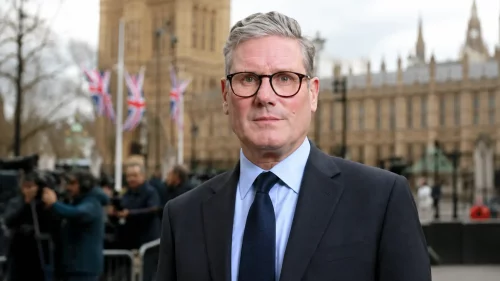 Starmer made economic growth one of his government’s central missions. The final record was mixed rather than clearly successful or unsuccessful.
Economic Growth and GDP
The economy continued to grow during Starmer’s final months in office.
The latest Office for National Statistics estimate for April to June 2026 showed that real UK GDP increased by 0.4% in the second quarter of 2026, following growth of 0.6% in the first quarter.
GDP was also estimated to be 1.2% higher than a year earlier.
Those figures indicated continuing expansion, but growth was not strong enough to settle arguments about living standards, business investment or productivity.
Inflation and Interest Rates
Inflation was much lower than the peaks Britain experienced before Starmer became Prime Minister, although it remained above the Bank of England’s 2% target.
CPI inflation stood at 2.6% in June 2026.
Meanwhile, Bank Rate had fallen from 5.25% when Starmer entered office to 3.75% by July 2026. The lower rate provided some relief for borrowers, although the Bank of England continued to warn about inflationary risks.
Unemployment and the Labour Market
The labour market was one of the weaker areas of the economic record.
The UK unemployment rate was around 4.2% in April to June 2024 but had risen to 4.9% in March to May 2026. Official figures also showed a year-on-year decline in the number of payrolled employees.
That meant Starmer could point to economic growth and falling interest rates while critics could point to weaker employment conditions.
Public Debt and Government Finances
Public finances remained under pressure throughout the premiership.
Public sector net debt was provisionally estimated at 99.4% of GDP in July 2024.
The comparable headline measure stood at about 94.9% in June 2026, although debt-to-GDP estimates can be revised and a falling ratio does not necessarily mean the cash value of government debt has fallen.
UK Economic Position in 2024 vs 2026
| Indicator | Around Starmer’s Arrival in 2024 | Position Near the End of His Premiership |
| CPI Inflation | 2.2% in July 2024 | 2.6% in June 2026 |
| Bank Rate | 5.25% | 3.75% in July 2026 |
| Unemployment Rate | 4.2% in Apr–Jun 2024 | 4.9% in Mar–May 2026 |
| Public Sector Net Debt | 99.4% of GDP in July 2024, provisional | 94.9% of GDP in June 2026 |
| Q2 2026 GDP Growth | — | 0.4% quarter on quarter |
Overall, Starmer left behind an economy that was growing and operating with lower interest rates, but unemployment, household costs and weak perceptions of economic progress prevented growth from becoming an unambiguous political success.
What Was Starmer’s Record on Housing and Renters’ Rights?
Renters’ Rights and the Section 21 Ban
Housing legislation was one of Starmer’s clearer achievements.
The Renters’ Rights Act abolished Section 21 no-fault evictions in England and moved assured tenancies towards a periodic system. It also strengthened rules around rent bidding, rent increases and tenants requesting pets.
For private renters, those changes represented a significant shift in the balance between tenant security and landlords’ possession rights.
Housing Targets and Affordability
The wider housing record was less conclusive.
Labour entered government promising 1.5 million new homes over the Parliament and changed planning rules in an attempt to increase supply. However, Starmer left Downing Street roughly two years into the parliamentary term.
It is therefore more accurate to describe the 1.5 million target as unfinished during his premiership, rather than judging it solely as a target he personally failed to complete.
Government modelling showed that achieving 1.5 million homes required construction to accelerate substantially later in the Parliament.
Housing affordability, rents and homelessness also remained major national problems despite stronger rights for tenants.
How Did Starmer’s Policies Affect Poverty and Living Standards?
Child Poverty and Family Support
The removal of the two-child Universal Credit limit was arguably Starmer’s most important anti-poverty measure.
From 6 April 2026, Universal Credit began including support for each eligible child rather than restricting the child element to two children in most cases.
Free school meal eligibility was also expanded to all children in Universal Credit households in England from September 2026.
Together, these measures strengthened support for lower-income families, although some of their full effects will only become measurable after Starmer’s premiership.
Welfare Reform and Cost of Living Pressures
The government’s poverty record was complicated by controversial welfare proposals.
Efforts to reduce future disability-related welfare spending generated concern about the impact on people with long-term illnesses and disabilities. Opposition from Labour MPs eventually forced significant changes in the government’s approach.
At the same time, many households continued to experience pressure from housing, food and energy costs.
The result was a mixed living-standards record. Starmer introduced substantial additional support for some families, but the benefits were partly overshadowed politically by controversial welfare decisions and continued financial pressure.
How Did Immigration Change During Starmer’s Premiership?
Fall in UK Net Migration
Net migration fell sharply while Starmer was Prime Minister.
Provisional ONS estimates put long-term net migration at approximately 171,000 in the year ending December 2025, down from 331,000 a year earlier.
This was a significant change, but it should not be attributed entirely to Starmer.
Some restrictions affecting work and dependant visas had been introduced under the previous Conservative government and continued to influence immigration numbers after Labour took office.
Starmer’s government introduced additional measures aimed at reducing reliance on overseas recruitment and tightening migration controls.
Immigration, Asylum and Small Boat Policies
Despite falling net migration, irregular migration remained politically difficult.
Small boat crossings continued to receive intense attention and Starmer faced criticism from opponents who argued that progress was too slow.
Labour abandoned the previous Rwanda removal scheme and instead focused on enforcement, international cooperation and action against people-smuggling networks.
The distinction matters. Net migration fell substantially, but this did not automatically resolve public concern about asylum, Channel crossings or border enforcement.
What Did Starmer Achieve on the NHS and Public Services?
NHS Waiting Lists and Healthcare
The NHS produced some of the clearest measurable improvements during Starmer’s premiership.
By March 2026:
- The Overall Elective Waiting List Had Fallen To Around 7.11 Million
- The List Was More Than 500,000 Lower Than In July 2024
- 3% Of Patients Were Waiting 18 Weeks Or Less
- The Number Of Very Long Waits Had Also Fallen
However, 65.3% was still well below the NHS constitutional standard of 92%, while accident and emergency departments continued to experience exceptionally high demand.
The fairest assessment is therefore that waiting-list performance improved from the position Starmer inherited, without resolving the NHS’s wider structural pressures.
Education, SEND and Skills Reform
Starmer’s government also began substantial changes to education and skills.
SEND reform focused on earlier support, more inclusive mainstream education and an expansion of specialist provision.
The longer-term programme included plans for tens of thousands of additional specialist places, but much of its implementation was scheduled beyond Starmer’s time in office.
Apprenticeship reforms included foundation apprenticeships, shorter eligible programmes in some sectors and greater emphasis on opportunities for younger workers.
These initiatives formed part of Starmer’s domestic legacy, although many were too new to judge by the time he resigned.
What Was Keir Starmer’s Foreign Policy Record?
Ukraine, Europe and the United States
Foreign policy was generally one of the stronger areas of Starmer’s premiership.
The UK maintained strong military and diplomatic support for Ukraine, while Starmer worked with European leaders through the Coalition of the Willing.
His government also pursued a reset in relations with the European Union, including a UK-EU Strategic Partnership and closer security and defence cooperation.
Relations with the United States required a more difficult balancing act after Donald Trump returned to the White House.
Starmer sought to preserve close defence and economic ties while occasionally taking a different position from Washington on international conflicts.
Gaza and Wider International Policy
The Middle East generated more political controversy.
Starmer’s government formally recognised the State of Palestine on 21 September 2025, while continuing to call for the release of Israeli hostages, an end to the violence and a negotiated two-state solution.
The decision attracted criticism from different directions. Some argued Britain had acted too slowly over the humanitarian situation in Gaza, while others opposed recognition or questioned its timing.
Starmer also dealt with growing instability involving Iran and the Strait of Hormuz during the final months of his premiership.
How Did Starmer Change the Labour Party?
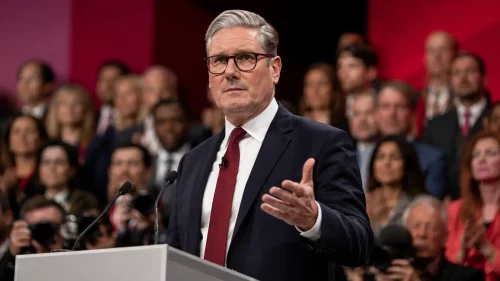 Moving Labour Towards the Political Centre
Starmer became Labour leader in April 2020 after the party’s heavy 2019 election defeat.
He moved Labour towards the political centre, placed greater emphasis on fiscal discipline and sought to demonstrate that the party could be trusted to govern.
He also made tackling antisemitism within Labour a major priority after taking over the leadership.
Labour’s 2024 General Election Victory
That strategy contributed to Labour’s decisive parliamentary victory in 2024.
Labour won 411 seats, gaining 209 compared with the 2019 election. The result ended 14 years of Conservative-led government and gave Starmer one of the largest Commons majorities in modern British politics.
However, the size of Labour’s parliamentary majority was much larger than its share of the national vote suggested, leaving the party potentially vulnerable if support moved quickly.
Declining Support After Entering Government
That vulnerability became clear during Starmer’s premiership.
Economic frustration, controversial policy decisions and the rise of Reform UK weakened Labour’s support. Repeated political resets did not fully reverse the decline.
The contrast between the scale of the 2024 victory and the leadership crisis less than two years later became one of the defining features of Starmer’s political record.
Labour After Starmer’s Resignation
Andy Burnham returned to Parliament in June 2026 and was elected Labour leader on 16 July 2026.
On 20 July, Starmer delivered his final Downing Street speech and Andy Burnham became Prime Minister later that day.
Starmer therefore left Labour still in government with a substantial parliamentary majority, but facing a much more competitive political environment than the one it entered after the 2024 election.
Keir Starmer’s Achievements vs Failures
| Policy Area | Main Achievement | Main Failure or Limitation | Overall Assessment |
| Economy | Continued GDP growth and lower interest rates | Unemployment increased and growth was not transformational | Mixed |
| Housing | Renters’ Rights Act and Section 21 abolition | Housing supply and affordability remained difficult | Positive To Mixed |
| Workers’ Rights | Employment Rights Act passed | Many reforms required later implementation | Positive |
| Welfare | Two-child Universal Credit limit removed | Disability and winter fuel policies caused political damage | Mixed |
| Immigration | Net migration fell substantially | Small boat crossings remained politically contentious | Mixed |
| NHS | Waiting list and long waits reduced | Overall backlog remained large | Positive To Mixed |
| Foreign Policy | Strong Ukraine role and closer European cooperation | Middle East policy remained controversial | Positive To Mixed |
| Political Leadership | Led Labour to a 411-seat victory | Lost authority and resigned around two years later | Negative |
Starmer’s policy record was therefore stronger than his final political position might suggest. Several significant reforms became law, but the government struggled to convert those achievements into sustained public confidence.
Keir Starmer Premiership Timeline: 2024–2026
| Date | Event | Why It Mattered |
| 5 July 2024 | Keir Starmer became Prime Minister | Labour returned to government after 14 years and Starmer began his national renewal programme |
| 21 September 2025 | UK formally recognised the State of Palestine | Became one of the most significant foreign policy decisions of his premiership |
| 27 October 2025 | Renters’ Rights Act received Royal Assent | Delivered major reform of England’s private rented sector |
| 18 December 2025 | Employment Rights Act received Royal Assent | Put major parts of Labour’s workers’ rights programme into law |
| 6 April 2026 | Two-child Universal Credit limit ended | Expanded financial support to families with three or more children |
| May 2026 | Poor election results increased pressure on Starmer | Labour MPs increasingly questioned his ability to lead the party into another general election |
| 22 June 2026 | Starmer announced his intention to resign | Triggered the transition to a new Labour leader |
| 16 July 2026 | Andy Burnham became Labour leader | Confirmed the person who would replace Starmer as Prime Minister |
| 20 July 2026 | Starmer left Downing Street | Ended a premiership lasting 745 days and Burnham became Prime Minister |
Conclusion
Keir Starmer’s time as Prime Minister lasted only 745 days, but it produced significant changes in renters’ rights, employment law, child poverty policy and parts of the NHS.
His government also oversaw a sharp fall in net migration, lower interest rates and continued economic growth.
However, unemployment increased, housing pressures remained, welfare policies caused damaging rebellions and several political controversies weakened confidence in his leadership.
Starmer’s greatest problem was ultimately the gap between policy delivery and political support.
He left Downing Street with several major reforms on the statute book, but without the public or parliamentary authority needed to complete the political project that began with Labour’s landslide victory in 2024.
Frequently Asked Questions
Why Did Keir Starmer Resign as Prime Minister?
Starmer stepped down after declining political support, poor election results, policy controversies and increasing pressure from Labour MPs over whether he could lead the party into another general election.
How Long Was Keir Starmer Prime Minister?
Keir Starmer served from 5 July 2024 to 20 July 2026, a period of 745 days, or just over two years.
What Were Keir Starmer’s Biggest Achievements?
His main achievements included the Renters’ Rights Act, Employment Rights Act, ending the two-child Universal Credit limit and measurable reductions in NHS elective waiting lists.
What Were Keir Starmer’s Biggest Failures?
His main weaknesses included welfare policy reversals, rising unemployment, political controversies, an unfinished housing programme and declining support within Labour and among voters.
Did Net Migration Fall Under Keir Starmer?
Yes. Provisional ONS estimates show net migration fell to around 171,000 in the year ending December 2025, although some of the fall reflected immigration restrictions introduced before Labour entered office.
What Did Keir Starmer Change for Renters?
The Renters’ Rights Act abolished Section 21 no-fault evictions and introduced stronger protections covering rent increases, rental bidding, pets and tenancy security in England.
Did the UK Economy Improve Under Keir Starmer?
The picture was mixed. GDP continued to grow and interest rates fell, but unemployment increased and many households continued to experience cost of living pressures.