

























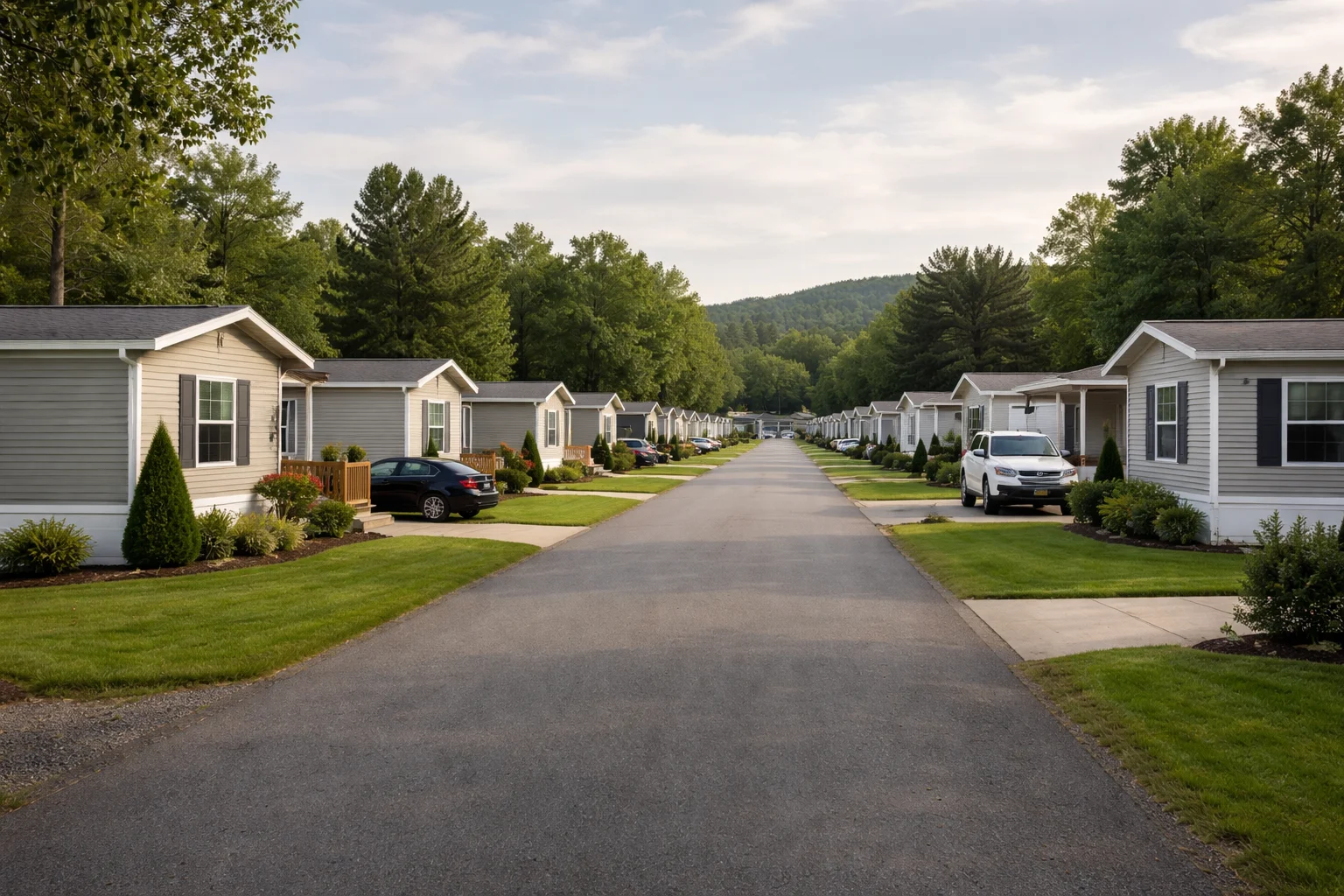
From a financial standpoint, investors typically seek two things: an acceptable return and income in the form of cash flow. The first is a long-range objective, a lump-sum reward you gain if and when you decide to sell.
But the second is both short and long-term, particularly if the cash flow from an asset is steady. Predictable income means you can bet your bottom dollar the money will flow in today and tomorrow.
Mobile home parks help investors achieve both sets of goals, but it’s the passive income that makes this asset stand out.
When considering types of investments in 2026, evaluate the reliability of cash flow and how hands-on you’ll need to be.
If you’re someone who prefers the more hands-off approach, here are a few good reasons mobile home parks can provide consistent, long-term income.
What Is the Passive Income Potential of Mobile Home Parks for Investors in 2026?
Low Operating Costs
Real estate assets come with ongoing operating costs. You can’t keep a property in good shape without maintenance. Furthermore, you need someone to manage it if you’re not going to do it yourself. A typical property requires weekly, if not daily, oversight.
Landlords are usually responsible for repairs and upkeep for the entire building, including the exterior.
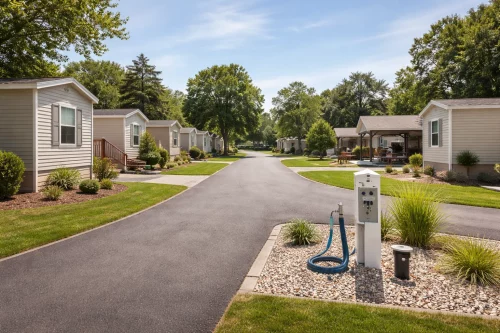
With mobile home parks, the dynamics are usually different. Investors own the land, but tenants own their homes.
This means fewer operating costs because you’re not paying for repairs and upkeep for each of the homes. Your maintenance expenses are limited to the land those houses sit on.
Lower operating costs translate to higher cash flow or income potential. Lifestyle Investing expert, Justin Donald, explains cashflow investing in a nutshell: “The more cash flow you get, the natural byproduct is more net worth, right? So, it’s like you can focus on this.
You got real utility over here on the cash flow side.” It comes back to basic budgeting principles. You can increase your income potential when your expenses go down.
Demand for Affordable Housing
When it comes to housing, there’s an affordability gap because typical household incomes aren’t keeping up with average prices.
A typical household earns $80,000 annually, but needs a boost to nearly $113,000 to afford homes at the median price.
Unless people get an unexpected raise, win the lottery, or receive a sudden windfall inheritance, the boost isn’t coming.
This reality is pricing many would-be homebuyers out of the market. However, mobile homes are usually substantially lower than the median home cost of $435,000.
The same potential buyers aren’t priced out of homeownership if they buy mobile. They can more easily afford to purchase a manufactured home if they’re willing to consider less conventional options.
The affordability of mobile homes applies across average income brackets and life stages. Young professionals starting out, singles, and retirees find homeownership within reach with manufactured properties.
Because the demand for affordable housing isn’t going away, mobile home parks are less likely to have the vacancies of other real estate assets. For investors, this means more income potential without excessive marketing.
Less Volatility
The combination of lower operating expenses and steady demand makes mobile home parks a less volatile investment.
Changes in the overall economy are less likely to diminish the cash flow possibility of this asset. Less volatility has earned mobile home parks the label of being recession-resistant.
When the economy’s performing poorly, it doesn’t seem to affect mobile home parks as much. This asset is more resilient, often weathering the ups and downs of a volatile market.
While nothing is absolute, investors can have increased confidence in mobile home parks producing steady income during turbulent times.
Tenants are less likely to bail because of the affordability factor. Plus, it’s usually too expensive to relocate their homes to another park.
Being able to accurately predict rental income despite volatility is a key advantage of this asset. Resident turnover is lower, even if property owners implement incremental rent increases to cover upticks in operating costs.
Syndication Opportunities
You can start investing in mobile home parks individually. Buy your first property, partner with a management company, and expand your portfolio from there.
This approach works well for those who want to get their feet wet, but it’s not the only one. Investing in real estate investment trusts concentrated in mobile home parks is another. Syndication deals are a third approach and can expand your possibilities.
With syndication, a group of investors combines their resources to purchase large-scale properties. A general partner is responsible for finding, managing, and then selling the assets.
The general partner takes an active role in the investment. As a result, they tend to get a larger slice of the cash flow pie.
Meanwhile, limited partners play a passive role. They contribute a percentage of their funds to the property and receive that percentage in returns, including steady income. The kicker is that limited partners don’t have to get involved in the day-to-day operations.
They benefit from contributing to a pool of money necessary to buy and run the property. It’s a way to invest in large-scale mobile home parks that they wouldn’t otherwise be able to. The reward is potentially higher passive income.
Less Competitive
With mobile home parks, there’s not usually a line around the block of investors waiting to secure the next property.
While larger investment firms have entered the picture, mobile home parks are still a relatively overlooked asset.
The long-standing stigma associated with these properties still lingers. Not to mention, zoning regulations and developers tend to favor putting in another office or condo complex rather than space for mobile homes.
These factors mean there’s usually less competition. You’re not going to be going up against as many bids for the property you set your sights on.
So, the negotiated purchase price is less likely to rise above appraised value and income forecasts due to a bidding war.
You also stand a greater chance of finding investments where the existing owners are mom-and-pop operators. They may be willing to negotiate seller financing and more favorable arrangements than traditional lenders.
This lowers your ongoing expenses, thereby increasing your earning potential. You could also encounter hidden opportunities by reaching out to existing mom-and-pop operators who haven’t yet advertised their desire to sell.
What Investors Should Consider?
When evaluating the financial feasibility of an investment, future returns and cash flows are usually top of mind. You want an asset that will produce at least the lowest acceptable return.
This threshold could include the eventual profit you’ll make from the future sale of the property. But it often also encompasses how much income you’ll make from month to month and year to year.
Several factors influence an asset’s probable cash flow, particularly when you’re a passive investor. The nature of mobile home parks can increase this potential.
From low operating costs to less competition, this asset has distinct advantages that contribute to consistent short and long-term gains.