


























Starting a business is an exciting journey, but deciding where to set up shop can make all the difference. For many new entrepreneurs in the UK, the focus tends to lean toward big cities like London, Manchester, or Birmingham.
However, tucked in the heart of Lancashire lies Preston, a city that’s quietly emerging as a smart and strategic choice for startups.
With its excellent connectivity, supportive infrastructure, skilled workforce, and relatively low business costs, Preston offers a powerful mix of opportunity and affordability.
This blog explores in detail why Preston is fast becoming a destination of choice for the UK’s next generation of entrepreneurs.
Last Updated: 13.08.2026
Why Is Preston Considered a Strategic Business Location?
Preston’s geographical position is one of its greatest assets. Situated in North West England, it sits between major cities and transport networks, offering entrepreneurs direct access to both northern and southern markets.
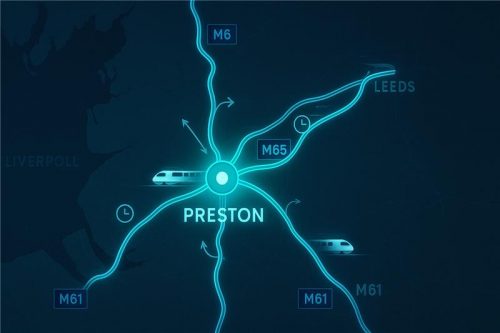
It is located just off the M6 motorway, with excellent links to the M61 and M65, making road travel to Manchester, Liverpool, and Leeds straightforward. Rail connectivity is equally strong.
Preston Railway Station is a central hub on the West Coast Main Line, providing fast services to London Euston in under 2.5 hours, and to Glasgow in a little over two hours.
This kind of logistical access allows businesses to move products quickly, meet clients in other cities with ease, and recruit talent from a broad area. Importantly, it also allows founders to tap into nearby regional economic centres without paying premium city-centre costs.
What Does the Local Economy Offer for Startups?
Preston has successfully transitioned from a predominantly industrial economy to a more diversified and knowledge-based one. Its economy now includes strong contributions from sectors like education, digital tech, manufacturing, and logistics.
Preston’s growth has been fuelled in part by investment in public-private partnerships, such as the City Deal, which is unlocking new opportunities for commercial and residential development. New entrepreneurs can take advantage of a business environment that supports innovation while still remaining accessible.
Economic Overview of Preston
| Metric | Current Figure |
|---|---|
| Population | 162,864 |
| Employment Rate | 75.4% |
| Businesses/Enterprises | 5,830 |
| Enterprise Growth in 2025 | +2.6% |
| Micro Businesses | 88.3% of enterprises |
According to the latest available business data, Preston had 5,830 active enterprises in 2025, the highest number among Lancashire’s 14 local authority areas.
This represented an increase of 145 businesses, or 2.6%, compared with 2024. Of these enterprises, 5,145 were micro businesses employing fewer than 10 people, highlighting the important role smaller firms and entrepreneurs play in Preston’s economy.
How Affordable Is It to Start a Business in Preston?
Affordability is a major draw for entrepreneurs choosing Preston over bigger cities. Office space, housing, and daily business costs are significantly lower here, freeing up funds for investment in staffing, marketing, and development.
 Cost Comparison Table
| Expense Category | Preston | Manchester | London |
| Office Rent (sq ft avg) | £12 – £18 | £22 – £32 | £50+ |
| 2-Bed Flat Rental (monthly) | £650 – £850 | £1,000 – £1,400 | £1,800+ |
| Day-to-Day Commuting | Low | Medium | High |
For new entrepreneurs with lean budgets, this can mean the difference between survival and sustainability in the first year. Whether it’s renting a small office, hiring a small team, or investing in product development, the reduced costs in Preston offer greater breathing room.
What Kinds of Support Are Available for Startups?
One of the strongest aspects of Preston’s startup landscape is the amount of support available for early-stage businesses. From government-backed schemes to university incubators, entrepreneurs have access to a range of tools that make launching a venture easier and more sustainable.
Entrepreneurs in Preston can also access support through Boost, Lancashire’s Growth Hub, which continues to provide a Business Support Helpdesk, business-support finder, events and guidance for startups and growing companies.
Preston City Council also directs new businesses towards startup advice, finance options and locally funded support programmes. However, individual grants and funded schemes can open and close during the year, so entrepreneurs should check current eligibility before applying.
UCLan (University of Central Lancashire) also operates the Propeller Hub, a dedicated startup incubator that helps student and graduate entrepreneurs turn ideas into scalable businesses. Its services include legal and accounting support, workshops, and co-working spaces.
Additionally, local co-working venues like Society1 and Fraser House Hub create professional, collaborative environments where startups can work flexibly while networking with other businesses.
How Strong Is the Local Talent Pool?
Attracting the right talent is one of the biggest challenges for any new business, but Preston makes it easier with its steady supply of young, skilled professionals.
The presence of the University of Central Lancashire, one of the UK’s largest universities, plays a central role in shaping the local workforce.
Graduates from UCLan’s business, digital, engineering, and healthcare programmes often stay in the area, making Preston an ideal place for startups that require fresh, trained minds at affordable salaries.
The university also has a strong reputation for connecting students with industry placements, which can benefit early-stage businesses looking for short-term or part-time help.
Beyond university education, vocational colleges and training centres in the region provide apprenticeship schemes and reskilling opportunities, ensuring that the workforce is not just educated, but also industry-ready.
What Role Does Infrastructure and Regeneration Play?
Preston continues to benefit from major infrastructure investment through the Preston, South Ribble and Lancashire City Deal, a £434 million investment programme designed to support transport improvements, new homes, employment sites and wider economic growth across the area.
For entrepreneurs, these investments can improve connectivity, increase footfall and create new residential and commercial markets.
Regeneration has become increasingly visible across Preston during 2025 and 2026. The £45 million-plus Animate leisure development opened in 2025, while The Harris reopened in September 2025 following a £19 million redevelopment.
Further improvements have continued across areas including Friargate South, Cheapside, Market Place and Orchard Street, strengthening the city centre’s leisure, cultural and commercial offer.
Key Infrastructure Projects
City Centre Developments
Regeneration projects in the city centre are transforming retail and office spaces, creating more footfall for businesses and a better overall environment for investors.
Preston Station Masterplan
Plans to upgrade the station and the surrounding area will improve the travel experience and increase commercial value.
Stoneygate Regeneration
The Stoneygate Regeneration Framework is intended to support the long-term redevelopment of this important part of Preston, encouraging new housing, commercial activity, improved public spaces and better connections with the wider city centre.
Does Preston Offer a Supportive Lifestyle for Entrepreneurs?
Lifestyle factors often get overlooked, but they matter deeply, especially for new founders. Entrepreneurs in Preston enjoy the benefits of a balanced and affordable lifestyle, which helps reduce stress and prevent burnout.
The city offers access to Avenham and Miller Parks, riverside walks and cultural attractions including The Harris, which reopened in September 2025 following a £19 million transformation.
The redevelopment has created a refreshed cultural hub combining museum, gallery, library and community spaces in the heart of Preston. By the end of 2025, The Harris had already welcomed more than 150,000 visitors following its reopening, adding another attraction capable of increasing city-centre activity and footfall.
This improved cultural and leisure environment also supports businesses in hospitality, retail, tourism and professional services by making Preston a more attractive place to live, work and spend time.
The social side of Preston also thrives through community-led events, cultural festivals, and local markets, helping business owners feel connected and inspired. Unlike larger cities that may feel impersonal, Preston retains a strong sense of community, making it a genuinely pleasant place to live and work.
What Are the Emerging Sectors for New Entrepreneurs?
Certain industries are seeing above-average growth in Preston, making them prime areas for entrepreneurial activity. The combination of available talent, local demand, and infrastructure support has positioned several sectors as particularly promising.
Digital and Creative Media
Freelancers, agencies, and digital marketers find Preston appealing thanks to low setup costs and a growing client base in Lancashire.
Green and Sustainable Technologies
With a national push towards net-zero emissions and local government support for eco-initiatives, startups in renewable energy, recycling, and carbon reduction are thriving.
Professional Services
There is always demand for affordable legal, financial, HR, and consulting services, particularly from Preston’s growing SME community.
Food and Hospitality
New restaurants, cafés, and artisanal food businesses are popping up, thanks to a vibrant local food culture and a market that values community-rooted enterprises.
How Can Entrepreneurs Stay Updated on Local Business Trends?
Keeping up with the local scene is key for any entrepreneur looking to stay ahead of the curve. That’s where regional platforms like the Preston Blog become invaluable. The site regularly covers local news, startup features, grant announcements, networking events, and business policy updates.
These insights help entrepreneurs make informed decisions, identify collaboration opportunities, and understand how national economic trends are impacting the local ecosystem.
Final Thoughts: Is Preston the Right Place to Launch Your Business?
While it may not always be the first city that comes to mind, Preston is proving to be one of the UK’s most underrated gems for entrepreneurs.
Its strategic location, growing economy, lower operational costs, and rich support network offer a compelling alternative to pricier startup cities.
Combined with a high quality of life and strong local identity, Preston isn’t just a smart choice, it’s a city where your business can grow with purpose.
Whether you’re launching a tech startup, opening a consultancy, or starting a creative agency, Preston provides the infrastructure, community, and energy to make your vision a success.
Frequently Asked Questions
1. Is Preston a good place to start a business in 2026?
Yes. Preston offers relatively affordable operating costs, strong transport links, business support services and access to a growing local workforce.
2. What types of businesses are growing in Preston?
Digital and creative services, professional services, hospitality, manufacturing and sustainability-related businesses are among the sectors offering opportunities in Preston.
3. What support is available for new businesses in Preston?
Entrepreneurs can access advice through Boost, Lancashire’s Growth Hub, Preston City Council and business-support services connected with the University of Lancashire.
4. Is it cheaper to start a business in Preston than in Manchester or London?
Generally, Preston offers lower commercial property and living costs than larger cities such as Manchester and London, which can help startups control early expenses.
5. Does Preston have a good workforce for startups?
Yes. The University of Lancashire and local training providers contribute graduates, apprentices and skilled workers across business, technology, engineering and other sectors.
6. How well connected is Preston for businesses?
Preston has strong road connections through the M6, M61 and M65, while Preston railway station provides direct links to major UK cities including London, Manchester and Glasgow.
7. Is Preston city centre receiving new investment?
Yes. Recent regeneration has included developments such as Animate and the redevelopment of The Harris, alongside continuing improvements to public spaces and infrastructure.