






















What the London Design Festival 2025 Taught Us About the Future of Live Brand Experiences?
Every September, London becomes a stage for creativity. The London Design Festival 2025, which ran from 13–21 September, once again transformed the city into a living gallery – from the immersive installations at the V&A to street-level pop-ups that blurred the lines between art, design, and technology.
But beyond the exhibitions and hashtags, this year’s festival offered a deeper insight into how people want to experience brands. And for UK businesses planning trade shows or public activations in late 2025 and beyond, there’s a lot to take from it.
From Design to Experience
The biggest trend coming out of LDF 2025 wasn’t a colour palette or a material choice – it was experience design. Every standout installation invited visitors to feel, move, or participate.
That shift reflects a broader truth across UK events: audiences no longer want to be passive observers.
Whether it’s a product launch, a conference stand, or a touring exhibition, people now expect spaces to surprise them, teach them, or connect them emotionally with a brand.
1. Immersion Over Information
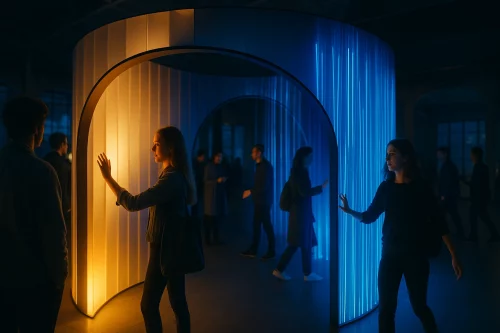
This year’s most talked-about installations, such as the light-responsive “City Echo” pavilion and the interactive “Sound Forms” sculpture, proved that attention is earned through involvement.
For exhibitors, the lesson is simple: don’t just tell your story – build it around your audience. Stands and brand environments that invite people to touch, play, or explore will always outperform static displays.
2. Sustainability Became Standard
LDF 2025 continued the industry’s shift from sustainability as a trend to sustainability as an expectation.
Designers showcased structures built from reclaimed timber, reusable aluminium frames, and biodegradable composites – materials that will almost certainly filter through to mainstream exhibition design next year.
For brands planning 2026 shows, this isn’t a “nice-to-have” anymore. Audiences now notice whether your space reflects environmental responsibility.
(For exhibitors looking to combine modular, reusable architecture with creative storytelling, Creative Spaces Design’s exhibition-stand specialists are helping UK brands do just that.)
3. Storytelling Through Space
LDF’s installations proved that narrative remains the most powerful design tool. Each room or structure guided visitors through an emotional arc – curiosity, surprise, reflection – all without words.
Applied to trade shows, this means treating the stand as a journey, not a footprint. Where does the visitor begin? What do they discover? What emotion do they leave with? Answering those questions separates a memorable stand from one that’s merely seen.
4. Collaboration Is the New Creative Currency
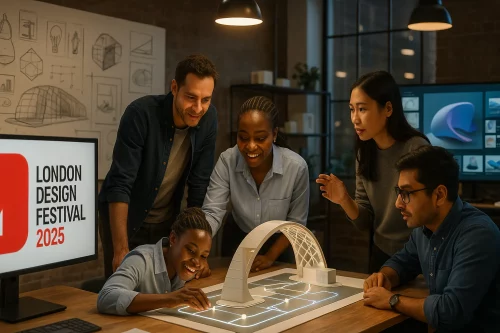
Another defining feature of this year’s festival was collaboration. Designers worked alongside technologists, sustainability experts, and even psychologists to build experiences that went beyond visual appeal.
For UK businesses, that’s a model worth copying. When marketing, design, and operations collaborate early, the final environment tells a more cohesive story – and visitors feel it.
Looking Ahead to 2026
The London Design Festival has always been a mirror for what’s next. This year made it clear that the future of brand presence lies in emotion, ethics, and engagement.
For exhibitors preparing for major UK events in 2026 – from manufacturing expos to retail and design fairs -the challenge isn’t simply to stand out, but to create something people want to remember.
And if LDF 2025 was any indication, the brands that will thrive are those that treat design as dialogue – turning creativity into connection, and connection into real-world impact.