

























The Entertainer, one of the UK’s largest specialist toy retailers, is now employee-owned after the Grant family transferred 100% of its holdings into an Employee Ownership Trust in 2025.
Employees are beneficiaries of the trust, giving them a voice in the company’s future and the opportunity to share in its financial success.
Founded by Gary and Catherine Grant in 1981, the business has expanded far beyond its standalone shops through partnerships with Tesco, Matalan, Marks & Spencer and other retailers.
The employee-ownership structure is now an established part of The Entertainer’s business rather than a proposed transition.
What Is the Entertainer Toy Shop and How Did It Begin?
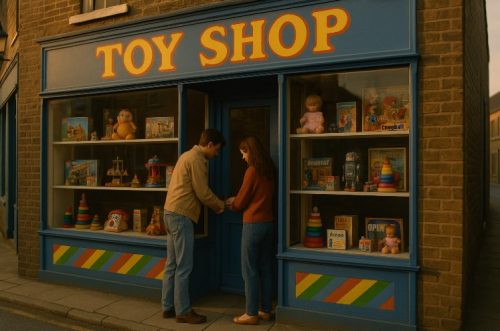
The Entertainer is widely recognised as the UK’s largest independent toy retailer, a business that has grown from humble beginnings into a multi-million-pound enterprise.
Gary Grant, together with his wife Catherine, opened the first shop in Amersham, Buckinghamshire, in 1981.
At the time, Gary was just 23 years old and had little experience in the toy sector. Their decision to enter the market came after taking out a loan to purchase a small toy shop despite lacking direct retail expertise.
Over the next four decades, The Entertainer expanded steadily, even during times of economic uncertainty.
The business survived the 2008 financial crisis, the Covid-19 pandemic, and the overall decline of the high street.
Sunday closure was historically one of The Entertainer’s best-known policies, reflecting the founding family’s Christian values.
However, following the move to employee ownership, the retailer began opening stores on Sundays for the first time in its history in September 2025. Sunday opening now forms part of its evolving retail strategy, although opening hours can vary by location.
The company itself subsequently highlighted Sunday opening as one of the major operational changes made during its period of transformation.
The Entertainer currently lists around 160 standalone stores, alongside a much larger partner-retail footprint. Its official website lists The Entertainer-branded concessions across 2,719 Tesco stores and 140 Matalan stores, alongside its Moonpig and Marks & Spencer relationships. The Tesco expansion now includes smaller Tesco Express locations as well as the larger-format concessions rolled out previously.
This is a significant update because the original “over 850 Tesco supermarkets” figure no longer reflects the company’s wider Tesco presence.
How Does the Employee Ownership Trust Model Work in the UK?
An Employee Ownership Trust (EOT) is a business structure where employees collectively own the company through a specially formed trust.
Unlike traditional ownership models, the EOT does not require individual employees to buy shares directly. Instead, the trust holds all or most of the company’s shares on behalf of its employees.
Key features of an EOT include:
- The trust ensures that strategic decisions reflect employee interests.
- UK EOT tax rules have changed since The Entertainer announced its transaction. For qualifying EOT share disposals made from 26 November 2025, only 50% of the qualifying gain is exempt from Capital Gains Tax, compared with full relief for qualifying disposals made on or before 25 November 2025.
- Qualifying employee bonuses paid by eligible employee-owned companies can currently receive an income-tax exemption of up to £3,600 per employee in a tax year, provided the statutory EOT bonus conditions are met. National Insurance contributions are not covered by this income-tax exemption and continue to follow the normal rules.
In the UK, EOTs have gained popularity as a way to preserve company culture while rewarding long-serving employees.
They differ from Employee Stock Ownership Plans (ESOPs), more common in the United States, where staff often own shares individually and may need to invest their own money.
Why Did Gary Grant Choose Employee Ownership for The Entertainer?

Gary and Catherine Grant completed the transfer of the family’s 100% holding into an Employee Ownership Trust in 2025.
The move made employees beneficiaries of the trust while allowing the business to remain independent and continue operating under professional management.
A Colleague Advisory Board was also established to help communicate employee views, contribute ideas and influence company policies, with employee representation incorporated into the trust governance structure.
Preserving the Family’s Legacy
The Entertainer has been a family-owned business for over four decades, and its growth has been closely tied to the Grant family’s values and principles.
Gary wanted to ensure these values—such as closing stores on Sundays, charitable giving, and a commitment to ethical retailing would continue after his retirement.
Selling to a large corporate buyer risked undermining these ideals, potentially changing the essence of the business.
Rewarding Long-Serving Employees
Many employees have spent decades working at The Entertainer, with nearly 400 staff having over 10 years of service and around 50 exceeding 20 years.
By moving to an Employee Ownership Trust, Gary could directly reward this loyalty, allowing staff to share in profits and gain a stronger influence on the company’s future direction.
Avoiding an External Takeover
Selling to an outside investor might have brought an immediate financial gain but at the cost of the company’s culture and employee stability.
Gary was concerned that a corporate buyer might focus solely on profitability, possibly leading to store closures, job losses, or significant cultural shifts.
The EOT model ensures that ownership remains aligned with the people who work within the business.
A Structured Succession Plan
Two of the Grants’ four children work in the business, but neither wished to take over the company in the long term.
This created a need for a succession plan that would not only secure the company’s operations but also provide financial stability for the family and employees.
The EOT was the most balanced option, offering a smooth leadership transition without disrupting the organisation.
Balancing Financial and Ethical Goals
The decision was not purely sentimental. Through the EOT, the Grant family will receive a financial payout for their shares over time, drawn from company profits.
This ensures the family is compensated fairly while safeguarding the future of the business in a way that aligns with its founding principles.
What Are the Benefits of Employee Ownership for Staff?
The move to an Employee Ownership Trust transforms the relationship between The Entertainer and its workforce.
Employees are no longer just staff members they become stakeholders in the company’s performance and success.
Financial Rewards Through Profit Sharing
One of the most direct benefits is the opportunity for employees to receive a share of the company’s profits. Under UK rules, bonuses paid through an EOT can be tax-free up to a certain limit.
- The first meaningful payouts are expected in January 2027.
- Bonus amounts will depend on company performance and profitability.
- Payments are distributed fairly across the workforce, ensuring every eligible employee benefits.
A Stronger Voice in Decision-Making
Employee ownership provides staff with a more formal say in how the company is run. While senior leadership still handles daily operations, employees can influence major business decisions through elected representatives and trust governance structures. This encourages open dialogue, greater transparency, and a stronger sense of inclusion.
Increased Job Security
The EOT model makes it more difficult for the business to be sold without employee consent, which adds a layer of protection for jobs.
This stability is particularly valuable in the retail sector, where market shifts and corporate takeovers often lead to restructuring and redundancies.
Recognition for Loyalty and Contribution
Many of The Entertainer’s employees have been with the company for over a decade, and some for more than 20 years.
Employee ownership formally recognises their long-standing commitment by offering them a direct stake in the company’s success, beyond just a regular salary.
Boosted Morale and Engagement
When staff feel that their efforts contribute directly to shared success, it can significantly improve workplace morale.
Employees are more motivated to perform at their best when they know that better results can lead to greater rewards for everyone.
How Will This Ownership Model Affect The Entertainer’s Future?
The transition to employee ownership is expected to bring a balance of continuity and innovation.
Andrew Murphy, who joined The Entertainer from the John Lewis Partnership, will continue as chief executive and lead the company through this new phase.
Current priorities include:
-
- Opening And Relocating Stores – Plans announced for 2026 include locations such as Cardiff, Castleford and a large-format outlet at The Galleria in Hatfield.
- Expanding Retail Partnerships – The business continues to grow its concession and B2B2C model alongside Tesco and other retail partners.
- Investing Through 2028 – An extended Barclays funding package is supporting store development, technology, customer propositions and international expansion.
- Growing Major Toy Brands – Investment includes the expansion of partnerships such as Pop Mart and the relaunch and development of Meccano.
- Working Towards Higher Group Sales – Management has publicly discussed progressing towards a £500 million Group sales target.
This model could also influence other UK retailers to explore employee ownership as a means of ensuring both profitability and staff engagement.
What Challenges Could the Employee Ownership Model Face?
While EOTs can bring significant benefits, they are not without limitations. Funding can be more challenging, as raising large amounts of external capital often requires complex negotiations.
There may also be slower decision-making processes when a broader group of stakeholders is involved in strategic choices.
However, The Entertainer is entering this phase with notable advantages:
- The business has no long-term debt.
- It has a proven record of sustainable growth.
- Its leadership team has direct experience managing employee-owned organisations.
How Does The Entertainer Compare to Other Employee-Owned Businesses?
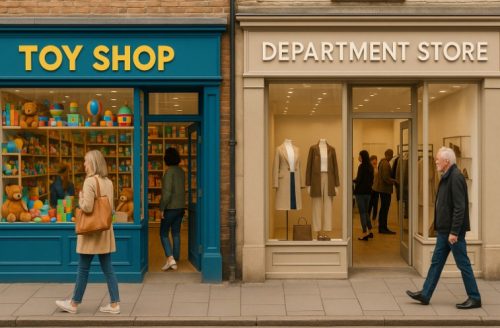
Employee ownership is not new to the UK retail sector. The John Lewis Partnership remains the most well-known example, combining commercial success with a high level of employee involvement.
The Entertainer’s adoption of this model shares some similarities but also distinct differences.
Comparison Between The Entertainer and John Lewis Partnership
| Factor | The Entertainer | John Lewis Partnership |
| Sector | Toy Retail | Department Stores & Groceries |
| Ownership Type | Employee Ownership Trust | Partnership Model |
| Size of Workforce | ~1,900 employees | ~78,000 employees |
| Main Profit Period | Christmas Season | Year-round |
| Charitable Giving | 10% of profits | Various charity programmes |
| Sunday Trading | Introduced from September 2025, with hours varying by location | No |
What Role Will the Leadership Team Play After the Transition?

While employees will collectively own the business, operational leadership remains with Andrew Murphy and his senior management team.
Their role will be to balance day-to-day decision-making with the interests of employee owners, ensuring profitability without compromising the company’s values.
Leadership priorities will include:
- Maintaining operational efficiency across 160+ stores and partner locations.
- Preserving brand identity and customer service standards.
- Managing profit allocation between reinvestment and employee bonuses.
Leadership Responsibilities in an Employee-Owned Company
| Area of Responsibility | Role of Leadership | Role of Employee Owners |
| Strategic Planning | Set long-term goals and business strategy | Provide feedback and vote on major changes |
| Financial Management | Oversee budgets, investments, and profitability | Benefit from profit distribution |
| Brand Values | Ensure ethos and charitable giving are maintained | Support brand culture in daily operations |
| Growth Initiatives | Identify and implement expansion plans | Participate in shaping priorities |
How Does Employee Ownership Impact the UK Retail Sector?

Employee ownership can reshape the retail sector by fostering stronger employee engagement, improving staff retention, and ensuring that a greater share of profits remains within the company. For customers, this can mean better service and a more committed workforce.
In the case of The Entertainer, the move positions it as a prominent example of how a family business can evolve without losing its identity.
As more companies in the UK explore alternative ownership models, the EOT structure could become an increasingly attractive choice for those prioritising stability and shared success.
Conclusion
The Entertainer’s employee-ownership transition is no longer simply a succession plan. By 2026, the EOT is established and the company is combining employee ownership with store expansion, wider retail partnerships and new investment.
The model allows employees to participate in the company’s success while day-to-day operations remain under an experienced management team.
With UK retail sales growth, new store investment and funding supporting expansion through 2028, the next major milestone will be seeing how employee ownership translates into long-term financial rewards and greater employee involvement.
Frequently Asked Questions
Is The Entertainer Employee-Owned Now?
Yes. The Grant family transferred 100% of its holdings into an Employee Ownership Trust in 2025, making employees beneficiaries of the trust.
Who Owns The Entertainer Toy Shop?
The business is held through an Employee Ownership Trust on behalf of employees rather than being individually owned by each member of staff.
Do The Entertainer Employees Have To Buy Shares?
No. Employees benefit collectively through the trust and do not need to purchase individual shares to participate in the employee-ownership structure.
How Much Can EOT Employees Receive Tax-Free?
Under current UK rules, qualifying EOT bonuses can receive an income-tax exemption of up to £3,600 per employee per tax year. Normal National Insurance rules still apply.
When Could The Entertainer Employees Receive Meaningful Bonuses?
Gary Grant previously indicated that more meaningful financial rewards were expected around the financial year ending January 2027, although actual payments depend on business performance.
Who Runs The Entertainer After The Ownership Change?
Andrew Murphy continues to lead the business as Group chief executive, while employees participate in its wider direction through the employee-ownership structure.
Is The Entertainer Still Closed On Sundays?
Not as a blanket company policy. The retailer began Sunday opening in September 2025, marking a major departure from its longstanding Sunday-closure tradition. Individual store hours can vary.