

























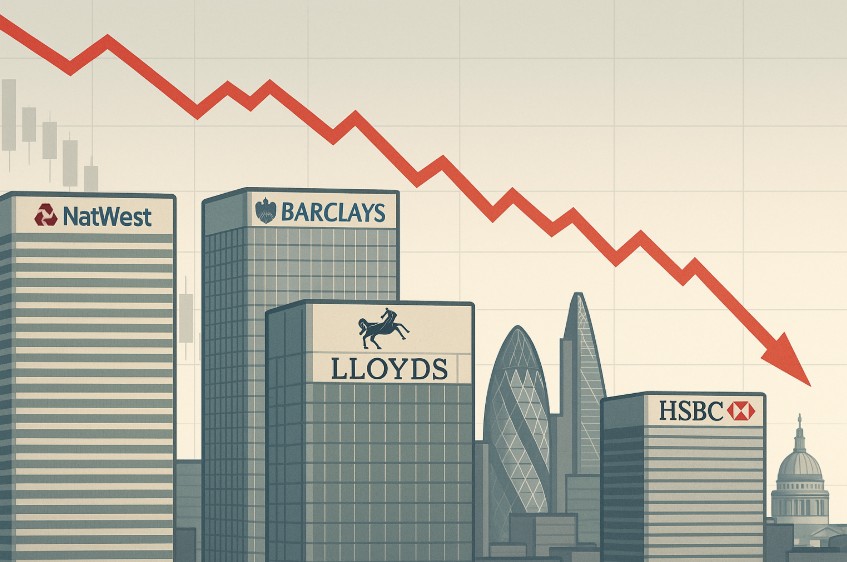
Calls for higher taxes on UK banks have returned to the political agenda in 2026 after major lenders reported another period of strong profits.
The UK’s four biggest banks, Barclays, HSBC, Lloyds and NatWest, recorded around £29 billion in combined profits during the first half of 2026, prompting renewed calls for banks to contribute more towards cost-of-living support.
The debate has changed considerably since this issue first emerged. Rachel Reeves ultimately introduced no new targeted tax on banks in the 26 November 2025 Budget, and bank shares subsequently rose.
However, pressure for higher bank taxation has resurfaced ahead of the next UK Budget, officially scheduled for 28 October 2026.
Last Updated: 22.08.2026
What Triggered The Fall In UK Bank Shares After The Budget Talks?
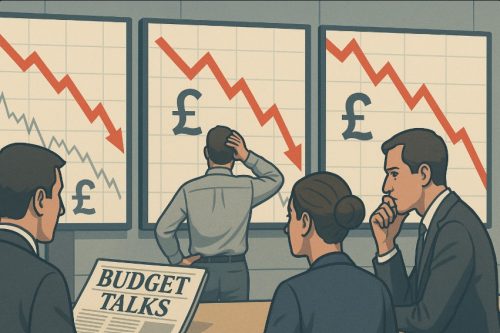
The sharp fall in UK bank shares occurred during the run-up to the 26 November 2025 Budget, when investors feared the government could introduce a new levy on lenders or tax the interest banks receive on reserves held at the Bank of England.
Those fears did not become policy in that Budget. Rachel Reeves announced no new bank-specific tax, and Lloyds, NatWest, Barclays and HSBC shares rose after the sector avoided the additional levy. Lloyds gained about 3.8%, Barclays 3.2%, NatWest 2.5% and HSBC 1% on Budget day.
The original market fall therefore remains useful historical context, but it should no longer be described as an unresolved upcoming Budget risk.
Immediate Market Reaction
NatWest, Lloyds, Barclays, and HSBC were the most affected, with share prices dropping between 1% and 5%.
This immediate reaction was largely driven by investor concerns that a windfall tax could reduce banks’ profitability, dividends, and future capital growth potential.
Political Context Behind The Decline
The speculation was fuelled by the Institute for Public Policy Research’s recommendations, which suggested taxing the “excess” gains banks have enjoyed from quantitative easing.
With the government facing a budget deficit of around £40bn, the proposal was seen as a credible option, heightening market fears that it may soon become policy.
Broader Economic Impact
The fall in bank shares also reflected broader investor unease. Banks are seen as a barometer for the UK economy, so any threat to their stability raises concerns about reduced lending, slower investment, and weaker growth prospects across multiple sectors.
Why Is The IPPR Calling For A Windfall Tax On UK Lenders?
The Institute for Public Policy Research (IPPR) has been central to the debate, producing a report that suggests banks are reaping undue financial benefits from the way quantitative easing (QE) was designed after the 2008 crisis.
The mechanism works as follows:
- The Bank of England purchased £895bn worth of bonds from UK banks during QE.
- Banks were credited with reserves at the Bank of England.
- These reserves are remunerated in line with Bank Rate. As of 22 August 2026, Bank Rate is 3.75%, following the Monetary Policy Committee’s decision on 30 July 2026 to keep it unchanged.
Treasury figures published in April 2026 show that £25.91 billion of interest was payable during 2025 on central-bank reserves backed by bonds held in the Asset Purchase Facility.
The government notes that this figure does not represent interest paid across all reserves because a complete total is not available.
The Bank of England has also said that remunerating reserves is an important part of transmitting monetary policy and that there were, at that point, no plans to end the practice
The IPPR argues that this effectively represents a “windfall” to banks, which should be reclaimed through taxation and redirected into public services or economic support programmes.
How Have Previous Windfall Taxes Shaped UK Banking Policy?
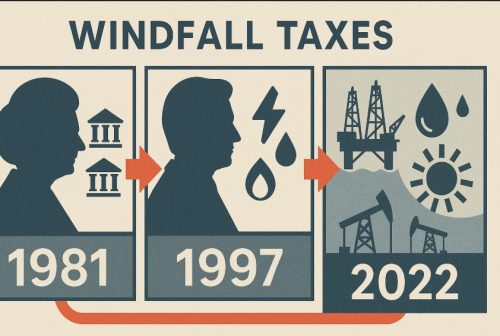
Windfall taxation has been used at various points in modern UK history, particularly when governments sought additional revenue during economic strain.
The 1981 Bank Deposit Levy
Introduced under Margaret Thatcher’s Conservative government, this levy was imposed directly on banks’ deposits.
It was controversial but raised substantial funds at a time of recession. The precedent demonstrated that banks could be targeted when public finances demanded it, despite opposition from the financial sector.
The 1997 Labour Windfall Tax On Privatised Utilities
The Blair government targeted utility companies, arguing that they had benefited disproportionately from privatisation.
The revenue generated was used to fund employment and welfare initiatives, showing how windfall taxes could be justified as a tool for redistribution and social investment.
The 2022 Energy Profits Levy
More recently, the Conservative government introduced a windfall tax on oil and gas producers during the energy crisis.
The proceeds were channelled into helping households cope with soaring bills. This example reinforced the political attractiveness of windfall taxation when public pressure demands corporate contributions.
Lessons For Today’s Banking Sector
These historical cases underline a pattern: windfall taxes tend to emerge during periods of financial hardship or political pressure.
While they raise significant short-term revenue, they also generate concerns about long-term investment, competitiveness, and the risk of overburdening critical sectors.
For banks today, the echoes of past policies suggest that renewed taxation could be more than just political rhetoric it could become reality.
What Does A New Bank Levy Mean For UK Public Finances?
The debate in 2026 is increasingly focused on increasing the UK’s existing Bank Corporation Tax Surcharge rather than relying solely on a completely separate windfall tax.
The surcharge currently stands at 3% on banking-company profits above the £100 million group allowance, alongside the ordinary corporation tax regime.
The existing Bank Levy also continues to apply at 0.05% on chargeable equity and long-term liabilities and 0.1% on short-term chargeable liabilities.
The TUC has called for the surcharge to be increased. Its July and August 2026 proposals argue that a higher surcharge could raise up to £60 billion over four years, while one scenario involving a 16% surcharge was estimated by the TUC to raise about £24 billion over four years. These are campaign estimates rather than confirmed government measures or official Budget revenue forecasts.
How Are Investors And Analysts Reacting To The Windfall Tax Proposal?

The announcement of a potential windfall tax on UK banks sparked an immediate response from financial markets and industry experts.
While the banking sector has faced taxation debates before, the timing amid fragile economic recovery has amplified concerns.
Investors and analysts are carefully weighing both the short-term risks and long-term implications.
Immediate Investor Concerns
The sharp decline in bank shares following budget discussions demonstrated how sensitive investors are to fiscal policy shifts.
Many view the proposed levy as an additional burden that could eat into bank profitability, reduce dividends, and limit reinvestment.
This concern is particularly acute for income-focused investors who rely on banking stocks for steady returns.
Latest Industry Reaction
The argument over bank taxation has returned in 2026 as profitability has remained strong. Barclays, HSBC, Lloyds and NatWest generated around £29 billion in combined profit during the first half of 2026, giving supporters of higher taxation fresh ammunition.
Banking executives, however, continue to warn that heavier sector-specific taxes could damage the UK’s competitiveness and influence where international banks invest and employ staff.
In August 2026, JPMorgan chief executive Jamie Dimon raised concerns with the Chancellor about further increases in UK bank taxation as the industry stepped up lobbying ahead of the Budget.
This means the debate is no longer simply about the market reaction to the original 2025 proposal. It is now part of the political discussion surrounding the 2026 Budget and the taxation of banks’ continuing high profits.
Broader Financial Sector Sentiment
Beyond equity markets, there are concerns within the wider financial services industry. Some argue that repeated speculation about sector-specific taxation risks undermining the UK’s attractiveness to foreign investors.
The City of London’s status as a global financial hub depends heavily on stability and predictability, both of which are threatened when tax policies appear politically driven.
The Balance Between Revenue And Growth
Ultimately, analysts agree that the debate over windfall taxation is a balancing act. On one hand, the government must raise revenue to address fiscal pressures.
On the other, it must avoid undermining confidence in a sector that plays a pivotal role in financing growth. Investors remain cautious, waiting for further clarity in the upcoming budget before making long-term decisions.
Could A Windfall Tax Harm The UK’s Financial Stability And Growth?
A fresh levy on banks may provide a short-term fiscal boost but carries potential long-term risks. Policymakers must weigh these carefully to avoid undermining the stability of the financial system.
The key risks include:
- Reduced Lending Capacity: Lower profits could prompt banks to scale back lending, particularly to small businesses that rely on accessible credit.
- Investor Sentiment: Repeated speculation about taxation could make the UK less attractive to international investors, limiting capital inflows into the financial sector.
- Sector Resilience: Additional levies may reduce the ability of banks to build capital reserves, which are vital for absorbing future economic shocks.
Maintaining confidence in the financial sector is critical. The City of London remains one of the world’s leading financial hubs, and a policy that erodes its competitive edge could have unintended economic consequences.
What Could The 2026 Budget Mean For UK Bank Taxes?
The next major decision point is the UK Budget on 28 October 2026, a date confirmed by HM Treasury on 31 July.
As of 22 August 2026, no new bank windfall tax has been confirmed. The current Bank Corporation Tax Surcharge remains at 3%, but calls for an increase have intensified following the strong first-half results reported by major UK lenders.
The TUC is among those pressing for higher taxation, while banking executives argue that further increases could undermine investment and the competitiveness of the City of London.
The 2025 Budget demonstrated that speculation does not necessarily result in policy, as banks were ultimately spared a new targeted levy.
Conclusion
The UK bank windfall tax debate remains active in 2026, but it is important to separate proposals from confirmed policy. The November 2025 Budget did not introduce a new targeted bank tax, despite widespread speculation beforehand.
Pressure has since returned as Barclays, HSBC, Lloyds and NatWest reported around £29 billion in combined first-half 2026 profits.
Campaigners are pushing for the existing 3% Bank Corporation Tax Surcharge to be increased, while the banking sector warns of potential effects on investment and UK competitiveness.
The next important date is 28 October 2026, when the government will deliver its Budget and provide greater clarity over whether calls for higher bank taxation will translate into policy.



