

























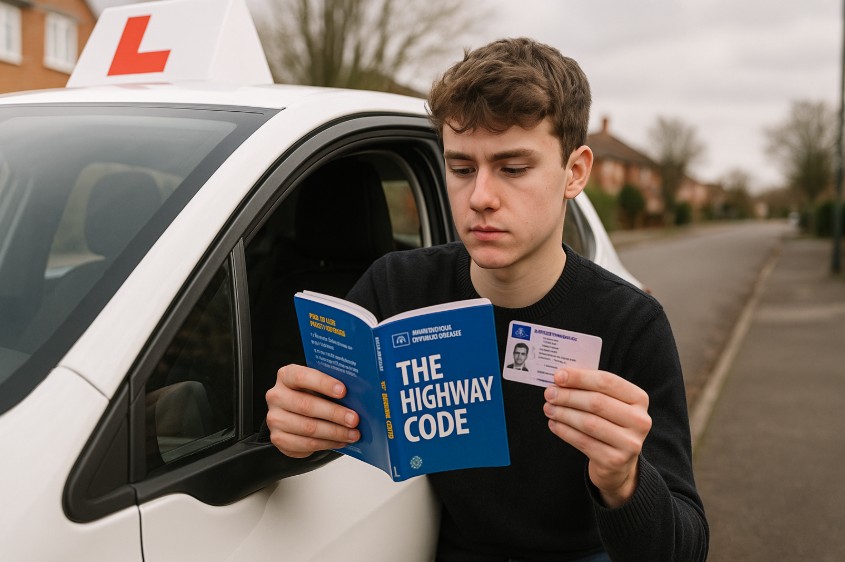
Learning to drive involves both practical experience and knowledge of the rules of the road, but you do not need to pass your theory test before starting driving lessons.
In Great Britain, most learners can begin practical lessons once they have a valid provisional driving licence and meet the minimum age and supervision requirements.
However, you must pass the theory test before you can book your practical driving test. Learners should also be aware that Northern Ireland has separate licensing rules, with major Graduated Driver Licensing changes due from 1 October 2026.
Can You Start Driving Lessons Without Passing Your Theory Test?
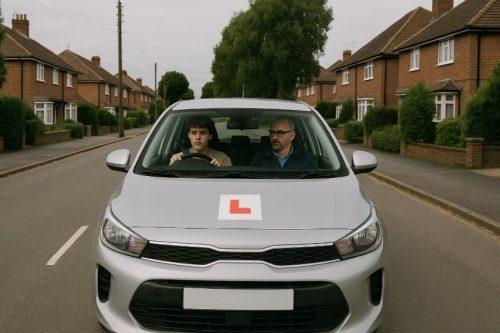
In the UK, learner drivers can legally start practical driving lessons without having passed the theory test.
The only legal requirement to begin lessons is possession of a provisional driving licence. This licence can be obtained at the age of 15 years and 9 months, but driving lessons cannot begin until the learner turns 17.
While some learners assume that the theory test must come first, the Driver and Vehicle Standards Agency (DVSA) does not make this a condition for starting lessons.
Driving schools and independent instructors across the UK allow students to begin learning practically as long as they have their provisional licence and meet insurance and supervision requirements.
Having said that, the theory test is a crucial step in the driving process, and learners must pass it before they can book the practical driving test. So although it’s not required before lessons begin, it plays an essential role in your overall progress.
| Requirement | Required Before Driving Lessons | Required Before Practical Test |
| Provisional Driving Licence | Yes | Yes |
| Theory Test Pass Certificate | No | Yes |
| Minimum Age (17) | Yes | Yes |
| DVSA-Approved Driving Instructor | Recommended | Recommended |
| Insurance for Learner Drivers | Yes | Yes |
Starting lessons without passing the theory can be advantageous for those who learn better through doing, as they can apply theoretical concepts in real-life situations, which often helps improve retention and understanding.
What Is the Purpose of the Driving Theory Test in the UK?
The driving theory test is a mandatory step in the UK’s licensing process. It is designed to evaluate a learner driver’s understanding of the rules, regulations, and safety measures required for competent and responsible driving.
Understanding the Structure of the Theory Test
The test is split into two main parts:
- Multiple-choice questions: These are based on three key areas:
- The Highway Code
- Road signs and markings
- Driving theory, including stopping distances, safety margins, and vulnerable road users
- Hazard perception test: This part uses video clips showing everyday driving scenarios. Learners must identify developing hazards in real-time. The earlier a hazard is spotted, the higher the score.
Both components must be passed in the same attempt. Failing one requires retaking both sections.
Why the Theory Test Matters?
The theory test plays a critical role in preparing learner drivers for real-world conditions.
Its purpose is not just to assess memory of rules but to ensure learners can:
- Make informed, safe decisions on the road
- React appropriately to signs, signals, and road markings
- Anticipate and avoid potential hazards
- Respect other road users, including pedestrians and cyclists
A strong grasp of theory makes a significant difference in how confidently and safely a new driver behaves behind the wheel.
Legal Requirement for Practical Test Booking
A learner must pass the theory test before they can book the practical driving test. Without the pass certificate number from the theory test, it is impossible to secure a test slot through the DVSA system.
Additionally, the theory test result is valid for two years. If a learner does not pass their practical test within that time, they must retake the theory test.
Enhancing Road Awareness Through Theory
Studying for the theory test also sharpens a learner’s road awareness. For example, understanding how long it takes to stop a vehicle in wet conditions can help inform safer driving habits during practical lessons.
It is not uncommon for learners to recall theory information during practical lessons. For example, recognising a sign for a pedestrian crossing or applying knowledge of roundabout priorities comes directly from theory revision.
When Should Learners Take the Theory Test?

There is no fixed schedule stating exactly when a learner should take their theory test. However, the timing of the test can have a significant impact on the learner’s progress.
Taking the Theory Test Before Driving Lessons
Some learners prefer to take the theory test before they start driving lessons.
This approach has its own set of advantages:
- Learners start lessons with a solid understanding of road rules and signs
- They may feel more confident applying their knowledge in real-time
- Lessons can progress faster as instructors spend less time explaining basic rules
However, this method may not suit all learners, especially those who understand concepts better through physical experience rather than reading or watching videos.
Taking the Theory Test During Driving Lessons
Most instructors recommend studying for and taking the theory test while actively doing driving lessons.
This parallel approach helps learners:
- See the relevance of the theory in real driving situations
- Retain information more effectively
- Stay engaged with both the practical and theoretical aspects of learning
Combining both types of learning offers the strongest foundation for test success and road safety.
Waiting Too Long to Take the Theory Test
Delaying the theory test can limit a learner’s ability to progress. Since the theory pass certificate is required to book the practical test, learners who wait too long may:
- Experience delays when they are ready to take the practical test
- Feel overwhelmed by the amount of material to revise later
- Risk losing momentum or motivation
Ideal Timeline for Most Learners
An ideal timeline is to begin theory revision as soon as the provisional licence is obtained, and to aim to pass the test within the first few months of starting driving lessons.
This ensures:
- Better retention of information
- A smoother path to booking the practical test
- Fewer delays due to failed or missed theory exams
Some instructors even structure lessons around theory topics, reinforcing learning by combining the two approaches.
Are Learner Driver Rules Changing in 2026?
As of August 2026, England, Scotland and Wales still have no statutory minimum number of driving lessons or minimum learning period before a learner can take a practical test.
However, the Department for Transport consulted in 2026 on introducing a minimum learning period, potentially alongside minimum supervised hours and a structured learning syllabus. The consultation closed on 11 May 2026, and these proposals should not yet be presented as current law.
Northern Ireland is taking a different approach. From 1 October 2026, its Graduated Driver Licensing scheme will introduce a six-month mandatory minimum learning period for relevant new learners, alongside a Programme of Training and Logbook. Learners whose category B provisional entitlement begins on or after 1 October 2026 will come under the new system.
What Are the Legal Requirements for Driving Lessons in the UK?
To start learning how to drive on public roads in the UK, the following legal conditions must be met:
- The supervising driver must be at least 21 years old
- They must be qualified to drive the type of vehicle being used
- They must have held a full licence for at least three years from the UK, EU, Switzerland, Norway, Iceland or Liechtenstein
- The learner must have appropriate insurance
- Only an approved or trainee driving instructor can legally accept payment for providing driving lessons
Learners practising with family or friends cannot drive on motorways. In England, Scotland and Wales, motorway lessons are permitted only with an approved driving instructor in a dual-controlled car.
| Legal Element | Requirement to Start Lessons |
| Age | 17+ |
| Provisional Licence | Mandatory |
| Theory Test Certificate | Not Required |
| Insurance | Mandatory |
| Supervision (if not with instructor) | Must be 21+ with 3 years’ experience |
Driving instructors also have the right to determine their own policies. Some may suggest passing the theory test first, but most are flexible and allow learners to start lessons without it, provided the legal conditions are met.
How Can You Book Driving Lessons Without a Theory Certificate?
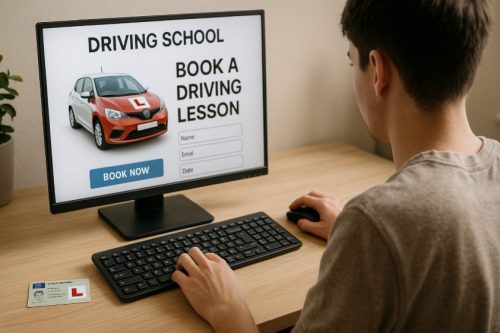
Booking lessons without a theory pass is straightforward and commonly done by new drivers. Most learners begin by applying for their provisional licence and contacting a local instructor or driving school to arrange lessons.
The steps to get started include:
- Apply for a provisional licence through the GOV.UK website
- Research and choose a DVSA-approved instructor
- Schedule an initial driving assessment or first lesson
- Start lessons while studying for the theory test in parallel
It’s advisable to inform your instructor that you haven’t taken the theory test yet. Many instructors will then tailor lessons to support your theory revision, helping you understand how practical driving links to the questions and concepts in the theory test.
Why Is It Beneficial to Pass Your Theory Test Early?
Although not legally required, passing your theory test early in your learning journey offers several strategic benefits.
It opens the door to booking the practical driving test, allows your instructor to tailor your lessons more effectively, and reduces the pressure of having to manage both tests within a limited timeframe.
Some of the main advantages include:
- Improved learning synergy: Understanding traffic rules and road signs in theory allows you to apply them with confidence in real driving scenarios.
- Faster progression: Learners who understand theory often make faster progress during practical lessons.
- Earlier access to practical-test booking: You must pass your theory test before booking a practical test. However, booking rules became stricter in 2026. Since 12 May 2026, learners must book and manage their own car driving tests. Test appointments can now be changed only twice, and since 9 June 2026, a test can generally only be moved to one of the three nearest test centres.
Many instructors report that learners who pass the theory test earlier tend to approach driving more confidently and have a better grasp of road safety from the outset.
What Happens If You Fail Your Theory Test?
Failing the theory test isn’t uncommon, especially for learners who take it before they’re adequately prepared.Failing the theory test is relatively common.
The latest full-year DVSA figures for Great Britain show that the car theory test pass rate was approximately 44.8% in 2025/26, meaning fewer than half of test attempts resulted in a pass. DVSA’s latest published annual theory-test data covers the period to March 2026.
If you fail:
- You will need to wait three working days before retaking the test.
- You’ll receive feedback outlining which areas need improvement.
- You can use that feedback to focus your revision before your next attempt.
Failing the theory test does not affect your ability to continue practical driving lessons, but it will delay the point at which you can book your practical test.
It’s best to plan ahead and leave enough time for potential retakes, especially if your practical test date depends on your theory pass.
Using online resources, mobile apps, and mock tests can significantly improve your chances of passing on the next attempt. Consistent practice and integrating what you learn during lessons can make a substantial difference.
How Do the Theory and Practical Tests Work Together?
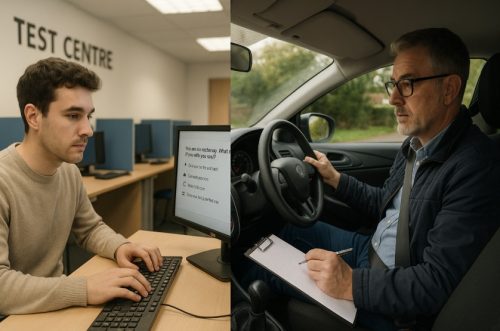
The two tests, although distinct, are closely interconnected. The theory test is designed to assess your knowledge of road rules, traffic signs, and safe driving practices, while the practical test evaluates your ability to apply that knowledge in real-life driving conditions.
You cannot book the practical driving test until you have successfully passed the theory test. This ensures that every learner who attempts the practical has already demonstrated an understanding of essential driving principles.
From a learning perspective, the theory and practical elements support each other:
- Theory underpins practical understanding: For example, knowledge of road signs helps you respond appropriately during lessons.
- Practical reinforces theory: Applying your understanding in real time makes it easier to retain information.
- Integrated learning helps reduce anxiety: The familiarity developed through lessons often translates into better test performance.
Instructors often incorporate theory discussions into practical sessions to create a more comprehensive learning experience. This dual approach helps learners retain information better and develop strong driving habits from the beginning.
Are There Any Exceptions or Special Circumstances?
In most cases, the driving test structure in the UK is the same for all learners. However, certain groups may experience slight variations in the process.
For example:
- Foreign licence holders from designated countries may be able to convert their licences without taking theory and practical tests, depending on reciprocal agreements.
- Learners with disabilities or medical conditions may be required to undergo an additional medical review by the DVLA.
- Automatic transmission licences require the same theory test, but practical lessons and tests are limited to automatic vehicles.
It’s always important to consult the official GOV.UK guidance or speak with a driving instructor if you’re unsure about any unique circumstances that may apply to you.
Conclusion
You do not need to pass your theory test before starting driving lessons. For most learners in Great Britain, having a valid provisional licence, meeting the age requirements and following the correct supervision and insurance rules is enough to begin practical learning.
You will, however, need to pass the theory test before booking your practical driving test. Studying theory alongside practical lessons can help connect road rules with real driving experience.
Learners should also check whether they are affected by different rules in Northern Ireland, particularly the Graduated Driver Licensing changes beginning on 1 October 2026.