

























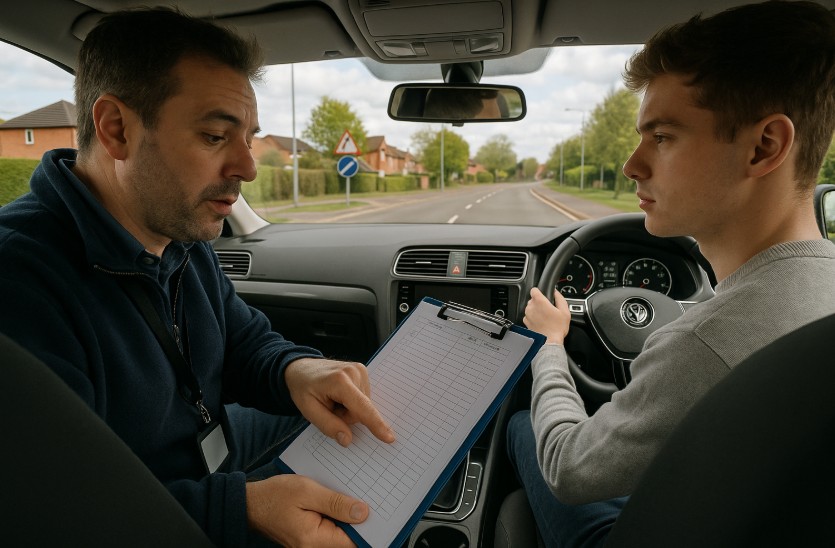
Becoming an Approved Driving Instructor (ADI) in Great Britain involves meeting DVSA eligibility requirements, passing three qualifying tests and joining the ADI register.
There is no fixed DVSA qualification time. The process can take several months depending on how quickly you complete training, secure test appointments and pass each stage. The important official deadline is that, after passing ADI Part 1, you must pass Parts 2 and 3 within two years, otherwise you have to restart the qualifying process.
After passing Part 3, you must apply to join the ADI register within 12 months.
Last Updated: 22.08.2026
What Are The Basic Requirements To Become A Driving Instructor In The UK?
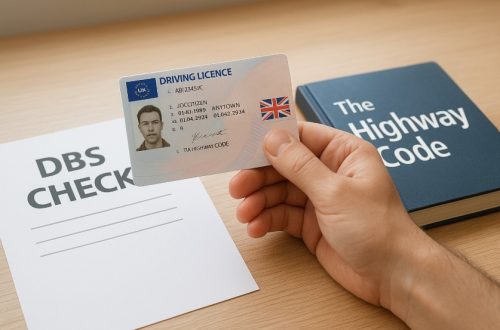
To qualify as a driving instructor in the UK, candidates must meet certain baseline requirements. These criteria are set by the Driver and Vehicle Standards Agency (DVSA) to ensure high professional standards.
The main eligibility requirements for becoming an ADI in Great Britain are:
- Be At Least 21 Years Old
- Have Held A Full Driving Licence For At Least Three Years
- Have Not Been Disqualified From Driving In The Previous Four Years
- Meet DVSA’s “Fit And Proper” Person Requirements
- Obtain A New Criminal Record Check When Starting Your Application
The existing statement that applicants simply “must not have more than six penalty points” is too absolute. DVSA considers the nature and seriousness of motoring offences when deciding whether someone is fit and proper, and its register guidance notes that applications have previously been refused where applicants had five or more penalty points within three years.
How Long Does The Driving Instructor Qualification Process Take?
The average time to become a driving instructor ranges from six to twelve months, though this varies based on training availability and personal progress. The process involves several structured steps:
- Passing background checks and meeting eligibility.
- Completing the ADI Part 1 theory test.
- Taking in-car training sessions for ADI Part 2, the advanced driving test.
- Preparing for and sitting ADI Part 3, the instructional ability test.
- Applying to join the Register of Approved Driving Instructors.
While some complete this in six months with intensive training, others may take over a year due to delays in test bookings or retakes.
What Are The Three ADI Qualifying Tests And How Much Time Do They Take?
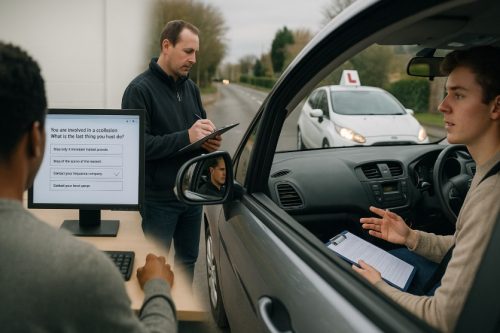
The journey to becoming a driving instructor in the UK requires passing three separate tests, set by the Driver and Vehicle Standards Agency (DVSA).
These tests are designed not only to confirm excellent driving ability but also to assess knowledge, teaching skills, and the ability to work with learner drivers effectively.
Each test builds on the previous one, meaning you must pass Part 1 before attempting Part 2, and both of these before progressing to Part 3.
The length of time needed varies, but on average, candidates spend between six and twelve months completing all three.
ADI Part 1: The Theory Test
The first step is the theory test, which examines both driving knowledge and instructional understanding. It consists of:
- Multiple-choice questions: Covering the Highway Code, road safety, teaching methods, and driving techniques.
- Hazard perception test: A computer-based test where candidates identify developing hazards in real driving scenarios.
Preparation time for Part 1 often depends on personal study habits. Some people can prepare in a few weeks, while others take up to three months. Many candidates use online resources, DVSA study materials, and mock tests to practise.
Key points for Part 1:
- Cost: £81
- Preparation time: 1–3 months
- Pass mark: Candidates must score at least 85 out of 100 overall in the multiple-choice test and at least 20 out of 25 in each of its four categories. The hazard perception pass mark is 57 out of 75.
- Validity: Once passed, candidates must complete Parts 2 and 3 within two years
ADI Part 2: The Driving Ability Test
Once the theory is complete, the next stage is a practical driving test. Unlike the standard learner’s test, this is a much more advanced assessment of driving skill and control.
The Part 2 test usually lasts about one hour and includes:
- Vehicle safety questions: Known as “show me, tell me” checks.
- Practical driving: A demonstration of advanced driving skills, including manoeuvres, independent driving, and handling a variety of road and traffic conditions.
For the eyesight test, candidates must be able to read a number plate from:
- 27 Metres For A New-Style Number Plate
- 27.5 Metres For An Old-Style Number Plate
This stage often requires professional in-car training with a registered instructor trainer. Most candidates take between 20 and 40 hours of training before attempting the exam. Depending on lesson availability, this can take 2–3 months.
Key points for Part 2:
- Cost: £111
- Preparation time: 2–3 months
- Allowed attempts: Three tries before restarting the entire ADI process
- Focus: High-level driving competence, hazard awareness, and consistency
Candidates pass Part 2 if they make no more than six driving faults and no serious or dangerous faults. The test still costs £111, and candidates are allowed up to three attempts.
ADI Part 3: The Instructional Ability Test
ADI Part 3 is the final qualifying test and assesses how well you can plan and deliver a safe, effective driving lesson.
A DVSA examiner observes you teaching a real pupil for around 45 minutes, with the pupil normally driving for about 40 minutes.
You are assessed across 17 competencies covering:
- Lesson Planning
- Risk Management
- Teaching And Learning Strategies
The test is scored out of 51. A score of 31–42 is a Grade B pass, while 43–51 is a Grade A pass. You can automatically fail if your risk management score is too low or the examiner has to stop the lesson for safety reasons.
Key Points For Part 3:
- Cost: £111
- Test Length: Around 45 Minutes
- Pass Score: 31 Or Higher
- Maximum Attempts: Three
- Focus: Teaching Skills, Lesson Planning And Safety
Estimated Timeframe For All Three Tests
| Stage | Preparation Time | Typical Duration |
| ADI Part 1 (Theory) | 1–3 months | Study alongside work or part-time |
| ADI Part 2 (Driving Ability) | 2–3 months | Dependent on training hours and test slots |
| ADI Part 3 (Instructional Ability) | 3–6 months | Trainee licence experience often used |
In total, completing all three tests can take six months at the fastest pace or up to twelve months or more if delays or retakes occur.
How Long Does The ADI Training Usually Last?
The training period varies from person to person. Some learners choose flexible study, while others take intensive courses. Training length depends on:
- Time dedicated weekly to theory and in-car sessions.
- How many attempts are required to pass each test.
- Waiting times for DVSA test appointments.
- The amount of practice and feedback taken between lessons.
Typically, training can take as little as six months with an intensive schedule or over a year with part-time study.
Can Trainee Driving Instructors Start Teaching Before Fully Qualified?
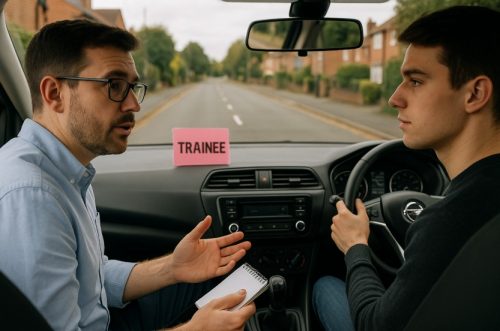
Yes. After passing ADI Part 2, candidates can apply for a six-month trainee driving instructor licence if they have completed at least 40 hours of qualifying instructional training, including at least 10 hours in a car.
When applying, trainees must choose between:
- Being Supervised For 20% Of All Lessons They Give
- Completing At Least 20 Additional Hours Of Training
A trainee licence allows paid driving instruction while preparing for Part 3, but trainees cannot operate independently. They must give instruction through the training establishment named on their licence.
How Long Does It Take To Get Registered As An Approved Driving Instructor (ADI)?
After successfully completing all three ADI tests, the next step is registration. This involves submitting an application, paying the fee, and receiving the ADI green badge.
Registration details:
- Application must be made within twelve months of passing the final test.
- The registration fee is £300.
- Once approved, instructors are placed on the ADI register and can begin charging for lessons.
This final stage usually takes only a few weeks after passing the last exam.
What Challenges Might Extend The Time It Takes To Qualify?
Although some candidates progress quickly, others face challenges that extend the timeline. Common issues include:
- Failing one or more ADI tests, as retakes require booking new dates.
- Long waiting times for Parts 2 and 3, especially in busy areas.
- Trainer availability, which can be limited during peak times.
- Personal circumstances that reduce study and practice hours.
Planning ahead, booking early, and choosing a reputable trainer can help minimise delays.
How Much Does It Cost And How Does That Impact The Training Timeline?
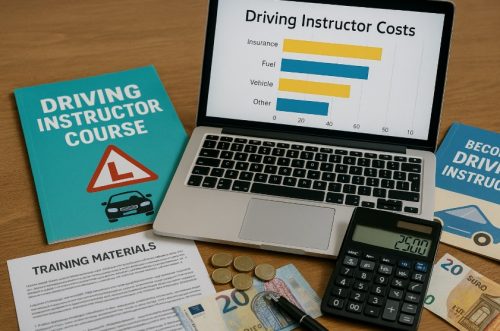
Financial considerations often influence the pace of training. Some learners spread their training across a longer period to manage expenses.
Typical costs include:
| Item | Cost |
| DBS Check | £5.40 |
| ADI Part 1 Test | £81 |
| ADI Part 2 Test | £111 |
| ADI Part 3 Test | £111 |
| Trainee Licence (Optional) | £140 |
| ADI Registration Fee | £300 |
| Training Courses | Varies By Training Provider |
Candidates who can commit financially to an intensive programme may finish faster, while others may train more gradually.
How Does Becoming A Driving Instructor Compare To Other Vocational Careers?
Compared with other professions, qualifying as a driving instructor is relatively quick. Many vocational careers, such as teaching, healthcare, or trades, require years of training, formal qualifications, and apprenticeships.
Driving instruction, by contrast:
- Can be completed within a year.
- Does not require a university degree.
- Offers the flexibility of self-employment immediately after registration.
This makes it attractive to career changers and those seeking faster entry into a stable profession.
What Is The Fastest Way To Become A Driving Instructor In The UK?
Candidates who want to qualify as quickly as possible should focus on efficiency in both training and test preparation.
Tips for a faster route include:
- Enrolling in an intensive ADI training course.
- Dedicating regular weekly hours for theory revision and in-car lessons.
- Booking tests as early as possible to avoid waiting lists.
- Applying for the trainee licence to gain experience while preparing for Part 3.
With the right approach, it is possible to complete the process in six months.
Is Being A Driving Instructor Worth The Time Investment?
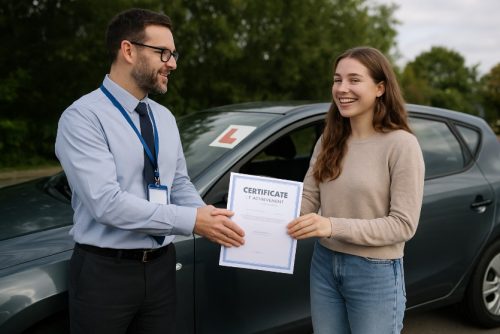
For many, the effort and time required to qualify are worthwhile. Driving instructors enjoy:
- Flexible working hours tailored to personal schedules.
- The choice between joining an established driving school or starting independently.
- Steady demand, as thousands of new drivers seek lessons every year.
- A career that combines teaching satisfaction with earning potential.
Although the training process requires commitment, the long-term rewards often outweigh the initial effort.
Conclusion
There is no fixed official timeframe for becoming a driving instructor in Great Britain because training speed, test availability and retakes can all affect how long qualification takes.
The main deadline to remember is that Parts 2 and 3 must be passed within two years of passing ADI Part 1. Once Part 3 has been passed, candidates have 12 months to register as an ADI.
Preparing thoroughly, booking tests efficiently and using a trainee licence where appropriate can help candidates progress through the process without unnecessary delays.
Frequently Asked Questions
How Long Does It Take To Become A Driving Instructor In The UK?
There is no fixed DVSA completion time. Training pace, test availability and whether retakes are needed determine how many months the process takes.
How Long Do You Have To Complete The ADI Tests?
After passing ADI Part 1, you have two years to pass Parts 2 and 3. Otherwise, you normally have to restart the qualifying process.
How Many Attempts Do You Get At The ADI Tests?
Part 1 can be retaken, while candidates have a maximum of three attempts each at Parts 2 and 3 within the qualification rules.
Can You Teach Before Becoming A Fully Qualified ADI?
Yes. After passing Part 2 and completing the required training, you may apply for a six-month trainee licence and give paid lessons subject to DVSA trainee rules.
How Much Do The ADI Tests Cost?
Part 1 costs £81, while Parts 2 and 3 each cost £111. A trainee licence costs £140 and first ADI registration costs £300.
Do You Need A Real Pupil For The ADI Part 3 Test?
Yes. You must bring a suitable real pupil for the test. The pupil cannot be an ADI or someone currently preparing for their own Part 3 test.
How Long Does A Trainee Driving Instructor Licence Last?
A trainee licence normally lasts six months. A further licence is not automatic simply because you need more time to pass Part 3.