
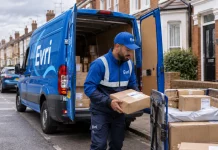



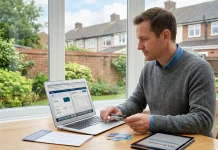






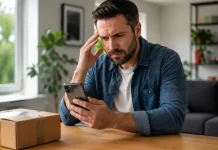












A DPD scam email is a fraudulent parcel notification designed to steal personal information, banking details or account passwords.
It may claim that a delivery failed, an address is incomplete or a small redelivery payment is required. Recipients should not click its links, download attachments, reply to the sender or enter any information.
The safest response is to leave the email, open the genuine parcel-tracking service independently and compare the message with the retailer’s order information. A logo, professional design or familiar parcel number does not prove that an email is genuine.
What Is a DPD Scam Email and Why Is It Dangerous?
 A DPD scam email is a phishing message sent by criminals who impersonate the delivery company. It may copy genuine colours, logos, tracking language and delivery-page layouts so that the recipient believes the message relates to a real parcel.
The email usually tries to move the recipient to a fraudulent website. That site may request a name, address, telephone number, password, parcel reference or debit card details. Other versions encourage the recipient to download a delivery label or install software that may contain malware or ransomware.
Information Commonly Targeted
- Personal details such as names, addresses and dates of birth
- Email, shopping and delivery account passwords
- Card numbers, expiry dates and security codes
- Online banking credentials
- Parcel references and order information
- Access to a computer or mobile device
The danger is not limited to the small charge shown on a fake payment page. Stolen credentials may be reused for account takeovers, further fraud or convincing follow-up scams.
How Does a DPD Scam Email Usually Work?
Most versions follow a simple social-engineering sequence: create concern about a parcel, impose a deadline and direct the recipient to a fraudulent page.
The Missed-Delivery Or Shipping-Update Story
The message may say that a parcel could not be delivered because nobody was available, a signature was required or the address was incomplete. Other examples threaten that the parcel will be returned, destroyed or held until a “final notice” payment is made.
A Netherlands-specific warning published on 6 May 2025 described emails with the subject “Shipping Update”. Reported clues included a double logo, a sender address that did not end in @dpd.nl, French wording such as “moyen de paiement” and a link requesting shipping confirmation.
That warning also referred to a 14-digit parcel number for certain customs-duty communications and listed +31 85 0022222 as a Netherlands contact number. Those details are not UK verification rules and should not be used by British recipients.
What Happens After The Link Is Opened?
The linked page may imitate a tracking, address-update or redelivery form. Details entered there can be transmitted directly to the criminals, while a download presented as a label or delivery tool may infect the device.
Readers can compare suspicious messages against the official UK phishing guidance, which describes urgent threats, malicious links and dangerous downloads. The guidance also explains that parcel-themed phishing can target usernames, passwords and financial information.
What Are the Most Common Signs of a Fake DPD Email?
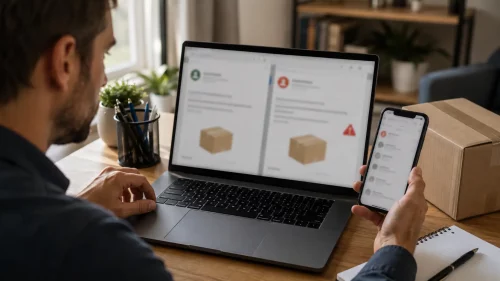 The clearest warning signs are an unfamiliar sender address, an unexpected payment request, a suspicious destination and language intended to make the recipient act without checking.
DPD Scam Email Warning Signs
- The displayed name says “DPD”, but the underlying address is unrelated.
- The greeting says “Dear Customer” or “Dear Sir/Madam”.
- The recipient was not expecting a parcel from that courier.
- A small redelivery or address-correction payment is demanded.
- The parcel is supposedly about to be returned or destroyed.
- The destination contains extra words, misspellings or an unusual suffix.
- The message asks for passwords or excessive personal information.
- An attachment or software download is included unexpectedly.
- The logo is duplicated, grainy or poorly positioned.
- The language does not fit a normal UK delivery message.
A polished email can still be fraudulent. Correct grammar, HTTPS encryption and copied branding only show that the message or site has been prepared professionally; they do not identify who controls it.
The company’s official statement is unambiguous:
“DPD will never ask you to pay a ‘redelivery fee’ via a link in an email, text or iMessage.”
That warning should carry more weight than the appearance of the message.
Which Email Addresses and Links Does DPD UK Use?
DPD UK uses a small number of official email domains and web addresses for customer relationship communications. Any message claiming to be from DPD should be checked carefully against these recognised formats.
Official DPD UK email addresses:
- @dpd.co.uk
- @dpdlocal.co.uk
- @dpdgroup.co.uk
- @dpd.uk
Official DPD UK website and tracking links:
- www.dpd.co.uk
- www.dpdlocal.co.uk
- www.dpdgroup.co.uk
- track.dpd.co.uk
If an email comes from any other domain, or if a link leads to a different or slightly altered website address, it should be treated as suspicious and verified independently before any action is taken.
UK guidance lists four recognised email suffixes: @dpd.co.uk, @dpdlocal.co.uk, @dpdgroup.co.uk and @dpd.uk. The full sender address should end with one of these suffixes; merely containing the letters “DPD” is not enough.
Sender And Link Comparison
| Check | More Consistent With A Genuine Message | Warning Sign |
| Sender address | Ends with a recognised UK suffix | Uses an unrelated or altered domain |
| Display name | Matches the underlying sender | Hides an unfamiliar address |
| Greeting | Relates naturally to the delivery | Uses a generic greeting |
| Payment | No linked redelivery-fee demand | Requests a small urgent fee |
| Website | Uses a recognised UK address | Adds words, hyphens or odd endings |
| Attachment | Expected and independently verified | Unexpected label or software file |
Recognised UK web addresses include www.dpd.co.uk, www.dpdlocal.co.uk and www.dpdgroup.co.uk. The secure tracking service is available at track.dpd.co.uk, but recipients should type the address themselves rather than opening it through a suspicious email.
This comparison provides a stronger check than business branding alone.
How Can Someone Check Whether a DPD Email Is Genuine?
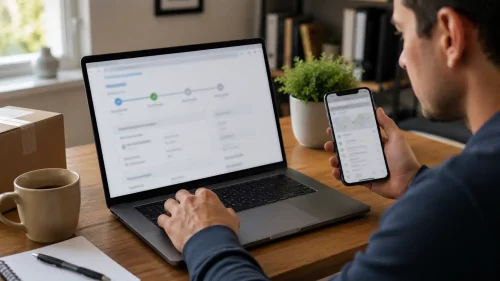 A recipient should verify three separate elements: the sender, the destination and the real parcel status. No single visual clue should be treated as conclusive.
Does The Sender Use An Official DPD Domain?
The recipient should expand the sender details and read the complete address. Criminals can display “DPD Delivery” while sending the message from an unrelated account.
Particular attention should be paid to:
- Additional letters or numbers
- Missing characters
- Unusual punctuation
- A different ending after the final @
- “DPD” appearing before an unrelated domain
- Addresses that resemble a personal email account
The address should be assessed from right to left, beginning with the domain after the @ symbol.
Link And Website Checks
The recipient should not open a link simply to test it. On a desktop, hovering may reveal its destination, but the safest method is to leave the message and open the tracking service independently.
A secure verification sequence is:
- Open the official app or type the tracking address manually.
- Enter the reference number rather than copying the email link.
- Check the retailer’s order page.
- Compare the genuine status with the email’s claim.
- Contact customer support through independently obtained details.
A university security warning similarly advises checking the browser address bar before entering usernames, passwords or banking details. It also recommends viewing the actual email address hidden behind the sender’s name.
Can Branding, Spelling Or A Blue Tick Be Trusted?
BIMI, or Brand Indicators for Message Identification, may show an official logo and blue tick when the recipient’s email client supports it. Its absence does not automatically prove fraud because the feature is not displayed by every provider.
Bad grammar and low-quality logos remain useful warning signs, but fluent writing is not proof of authenticity. Sender-domain checks and independent tracking provide stronger evidence.
Anyone who has already interacted with a suspicious message should follow the official recovery steps for phishing. These distinguish between merely opening a link and entering personal or banking information.
What Should Someone Do After Receiving a DPD Scam Email?
 The recipient should stop interacting with the message and verify the parcel through a separate channel. Acting quickly is useful, but following the scammer’s deadline is not.
Immediate Action Checklist
- Do not click links or open attachments.
- Do not reply or confirm that the address is active.
- Do not enter names, passwords or payment details.
- Check the parcel through the genuine app or tracking page.
- Save the sender address, subject and suspicious URL if needed.
- Forward the email to report@phishing.gov.uk.
- Mark the message as spam or phishing.
- Delete it after reporting and preserving necessary evidence.
- Tell the workplace IT team if it arrived on a business device.
Government guidance also advises users not to disclose private information, reply, download attachments or open links when an email’s authenticity is uncertain.
Reporting before deletion allows the suspicious sender or website to be investigated.
What Should Someone Do After Clicking a DPD Scam Link?
The appropriate response depends on whether the person only opened the page, entered information, installed software or lost money.
A person who opened the page but entered nothing and downloaded nothing is unlikely to need extensive recovery action. The page should be closed, and the person should remain alert for unusual account notifications.
Where a password was entered, it should be changed immediately on the affected account and on any other account using the same password. Multi-factor authentication should then be enabled, starting with the email account because it may control password resets elsewhere.
Where card or banking details were submitted, the bank should be contacted immediately through its genuine app, the number printed on the card or an independently obtained number. The card may need to be frozen or cancelled, and recent transactions should be reviewed.
Where a file or application was installed, the device should undergo a full antivirus scan. A work device should be reported to the organisation’s IT or security team before it reconnects to sensitive systems.
For money already lost, the victim should also make a formal fraud report.
How Should a DPD Scam Email Be Reported in the UK?
Reporting routes differ according to whether the message is an email, a text or a completed fraud. The location of the victim also affects the police reporting route.
Reporting Suspicious Emails And Websites
Suspicious emails should be forwarded to report@phishing.gov.uk. Suspicious websites can also be submitted for investigation, even where no money has been lost.
The reporting service had received more than 56.9 million scam reports by June 2026. Those reports had contributed to 252,000 scams being removed across 448,000 URLs, illustrating why reporting an unsuccessful attempt can still protect other users.
People who have lost money or responded to the criminals can use the official cyber crime reporting service in England, Wales or Northern Ireland. The service also accepts reports by telephone on 0300 123 2040; people in Scotland should contact Police Scotland on 101.
What About Scam Texts And iMessages?
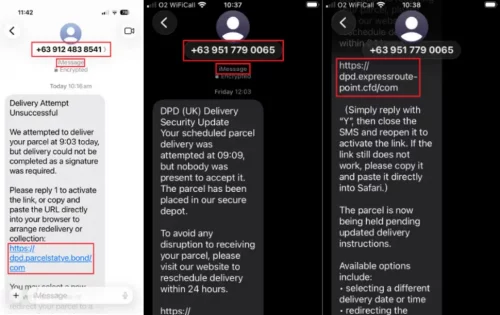 Phishing delivered by SMS, iMessage or Rich Communication Services is generally called smishing. Suspicious texts can be forwarded free of charge to 7726, allowing the mobile provider to investigate the sender.
One reported text campaign used a +63 country code, asked recipients to reply “A” and linked to dpdlocal.coc-uk.sbs/pay. It also requested a payment of about £1.50. These are examples from one campaign, not universal tests for every scam.
Genuine automated alerts are described as SMS messages rather than iMessages and may display “DPD UK”, “DPD Local” or “DPDgroup UK” as the sender.
How Can UK Customers Avoid Future DPD Delivery Scams?
 The most effective protection is to create a consistent habit: delivery messages should be treated as notifications, not as trusted gateways to payment or account pages.
Practical Prevention Measures
- Track parcels through an independently opened app or website.
- Compare messages with the retailer’s order account.
- Use unique passwords for email, retail and delivery accounts.
- Enable multi-factor authentication wherever available.
- Keep browsers, phones and security software updated.
- Avoid downloading delivery labels from unexpected messages.
- Review bank and card activity regularly.
- Teach family members about small redelivery-payment traps.
- Train employees to report parcel-themed emails promptly.
- Limit delivery information shared publicly or on social media.
UK guidance says registered SMS sender identification is supported through the Mobile Ecosystem Forum’s SenderID Protection Registry. It also explains that consistent sender names are intended to make fraudulent imitation more difficult, although recipients must still inspect unexpected requests carefully.
The safest rule remains simple: leave the message, open the real tracking service independently and verify the parcel there.
Conclusion
A DPD scam email may look convincing because criminals can copy logos, delivery terminology and payment-page designs. Its authenticity should therefore be judged through the complete sender address, the real link destination and an independently verified parcel status.
Recipients should never pay an unexpected redelivery fee through an email link. Suspicious messages should be reported, while anyone who has disclosed a password, installed software or entered bank details should secure the affected accounts and contact the relevant provider immediately.
Frequently Asked Questions
Does DPD Request Redelivery Payments Through Email Links?
Official UK guidance says the company will not request a redelivery fee through a link in an email, text or iMessage. Any such payment demand should be treated as suspicious and checked independently.
Can A Genuine-Looking Parcel Number Appear In A Scam?
Yes, criminals may invent, copy or reuse parcel references to make a message appear credible. A number should be entered manually into the independently opened tracking service rather than trusted because it appears in an email.
Does Every Genuine Email Display A Blue Tick?
No, the BIMI blue tick depends on whether the recipient’s email client supports the feature. Its absence alone does not establish that an email is fraudulent.
Can A Fake Email Use The Real DPD Logo?
Yes, logos, colours and layouts can be copied and placed inside fraudulent messages. The sender domain and independently verified parcel status provide better evidence than branding.
Should The Email Be Deleted Before Reporting It?
It is better to forward or report the original message first, preserving any useful sender and link information. It can then be marked as phishing and deleted.
Can A Small Delivery Fee Lead To Larger Fraud?
Yes, a fake payment page may collect the full card number, security code, address and other identity details. Those details may enable unauthorised payments or later impersonation attempts.
What Should A Business Do If An Employee Clicks The Link?
The employee should stop interacting with the page and inform the organisation’s IT or security team immediately. Any downloaded file should be scanned, and compromised passwords or financial details should be secured without delay.
Note: Netherlands-specific information including the @dpd.nl suffix, 14-digit customs reference and +31 85 0022222 contact number, should not be presented as UK guidance. The +63, “Reply A”, .sbs domain and £1.50 payment example came from a reported text-message campaign and illustrates smishing rather than every DPD scam email.