
























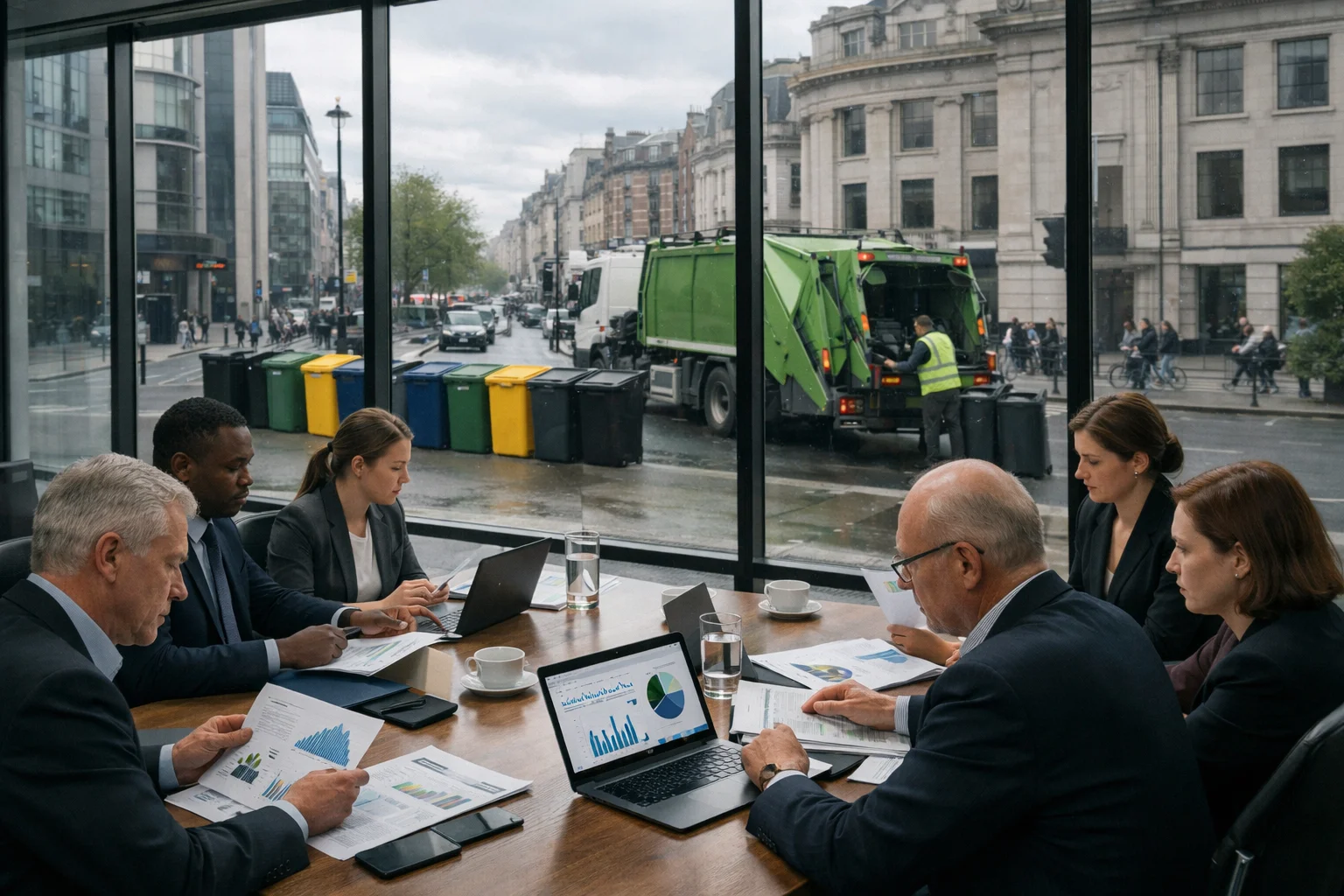
London waste management business strategy changes are actively reshaping how organisations operate, making waste handling a core part of decision making rather than a routine task. Businesses are adapting to stricter UK regulations, rising costs, and growing sustainability expectations by integrating structured waste strategies into their operations.
Key takeaways:
- Regulatory changes are forcing businesses to rethink waste handling practices
- Sustainable waste management is now linked to brand value and growth
- Efficient waste strategies can significantly reduce operational costs
- Compliance plays a critical role in avoiding legal and financial risks
- Businesses face challenges such as cost, expertise, and infrastructure gaps
- Strategic partnerships and data driven approaches are improving efficiency
- Future trends include smart technologies and zero waste initiatives
What Is Driving the Shift in London Waste Management Business Strategy Changes?

The shift in london waste management business strategy changes is being driven by a combination of regulatory tightening, economic pressure, and a broader cultural move towards sustainability.
Businesses in London are no longer treating waste as a routine operational byproduct. Instead, it is becoming a central element of strategic planning.
Evolution of UK Waste Regulations
The UK regulatory environment has undergone significant transformation over the past decade. Policies are increasingly designed to reduce landfill dependency and promote recycling and reuse. The Environment Act has introduced stricter accountability for businesses, particularly around waste tracking and reporting.
Businesses are now expected to demonstrate duty of care in how waste is handled from production to final disposal. This includes proper documentation, safe storage, and ensuring waste is transferred only to authorised carriers.
The following table highlights key regulatory elements influencing business strategy:
| Regulation Area | Business Requirement | Strategic Impact |
| Waste Duty of Care | Proper handling and documentation | Increased administrative oversight |
| Recycling Mandates | Segregation of recyclable materials | Operational process redesign |
| Landfill Tax | Higher disposal costs | Incentive to reduce landfill use |
| Extended Producer Responsibility | Accountability for product lifecycle | Product and packaging redesign |
These regulations are not static. They continue to evolve, forcing businesses to remain agile and informed. Companies that fail to adapt often find themselves reacting under pressure rather than planning proactively.
Growing Importance of Sustainability in Business
Sustainability has shifted from a branding exercise to a measurable performance indicator. Investors and consumers are placing greater emphasis on environmental responsibility, and waste management plays a visible role in this perception.
Organisations are integrating sustainability into their key performance indicators. Waste reduction targets are being tracked alongside revenue and efficiency metrics. This alignment is changing how decisions are made at the executive level.
How Are London Businesses Adapting to Waste Management Changes?
Businesses across London are implementing structured changes to align with new waste management expectations. These adaptations are not uniform but reflect the size, industry, and operational complexity of each organisation.
Many companies are moving towards integrated waste systems that combine tracking, segregation, and reporting. Partnerships with external providers are also becoming more common, particularly for organisations lacking internal expertise.
A practical example of this shift is the increasing reliance on professional services such as waste removal London, where businesses can access compliant, efficient, and scalable solutions tailored to commercial needs. This kind of support allows organisations to focus on their core operations while ensuring waste is handled responsibly.
A waste management consultant working with mid sized London firms explained this transition clearly: “We’re seeing a clear move away from basic disposal contracts towards strategic partnerships. Businesses want data, transparency, and efficiency from their waste providers.”
This reflects a deeper operational change where waste is analysed in the same way as procurement or logistics.
The table below outlines common adaptation strategies:
| Strategy | Description | Business Benefit |
| Waste Audits | Detailed analysis of waste streams | Identifies cost saving opportunities |
| Segregation Systems | Separation of materials at source | Improves recycling rates |
| Digital Tracking | Monitoring waste volumes and types | Data driven decision making |
| Outsourcing Services | Partnering with specialists | Ensures compliance and efficiency |
These changes are gradually becoming standard practice rather than optional improvements.
Why Is Compliance with UK Waste Regulations Crucial for Businesses?

Compliance is not simply about avoiding penalties. It directly influences operational stability and long term viability. London waste management business strategy changes are heavily shaped by the need to meet legal obligations.
Businesses that fail to comply risk significant disruption. Regulatory breaches can lead to fines, legal action, and reputational damage. In some cases, operations may be halted until compliance issues are resolved.
At the same time, compliance provides a framework for consistency. It ensures that waste is handled safely and responsibly, reducing environmental impact and improving overall efficiency.
The relationship between compliance and business outcomes can be summarised as follows:
| Compliance Level | Business Risk | Outcome |
| High Compliance | Low risk | Stable operations and strong reputation |
| Moderate Compliance | Medium risk | Occasional disruptions |
| Low Compliance | High risk | Legal and financial consequences |
Companies that integrate compliance into their strategy often find it easier to adapt to future regulatory changes.
What Are the Financial Impacts of Waste Management Strategy Changes?
Financial considerations are central to london waste management business strategy changes. While initial investments may be required, the long term financial benefits are often substantial.
Cost Reduction Through Efficient Waste Handling
Efficient waste management reduces unnecessary expenditure. By minimising waste generation and improving recycling rates, businesses can significantly lower disposal costs.
For example, segregating recyclable materials reduces the volume of general waste, which is typically more expensive to dispose of. This simple operational change can lead to measurable savings.
Hidden Costs of Poor Waste Management Practices
Poor waste management often leads to indirect costs that are not immediately visible. These may include inefficiencies in resource use, higher energy consumption, and increased regulatory risk.
A sustainability advisor working with retail businesses in London described this clearly: “When companies start tracking their waste properly, they often realise they are paying twice. Once for the materials they waste and again for disposing of them.”
The financial comparison below illustrates the difference:
| Waste Practice | Direct Costs | Indirect Costs | Overall Impact |
| Efficient Management | Lower disposal fees | Reduced resource waste | Positive financial outcome |
| Poor Management | Higher landfill fees | Resource inefficiency | Negative financial outcome |
This demonstrates why waste management is increasingly viewed as a financial strategy rather than a compliance obligation.
How Does Sustainable Waste Management Influence Business Growth?
Sustainable waste management contributes directly to business growth by improving brand perception and operational efficiency. Companies that adopt environmentally responsible practices are better positioned in competitive markets.
Customers are becoming more selective, often favouring businesses that demonstrate clear sustainability commitments. Waste reduction is one of the most visible indicators of such commitment.
The circular economy model is particularly relevant in this context. By reusing and recycling materials, businesses can reduce costs while creating new revenue opportunities.
Key growth drivers linked to sustainable waste management include:
- Enhanced customer trust
- Improved brand differentiation
- Access to sustainability focused investment
These factors combine to create a competitive advantage that extends beyond cost savings.
What Challenges Do London Businesses Face in Implementing Waste Strategy Changes?

Despite the clear benefits, implementing london waste management business strategy changes presents several challenges. These barriers can slow down progress, particularly for smaller organisations.
One of the primary challenges is the cost of transition. Implementing new systems, training staff, and upgrading infrastructure requires investment. For businesses operating on tight margins, this can be a significant obstacle.
Another issue is the lack of internal expertise. Waste management is a specialised field, and many organisations do not have the knowledge required to design effective strategies.
Infrastructure limitations also play a role. Not all areas have access to advanced recycling facilities, which can restrict the options available to businesses.
The table below summarises these challenges:
| Challenge | Description | Impact on Business |
| Cost of Implementation | Investment in systems and training | Slows adoption |
| Knowledge Gaps | Limited expertise in waste management | Inefficient strategies |
| Infrastructure Limits | Lack of local facilities | Restricted options |
Addressing these challenges often requires external support and long term planning.
How Can Businesses in London Build an Effective Waste Management Strategy?
Building an effective strategy requires a structured and data driven approach. Businesses must move beyond basic compliance and focus on continuous improvement.
Initial Steps for Strategy Development
The first step is to conduct a comprehensive waste audit. This provides a clear understanding of current practices and identifies areas for improvement.
Once the audit is complete, businesses can set realistic targets and implement changes. This phased approach reduces disruption and allows for continuous monitoring.
Selecting the Right Waste Management Partner
Choosing the right partner is critical. A reliable provider offers not only collection services but also strategic guidance and compliance support.
Businesses should look for providers that offer transparency, data reporting, and sustainable solutions. This ensures alignment with long term objectives.
The following table outlines key selection criteria:
| Criteria | Importance | Benefit |
| Regulatory Knowledge | High | Ensures compliance |
| Service Flexibility | Medium | Adapts to business needs |
| Sustainability Focus | High | Supports long term goals |
| Data Reporting | High | Enables performance tracking |
A well chosen partner can significantly enhance the effectiveness of a waste management strategy.
What Is the Future of Waste Management Business Strategy in London?

The future of london waste management business strategy changes will be shaped by innovation and policy development. Businesses are expected to adopt more advanced technologies and align with stricter environmental targets.
Smart waste tracking systems are becoming increasingly common. These technologies provide real time data, allowing businesses to monitor waste generation and optimise processes.
Zero waste initiatives are also gaining momentum. These programmes aim to eliminate waste entirely by redesigning production and consumption systems.
Government policies are expected to continue evolving, with a focus on reducing carbon emissions and promoting resource efficiency. Businesses that anticipate these changes will be better prepared to adapt.
Are London Waste Management Business Strategy Changes Here to Stay?
The current shift in waste management practices reflects a long term transformation rather than a temporary trend. Environmental concerns, regulatory pressure, and market expectations are all reinforcing the importance of sustainable waste strategies.
Businesses that integrate waste management into their core operations are more resilient and better positioned for future growth. This approach allows them to respond effectively to changes in regulation and consumer behaviour.
As innovation continues and expectations rise, waste management will remain a central component of business strategy in London.
Conclusion
London waste management business strategy changes clearly show that waste handling is no longer just an operational task. It has become a critical component of business planning, influencing compliance, cost efficiency, and brand reputation.
As regulations tighten and sustainability expectations grow, businesses must integrate waste management into their core strategies.
Those that do will not only meet legal requirements but also position themselves for long-term success in an increasingly environmentally conscious market.
FAQs
What are the main waste regulations affecting London businesses?
London businesses must comply with UK regulations such as the Environment Act, waste duty of care, and recycling requirements, which mandate proper waste handling and disposal.
How can waste management reduce business costs?
By reducing waste volume, increasing recycling, and improving efficiency, businesses can lower disposal fees and resource expenses.
What is a waste audit and why is it important?
A waste audit analyses the types and volumes of waste a business produces, helping identify areas for reduction and cost savings.
Are small businesses affected by waste management regulations?
Yes, all businesses, regardless of size, must comply with UK waste regulations, although the scale of implementation may vary.
What is the circular economy in waste management?
It is a system where materials are reused, recycled, or repurposed to minimise waste and maximise resource efficiency.
How do customers influence business waste strategies?
Customers increasingly prefer environmentally responsible brands, encouraging businesses to adopt sustainable waste practices.
What are zero waste initiatives?
Zero waste initiatives aim to eliminate waste by redesigning processes and promoting reuse and recycling.