

























Online gambling may provide entertainment, but it also carries financial, emotional and personal risks. These risks can be greater on non-GAMSTOP platforms because the websites may operate outside the consumer-protection standards imposed on gambling companies licensed in Great Britain.
Responsible gambling on non-GAMSTOP platforms requires more than setting a basic spending limit. Players must understand the operator’s regulatory position, examine the available control tools and recognise when gambling is beginning to cause harm.
Anyone registered with GAMSTOP should not use an overseas gambling platform to bypass their exclusion. GAMSTOP registration reflects a decision to stop gambling, and accessing another website can undermine that protection.
Last Updated: 31.08.2026
What Non-GAMSTOP Really Means For British Players?
GAMSTOP is a free self-exclusion service that blocks registered users from accessing online gambling companies licensed in Great Britain. Players can choose an exclusion lasting six months, one year, five years or five years with automatic renewal.
All online gambling operators licensed to serve customers in Great Britain must participate in GAMSTOP. Therefore, a platform advertising itself as “not on GAMSTOP” will generally operate without a British Gambling Commission licence.
Some non-GAMSTOP platforms hold licences from overseas regulators. However, an overseas licence does not necessarily provide the same standards for responsible gambling, customer-fund protection, complaints or regulatory enforcement.
The term “non-GAMSTOP” should describe the platform’s status rather than suggest that avoiding self-exclusion is a benefit. A large bonus, extensive game library or positive online review does not prove that a platform is safe.
British players should understand who owns the website, where it is licensed and which authority handles complaints before depositing money.
The Protection Gap Between UK-Licensed And Non-GAMSTOP Platforms
British-licensed operators must follow specific rules designed to reduce gambling-related harm. An overseas platform may offer similar tools voluntarily, but their availability and effectiveness can differ considerably.
| Protection | British-Licensed Operator | Non-GAMSTOP Platform |
| GAMSTOP Coverage | Required | Usually Not Included |
| Deposit Limits | Required | Depends On The Operator |
| Time-Outs | Required | May Be Limited |
| Self-Exclusion | Required | Usually Applies To One Website |
| Customer Monitoring | Required | Standards Vary |
| Complaint Resolution | Approved Procedures Required | Depends On The Licence |
| Regulatory Enforcement | Gambling Commission Oversight | Overseas Regulator, If Any |
| Customer-Fund Information | Protection Level Must Be Disclosed | Standards May Differ |
A platform-level self-exclusion is also different from GAMSTOP. Closing an account with one non-GAMSTOP operator may not prevent the same person from opening an account on another website owned by a different company.
How The 2026 Deposit-Limit Rules Affect Players?
British-licensed online gambling businesses must prompt customers to consider setting a financial limit before making their first deposit. Players must also be able to review and change their limits through an accessible account feature.
From 30 June 2026, a control described as a “deposit limit” must be calculated using only the amount a customer pays into an account during a specified period.
Operators can still provide other controls, including loss or spending limits, but they must label them clearly.
These requirements do not automatically apply to overseas non-GAMSTOP platforms. Players should not assume that a tool labelled as a deposit limit works in the same way as one offered by a British-licensed operator.
Build A Three-Layer Gambling Control Plan
Relying on willpower alone may not provide enough protection. A stronger responsible gambling plan combines controls over money, time and access.
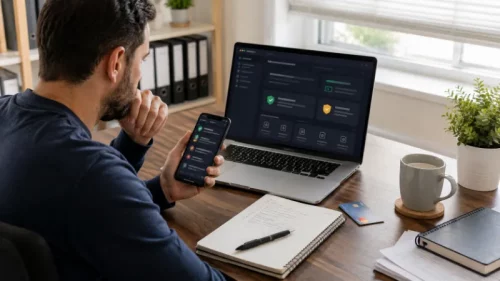 Control The Money
A gambling budget should be based only on money that remains after essential expenses and planned savings have been covered. Gambling should never be used as a solution for debt or financial pressure.
Practical money controls include:
- Set A Maximum Daily, Weekly Or Monthly Deposit Limit
- Keep Gambling Money Separate From Household Spending
- Never Use Rent, Food Or Bill Money
- Never Borrow Money To Gamble
- Avoid Increasing Limits After Losing
- Do Not Cancel A Withdrawal To Continue Playing
- Review Complete Transaction History Regularly
A deposit limit controls how much enters an account, while a loss limit controls how much can be lost. Where available, using both controls can provide a clearer boundary.
Control The Time And Access
Long sessions can make it more difficult to track spending and make considered decisions. Time controls should be established before gambling begins.
Players can:
- Set A Fixed Session Length
- Use Reality Checks And Session Reminders
- Schedule Gambling-Free Days
- Take Regular Breaks Away From The Screen
- Log Out When The Planned Session Ends
- Disable Gambling Notifications
- Remove Saved Payment Details
- Use A Time-Out Before Limits Are Reached
A time-out may temporarily block an account for a selected period. Self-exclusion is more appropriate when someone needs to stop for longer or believes gambling is already causing harm.
Add Protection Outside The Platform
Controls provided by a gambling website can be useful, but they should not be the only barrier. External tools continue working even when someone visits another platform.
Additional protection can include:
- Activate A Gambling Block Through A Bank
- Install Gambling-Blocking Software
- Block Gambling Websites On Personal Devices
- Unsubscribe From Gambling Emails And Messages
- Disable Personalised Gambling Advertising
- Ask A Trusted Person To Help Monitor Spending
- Keep Essential Money In A Separate Account
Combining these measures creates several barriers between an impulse and a deposit.
How To Audit A Non-GAMSTOP Platform Before Depositing?
The presence of a licence number or responsible gambling page does not automatically confirm that a website is trustworthy. Players should independently verify its information.
Start by identifying the operator’s complete legal name, registered address and named regulator. The licence should then be checked directly through the regulator’s official register.
The following checks can reveal important risks:
- Confirm The Licence Is Active
- Check That The Domain Appears On The Licence
- Identify The Company Processing Payments
- Read The Deposit And Withdrawal Conditions
- Check Whether Limits Can Be Reduced Immediately
- Find The Time-Out And Self-Exclusion Procedures
- Look For An Independent Complaints Process
- Review The Policy On Dormant Accounts
- Check How Customer Funds Are Handled
- Read Bonus Terms Before Accepting An Offer
A review website or rating should not replace a regulatory check. Reviews may describe customer experiences, but they do not confirm whether an operator is legally permitted to serve British consumers.
Players should also be cautious when a website hides ownership details, provides only cryptocurrency payments, imposes unclear withdrawal conditions or requires additional deposits before releasing winnings.
When Responsible Gambling Controls Are No Longer Enough?
Limits can reduce risk, but they cannot guarantee that gambling remains controlled. A person’s behaviour and circumstances are often more important than the amount deposited.
| Risk Level | Possible Signs | Appropriate Response |
| Green | Staying Within Planned Money And Time Limits | Continue Monitoring Activity |
| Amber | Increasing Deposits, Longer Sessions Or Thinking Frequently About Gambling | Pause Gambling And Add Stronger Blocks |
| Red | Chasing Losses, Borrowing, Hiding Activity Or Missing Payments | Stop Gambling And Seek Support |
Other warning signs include feeling restless when unable to gamble, repeatedly breaking personal limits, lying about losses and using gambling to escape stress or low mood.
Gambling-related harm can affect more than money. It may damage sleep, mental health, employment and relationships. Family members can also experience financial pressure and emotional distress.
Why Game Knowledge Cannot Remove Gambling Risk?
Understanding game rules can prevent mistakes, but it cannot make gambling profitable or remove the operator’s mathematical advantage.
Casino games are designed with a house edge. Random outcomes cannot be reliably predicted, and a previous loss does not make a future win more likely.
Strategies claiming to guarantee winnings should therefore be treated with caution. Responsible gambling means accepting that losses are possible and never treating gambling as an income source.
When To Stop Rather Than Set Another Limit?
Setting another limit may not be sufficient when someone repeatedly breaks existing limits, borrows money, chases losses or attempts to bypass self-exclusion.
In these circumstances, the safer response is to stop gambling, activate external blocks and seek professional support. Trying to recover losses by continuing to play can deepen the original harm.
Anyone already registered with GAMSTOP should treat the exclusion as a firm boundary. A non-GAMSTOP website should not be used as a substitute.
What To Do If A Platform Ignores Your Limits?
A gambling platform should respect an activated limit, time-out or self-exclusion request. If it does not, the customer should avoid making further deposits.
 The following steps can help:
- Stop Gambling Immediately
- Take Screenshots Of Limits And Account Messages
- Download Deposits, Bets And Withdrawal Records
- Request Written Confirmation Of Account Closure
- Activate A Bank Gambling Block
- Contact The Platform’s Named Regulator
- Use The Available Dispute Procedure
- Seek Independent Gambling Support
Customers should keep copies of emails, live-chat conversations and transaction records. This evidence may be important when submitting a complaint to an operator, regulator or payment provider.
If a platform has no identifiable owner, regulator or complaints process, recovering money may be considerably more difficult. This is one reason regulatory checks should take place before any deposit.
Conclusion
Responsible gambling on non-GAMSTOP platforms requires careful limits, independent licence checks and external blocking tools.
However, these measures cannot remove every risk or recreate the protections provided by GAMSTOP and British gambling regulation.
Anyone who struggles to remain within limits, chases losses or experiences financial or emotional harm should stop gambling rather than move to another platform.
Free and confidential professional support is available for gamblers and people affected by someone else’s gambling.
Frequently Asked Questions
What Is A Non-GAMSTOP Gambling Platform?
It is an online gambling website that does not participate in the GAMSTOP self-exclusion scheme, usually because it is not licensed by the British Gambling Commission.
Are Non-GAMSTOP Casinos Licensed In The UK?
Online casinos licensed to serve customers in Great Britain must participate in GAMSTOP. A non-GAMSTOP casino may instead claim to operate under an overseas licence.
Does GAMSTOP Cover Overseas Gambling Websites?
GAMSTOP covers online gambling companies licensed in Great Britain. It may not block websites operating solely under overseas licences.
Can Someone Cancel A GAMSTOP Exclusion Early?
No. A GAMSTOP exclusion cannot be removed before the selected minimum exclusion period has ended.
What Limits Should Players Set Before Gambling?
Players should set affordable deposit, loss and time limits before starting. The limits must never include money needed for essential spending or debt repayments.
Are Non-GAMSTOP Responsible Gambling Tools Reliable?
Their quality and enforcement depend on the individual operator and regulator. Players should verify how each tool works before depositing money.
Where Can Someone Get Help For Gambling-Related Harm?
The National Gambling Helpline provides free and confidential support. NHS gambling services and other specialist organisations can also help individuals and affected families.