

























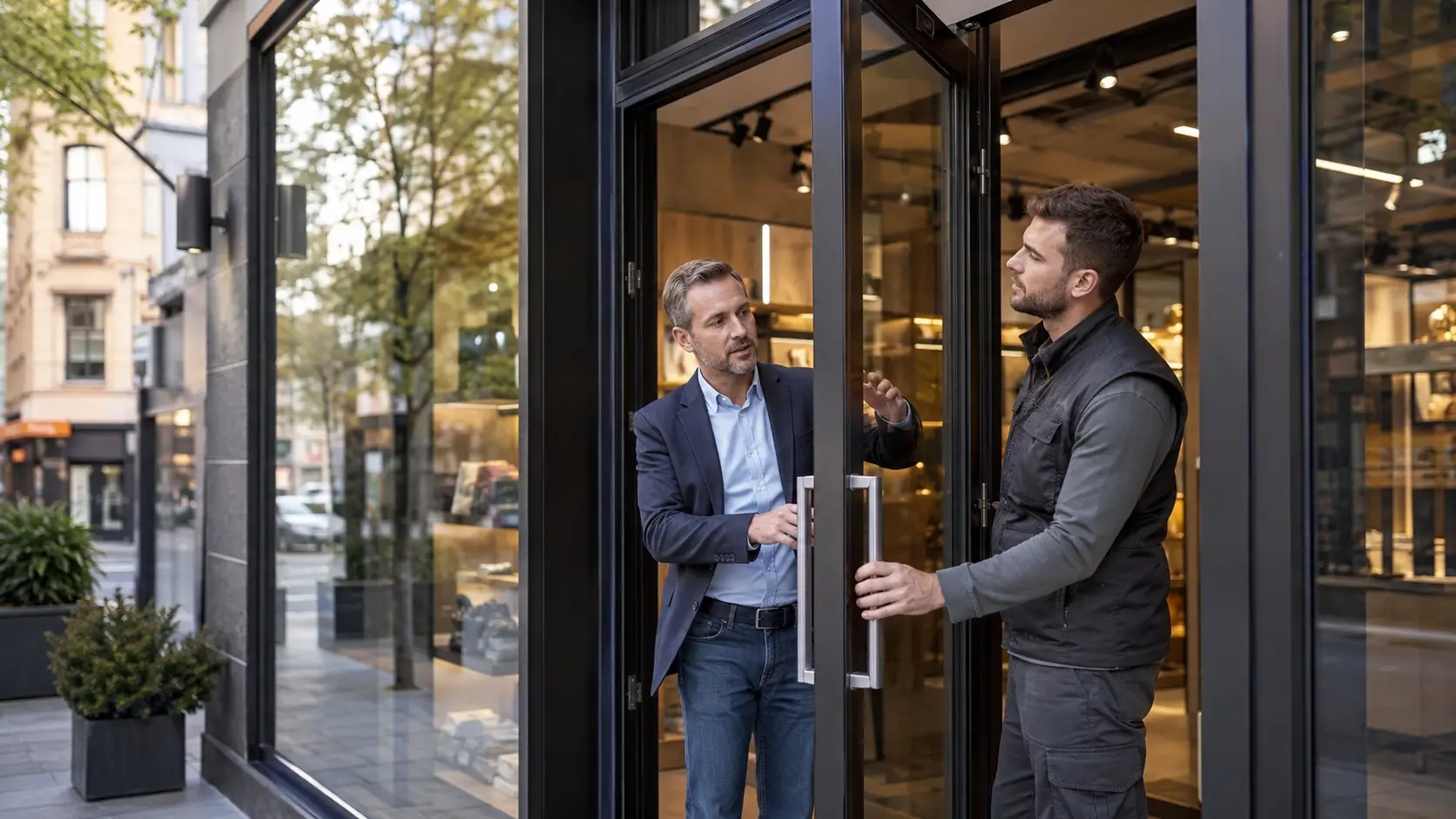
The entrance to a retail premises communicates a great deal about the business behind it before a customer steps inside. It affects the ease of access, the brand’s perceived quality, and the level of security the operator can maintain during and after trading hours.
Commercial entrance specialists such as Dasco Entrance Technology supply and install a range of retail door systems designed to meet the practical and aesthetic demands of different trading environments.
The Role of the Shopfront in Customer Experience
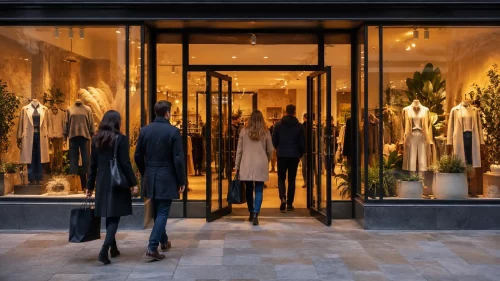 A retail entrance is the boundary between the public realm and a commercial space. It must welcome customers while providing a clear visual signal of the brand’s character.
A well-designed shopfront with a high-quality door system contributes to the overall impression of professionalism and care that customers associate with the business.
Conversely, a poorly maintained or inadequate entrance can undermine confidence before a customer has engaged with any product or member of staff.
Frameless Glass Shopfronts
Toughened glass shopfronts offer maximum transparency, which is particularly valuable for retail spaces that rely on visual merchandising to attract passing trade.
The absence of visible framing allows the interior display to occupy the full width of the shopfront, maximising the impact of window arrangements.
Toughened glass used in commercial shopfronts is manufactured to withstand the physical stresses of regular use and the thermal variations of external exposure.
Aluminium Shopfront Systems
Aluminium shopfront systems combine structural rigidity with the ability to be finished in a wide range of colours and profiles. The material is lightweight relative to its strength, corrosion-resistant, and low-maintenance.
Aluminium frames can accommodate a variety of door configurations, from single sliding doors to wide double-leaf swing installations.
The profile and colour can be specified to align with the business branding requirements, from standard commercial finishes to fully RAL-matched custom colours.
Door Configuration Options for Retail
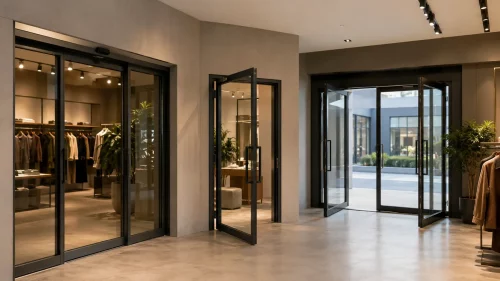 The door configuration in a retail shopfront should reflect the anticipated customer flow and the interior layout.
Sliding doors are a common choice for high-footfall shops where customers need to move in and out quickly without waiting for a door to swing clear. Swing doors suit lower-traffic environments and provide a more traditional shopfront appearance.
Bi-folding doors work well for retailers who want the option to open the full facade during trading hours, blurring the boundary between interior and exterior in good weather. Telescopic sliding systems provide wide openings in limited wall space.
Secondary Door Systems and Access Control
Larger retail environments sometimes require a secondary door inset behind the main shopfront to create a controlled entry zone.
This can be managed through an interlocking system where the outer and inner doors cannot both be open at the same time, which is useful for managing queues, reducing the risk of theft, or controlling access to restricted areas.
Electronic integration with the building security system allows the inner door to be controlled by staff from behind the service counter.
Security Requirements for Commercial Retail Doors
Retail premises face a specific security challenge: they must be open and welcoming during trading hours yet secure when closed. Doors and shopfronts that meet PAS24 standards provide enhanced security performance and resistance to forced entry.
Locking mechanisms, panic escape hardware on emergency exit routes, and integration with the alarm system all contribute to a coherent security strategy.
The quality of the door frame and glazing is as important as the locking mechanism, since a weak frame can defeat even a robust lock.
Maintenance and After-Sales Support
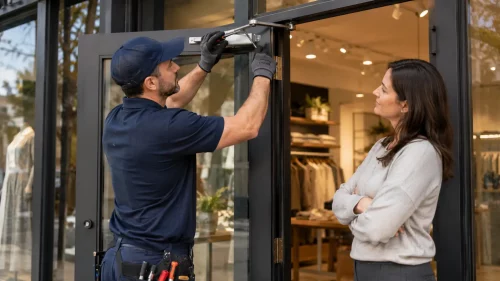 A retail shopfront is exposed to daily use and the full range of weather conditions that the external environment brings. Regular maintenance ensures that the door mechanism, seals, glazing, and locking hardware remain in good condition.
A maintenance contract that includes scheduled inspections and priority repair cover ensures that any issue will be resolved quickly, minimising the time the entrance is compromised.
After-sales support from the installer is valuable for any adjustments needed as the building settles or as the trading requirements change over time.
Working with a Specialist Installer
Retail door systems involve a combination of structural, mechanical, and electronic components that a specialist experienced in commercial shopfronts is most likely to install.
A structured installation process that covers the initial survey, specification, manufacture, delivery, and commissioning ensures that the finished shopfront performs as intended from the first day of operation.
Accreditations such as SafeContractor certification and membership of the Automatic Door Suppliers Association indicate that a supplier operates to industry standards.