
























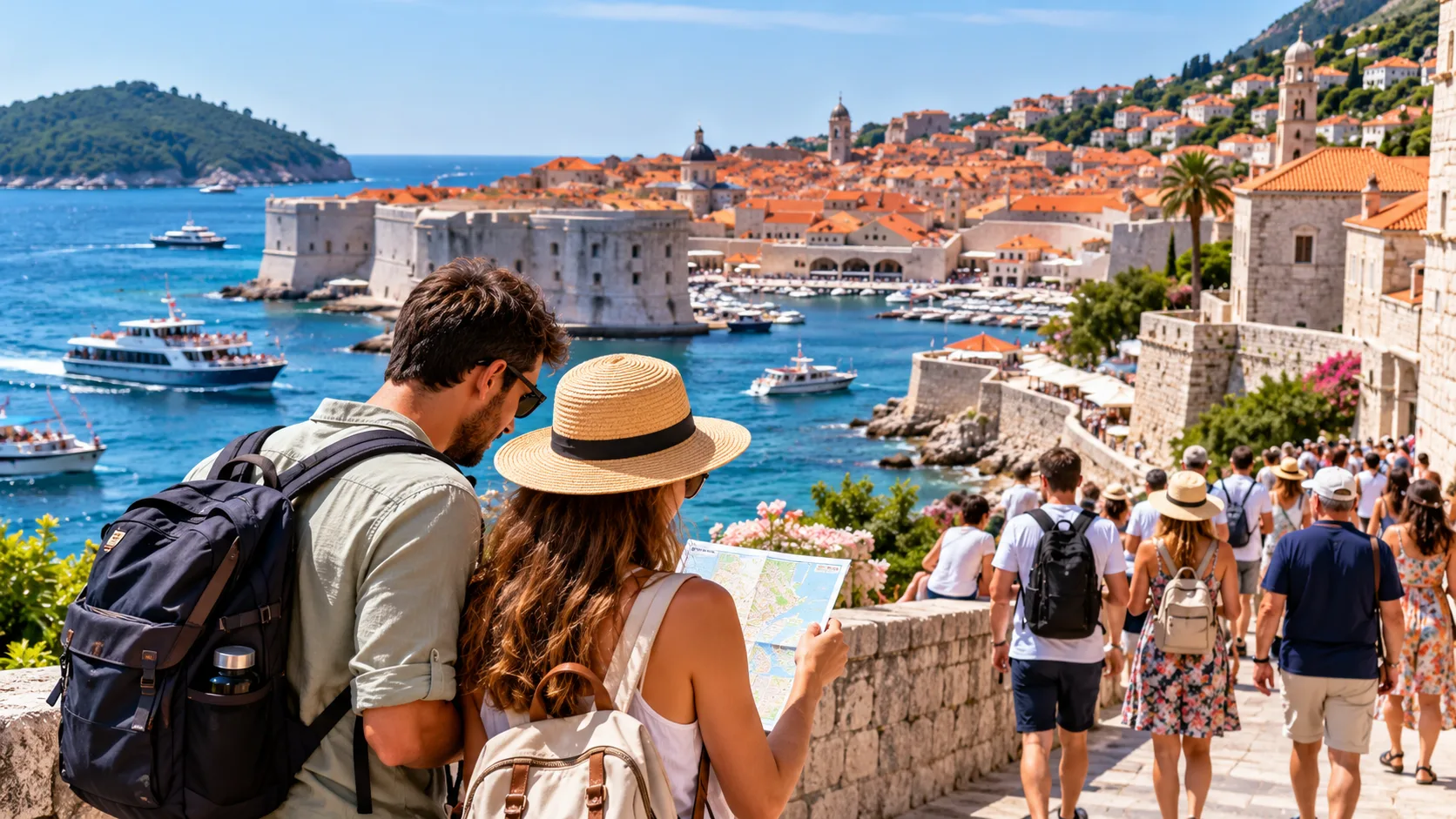
More than five million tourists arrived in Croatia in August 2026, the first time the country had passed that mark in a single month. Data from the national eVisitor system, presented in Zagreb on Sept.
10, put the total for the first eight months of the year at 17.5 million arrivals and 90.5 million overnight stays, each about 1% higher than in 2025, according to Croatia Week. The figures cover commercial and private accommodation as well as nautical charter.
The Adriatic coast accounted for 86.7 million of those nights. Istria led all counties with 25.4 million. Continental Croatia, including Zagreb, added 3.8 million nights, 1% more than a year earlier.
Beneath the record, August arrivals rose 2% on the previous year. Overnight stays grew by only 0.5%, to 31.4 million. Croatia’s tourism minister read the gap as a sign that visitors were taking briefer holidays and keeping a closer eye on what they spent.
He added that Croatian tourism had held its ground even as people changed how they travel and how much they are willing to pay.
More Guests, Fewer Nights
Across the country’s commercial accommodation, August produced almost 27 million overnight stays, broadly level with a year earlier, and private apartments and rooms, still the largest part of the market, took in more visitors who each stayed a little less time, The Dubrovnik Times reported.
On the island of Krk, private accommodation had recorded 2.8% more arrivals but 1.5% fewer overnight stays in the season figures reported in late August.
The island’s tourist board director said the numbers reflected new habits among holidaymakers, who were staying for fewer nights, and not weaker interest in Krk, according to an earlier Croatia Week report that also noted guests were booking later.
Fiscalised revenue reached €7.41 billion in the first eight months, 17.6% more than a year earlier, and the number of receipts issued rose 5.7%, according to the Ministry of Tourism.
In August alone, accommodation, restaurants and food services issued 65.7 million receipts, 6% more than a year earlier, The Dubrovnik Times reported in a separate analysis of fiscal data.
Croatian residents spent 7.7% more nights in commercial accommodation in the first half of 2026 than a year earlier, while foreign visitors spent 0.6% fewer, according to national statistics cited by Total Croatia News.
Commercial accommodation as a whole logged 78.6 million overnight stays by the end of August, about 0.5% more than a year earlier.
Hotels Take a Larger Share
Croatian hotels recorded almost 5.3 million overnight stays in August, 2% more than a year earlier, The Dubrovnik Times reported.
Over the first eight months, hotels logged about 20 million overnight stays, up 2.7%, while the almost 34 million nights spent in household accommodation stayed at roughly the previous year’s level, according to Total Croatia News.
Employment in accommodation and food services reached 120,185 in August, 4.3% more than in July, Travel And Tour World reported.
Germany remained Croatia’s largest foreign market with 16.9 million overnight stays between January and August, followed by Slovenia with 9.6 million and Austria and Poland with 6.3 million each.
The Czech Republic contributed 4.5 million and Hungary 3.7 million. Most of those markets lie within driving distance of the Adriatic, which makes a short stay easy to arrange.
A broad, price-aware middle market of that kind tends to favour hotels that combine reliable standards with sensible pricing, flexible stay lengths and services that justify a slightly higher nightly rate than a private apartment.
Older coastal properties built for long, fixed-week stays can need new room layouts, food and beverage offers suited to guests who stay three nights instead of 10, and booking systems that handle short, late reservations.
Properties that can open for longer each year also spread their fixed costs across more guests. Some hotel investors have approached that work with techniques first developed in retail property, where owners learned to reposition tired assets around the way customers actually shop.
Investors who have carried those retail methods into hotels tend to start from the guest a location can realistically attract and work back to the product.
Tourism Officials Shift Focus to Spending
Speaking on Sept. 10, the director of the Croatian National Tourist Board said good results were also expected for the rest of 2026, and he noted that some newer markets, including visitors from China, travel throughout the year and not only in the July and August peak, according to Xinhua.
The minister argued that the industry should be judged on what visitors spend and what tourism adds to the wider economy, alongside the familiar counts of arrivals and nights. A yardstick of that kind is likely to suit operators that can earn more from each guest.
More than five million tourists arrived in Croatia in August 2026, the first time the country had passed that mark in a single month. Data from the national eVisitor system, presented in Zagreb on Sept.
10, put the total for the first eight months of the year at 17.5 million arrivals and 90.5 million overnight stays, each about 1% higher than in 2025, according to Croatia Week. The figures cover commercial and private accommodation as well as nautical charter.
The Adriatic coast accounted for 86.7 million of those nights. Istria led all counties with 25.4 million. Continental Croatia, including Zagreb, added 3.8 million nights, 1% more than a year earlier.
Beneath the record, August arrivals rose 2% on the previous year. Overnight stays grew by only 0.5%, to 31.4 million. Croatia’s tourism minister read the gap as a sign that visitors were taking briefer holidays and keeping a closer eye on what they spent.
He added that Croatian tourism had held its ground even as people changed how they travel and how much they are willing to pay.
More Guests, Fewer Nights
Across the country’s commercial accommodation, August produced almost 27 million overnight stays, broadly level with a year earlier, and private apartments and rooms, still the largest part of the market, took in more visitors who each stayed a little less time, The Dubrovnik Times reported.
On the island of Krk, private accommodation had recorded 2.8% more arrivals but 1.5% fewer overnight stays in the season figures reported in late August.
The island’s tourist board director said the numbers reflected new habits among holidaymakers, who were staying for fewer nights, and not weaker interest in Krk, according to an earlier Croatia Week report that also noted guests were booking later.
Fiscalised revenue reached €7.41 billion in the first eight months, 17.6% more than a year earlier, and the number of receipts issued rose 5.7%, according to the Ministry of Tourism.
In August alone, accommodation, restaurants and food services issued 65.7 million receipts, 6% more than a year earlier, The Dubrovnik Times reported in a separate analysis of fiscal data.
Croatian residents spent 7.7% more nights in commercial accommodation in the first half of 2026 than a year earlier, while foreign visitors spent 0.6% fewer, according to national statistics cited by Total Croatia News.
Commercial accommodation as a whole logged 78.6 million overnight stays by the end of August, about 0.5% more than a year earlier.
Hotels Take a Larger Share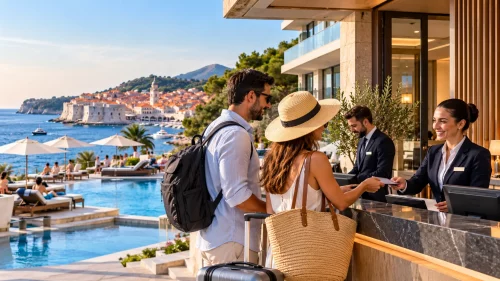
Croatian hotels recorded almost 5.3 million overnight stays in August, 2% more than a year earlier, The Dubrovnik Times reported.
Over the first eight months, hotels logged about 20 million overnight stays, up 2.7%, while the almost 34 million nights spent in household accommodation stayed at roughly the previous year’s level, according to Total Croatia News.
Employment in accommodation and food services reached 120,185 in August, 4.3% more than in July, Travel And Tour World reported.
Germany remained Croatia’s largest foreign market with 16.9 million overnight stays between January and August, followed by Slovenia with 9.6 million and Austria and Poland with 6.3 million each. The Czech Republic contributed 4.5 million and Hungary 3.7 million.
Most of those markets lie within driving distance of the Adriatic, which makes a short stay easy to arrange.
A broad, price-aware middle market of that kind tends to favour hotels that combine reliable standards with sensible pricing, flexible stay lengths and services that justify a slightly higher nightly rate than a private apartment.
Older coastal properties built for long, fixed-week stays can need new room layouts, food and beverage offers suited to guests who stay three nights instead of 10, and booking systems that handle short, late reservations.
Properties that can open for longer each year also spread their fixed costs across more guests.
Some hotel investors have approached that work with techniques first developed in retail property, where owners learned to reposition tired assets around the way customers actually shop.
Investors who have carried those retail methods into hotels tend to start from the guest a location can realistically attract and work back to the product.
Tourism Officials Shift Focus to Spending
Speaking on Sept. 10, the director of the Croatian National Tourist Board said good results were also expected for the rest of 2026, and he noted that some newer markets, including visitors from China, travel throughout the year and not only in the July and August peak, according to Xinhua.
The minister argued that the industry should be judged on what visitors spend and what tourism adds to the wider economy, alongside the familiar counts of arrivals and nights. A yardstick of that kind is likely to suit operators that can earn more from each guest.