
























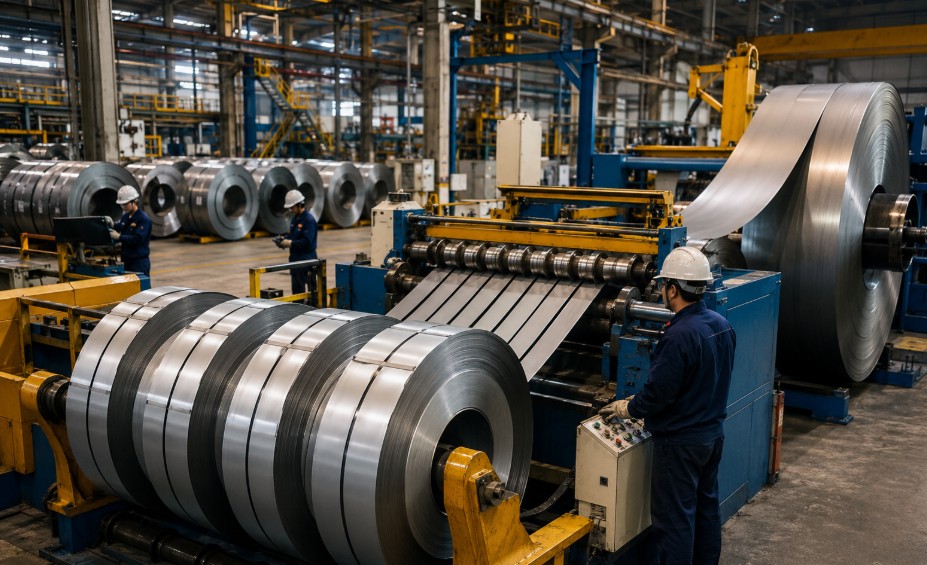
Manufacturers often look for growth in new products, but many quick gains can be found in a smoother production flow. If your company purchases metal in coils and processes it into components, slitting is one of the most important steps to control properly.
A slitting machine cuts a wide master coil into multiple narrower coils or strips that match the subsequent processing steps. When this is done well, it improves yield, quality, and delivery reliability. When it is done poorly, it leads to scrap, rework, and bottlenecks.
What Slitting Involves?
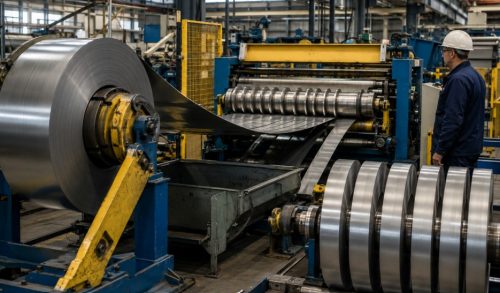 In slitting, circular knives are mounted on shafts, often referred to as arbors. The coil is unwound, guided through the knives, and then rewound into tight, stable coils.
Two terms you will often hear are:
- Burr: A rough edge caused by incorrect knife setup or worn tooling.
- Tension control: Keeping each strip under constant tension so it rewinds evenly.
These details matter because edge quality and coil build affect everything that comes afterward.
Where the ROI Comes From?
For operations and procurement teams, the business case is usually easy to measure.
A properly specified slitting line can deliver:
- Less scrap and rework through consistent strip width and fewer edge defects
- Faster changeovers when knife spacing and setup are repeatable
- Higher output through stable tension and reliable rewinding
- Better downstream performance, because strip quality affects forming, welding, and surface quality
Better coil processing, therefore supports production efficiency and predictable delivery dates.
Common Applications Across Different Sectors
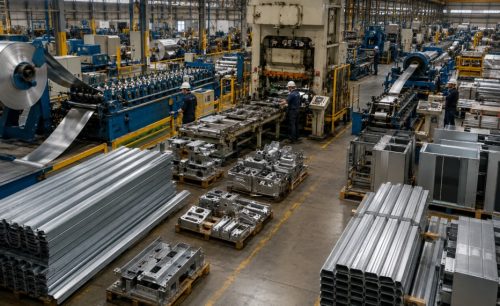 Slit strip is used in many sectors. That is why slitting capacity is often strategic for service centers and OEMs.
Typical applications include:
- Roll forming lines for cladding, roofing, and profiles
- Stamping and press work for brackets, housings, and automotive subcomponents
- Tube and pipe mills that require a constant strip width for stable welding
- HVAC and control cabinet production, where repeatable widths reduce setup time
If you supply multiple markets, flexibility in strip widths and fast changeovers become just as important as cutting accuracy.
The Building Blocks of a Slitting Line
A slitting machine is rarely a standalone unit. A line usually consists of an uncoiler, a slitting head where the cutting takes place, a tension stand to separate and stabilize the strips, and a recoiler. Many lines also include a scrap winder for edge trim.
By thinking in systems rather than individual machines, you prevent integration issues and improve safety and uptime.
A Practical Checklist Before You Buy
Define your requirements clearly before requesting quotations:
- Material type, such as steel, stainless steel, or aluminum
- Thickness range and tolerance requirements
- Coil width and maximum coil weight
- Desired strip widths and how often they change
- Required edge quality, including burr limits and surface protection
- Output targets, such as speed, uptime, and shift operation
- Available floor space and desired line direction
- Need for support, including installation, training, and spare parts
Choosing a Supplier That Can Engineer Around Your Specifications
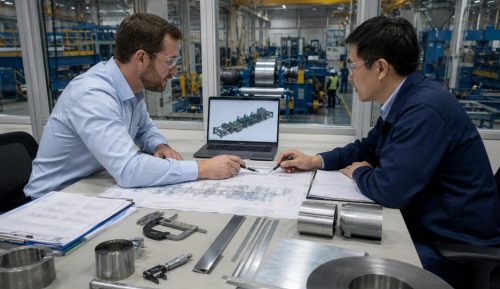 Because slitting strongly depends on coil data and the downstream process, it helps to work with a specialist that designs equipment based on real production requirements.
When comparing solutions, a configurable slitting machine is relevant for metalworking environments where accuracy, stable rewinding, and line integration matter.
Key Takeaway
Slitting is the link between raw material and value-adding production. If you are planning a new line or an upgrade, first document your coil specifications and quality objectives, then translate them together with a supplier into a reliable, reproducible setup.