























Many businesses focus on upfront prices when budgeting for material handling equipment, often overlooking the full spectrum of costs involved.
Accounting for the total cost of ownership ensures that procurement decisions reflect the actual financial impact over a machine’s lifespan. Informed planning helps organisations prevent hidden expenses from eroding their expected returns.
Businesses typically discover that material handling equipment represents much more than just an initial investment, as ongoing expenses can significantly affect long-term operating budgets.
Taking a closer look at the total cost of ownership, or TCO, is essential when seeking to understand every financial factor built into equipment life cycles.
Companies that source equipment from suppliers such as Breg Products often apply this approach to gain accurate projections for capital outlay, running costs, and operational risks. By calculating TCO early, procurement decisions can better align budgets with actual business performance.
What Goes into Total Equipment Ownership Costs?
 The sticker price of material handling equipment seldom tells the whole story. Beyond acquisition, businesses encounter a range of costs tied to specification, delivery arrangements, and seamless installation or commissioning.
Overlooking these factors can skew budget forecasts and operational plans, especially for equipment requiring complex setup or site preparation. Accurate TCO calculation means identifying every initial expenditure needed to get the equipment ready for daily use.
Financing and depreciation are also crucial to a transparent TCO view. Whether a business purchases equipment outright or uses financing options, interest charges or lease terms inevitably contribute to real costs over time.
Additionally, as equipment ages, depreciation affects asset values recorded on balance sheets. Understanding this relationship allows decision-makers to weigh up the financial implications of ownership choices, from outright purchases to longer-term leasing strategies, and factor genuine asset costs into overall calculations.
What Factors Influence the Cost of Ownership for Material Handling Equipment?
Day-to-day Operational and Training Obligations
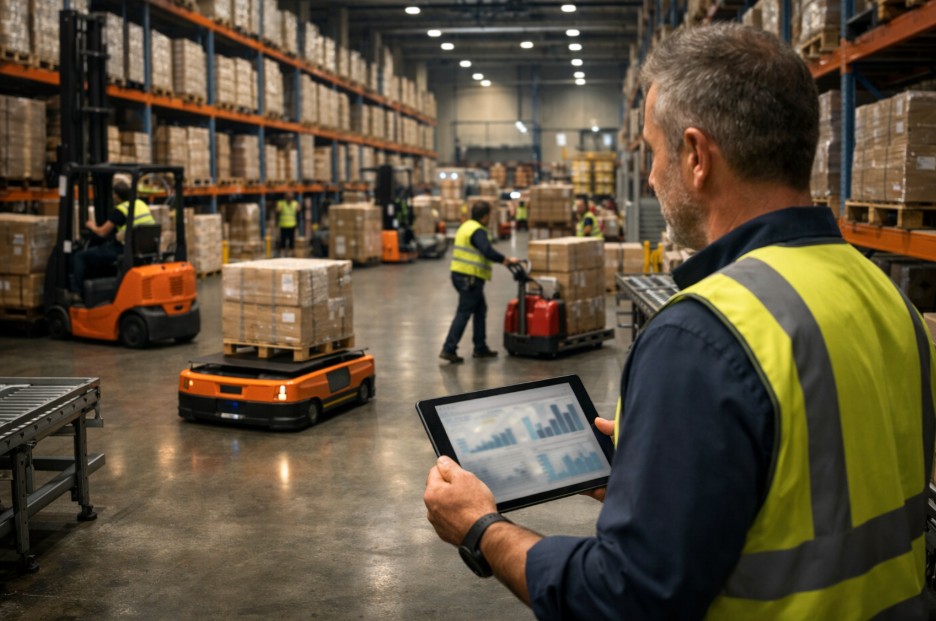
Running costs form a major pillar of the total cost of ownership. Labour remains a significant variable, with handling efficiency, movement times, and how seamlessly the equipment fits into existing workflows all affecting wage expenses.
Frequently used equipment can drive up overtime, especially if systems are ill matched to operational requirements or need additional staff support. Standardising workflows while choosing machinery that matches specific handling needs can prevent unnecessary cost escalations.
Energy and consumable expenses must also be factored into total cost of ownership in material handling equipment. Powered machines demand careful tracking of electricity, battery changes, or fuel consumption, whereas manual models may incur fewer direct running costs but could be less efficient at scale.
Training and onboarding are also important, as safe, consistent usage relies on comprehensive instruction for all operators. Any compromise here can lead to avoidable downtime or incidents, elevating hidden costs over time.
Impact of Servicing, Downtime, and Compliance Costs
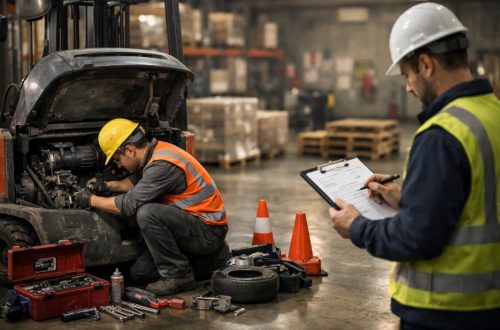 Regular maintenance versus reactive repairs can shape both budget predictability and productivity. Planned servicing keeps machinery running efficiently and minimises unexpected faults, while delays in sourcing parts or technical support can lead to extended downtime.
Sourcing equipment with readily available components and straightforward servicing procedures can help control costs and reduce operational disruption over the equipment’s life.
The indirect costs tied to unplanned downtime should not be underestimated. Missed dispatches, production schedule slips, and overtime hours can quickly accumulate financial penalties, even if the original repair expense appears minor.
Safety and compliance are equally central, as equipment designed for correct load ratings and robust safety features can help reduce the chance of workplace accidents.
Inspections, usage documentation, and adherence to policies can minimise incident-related costs, including the possibility of compensation claims, investigations, or reputational impact.
Lifespan Factors, End Value, and Decision Frameworks
Durability, build quality, and exposure to real-world wear influence how long material handling equipment remains viable and efficient.
Choosing machinery designed for extended use, with easily replaceable parts and strong materials, can support a planned maintenance scheme and reduce the frequency of costly replacements.
As equipment nears the end of its lifecycle, comparing total cost of ownership in material handling equipment among different models helps establish when scheduled replacement is more cost effective than ongoing repairs.
Residual value is another element that shapes overall cost of ownership. Well-maintained equipment may retain resale or trade-in value, offsetting future acquisitions, while options with strong recyclability or environmentally friendly disposal processes can minimise end-of-life costs.
When comparing options, it is useful to assemble a checklist of data points to review with suppliers, covering not only purchase price but each projected cost over a defined 3 to 5-year period.
When evaluating total cost of ownership in material handling equipment, larger upfront investments can sometimes be justified if ongoing costs are reliably lower, while in other cases a lower initial outlay is more rational due to predictable replacement cycles.
Final Thoughts
Leveraging total cost of ownership as a decision-making tool gives procurement and operations teams stronger control of budgets and performance outcomes.
The largest hidden costs often result from underestimating servicing requirements, inefficient operation, or unexpected incident risks, but these scenarios can be reduced through careful specification and a rigorous approach to equipment lifecycle management.