

























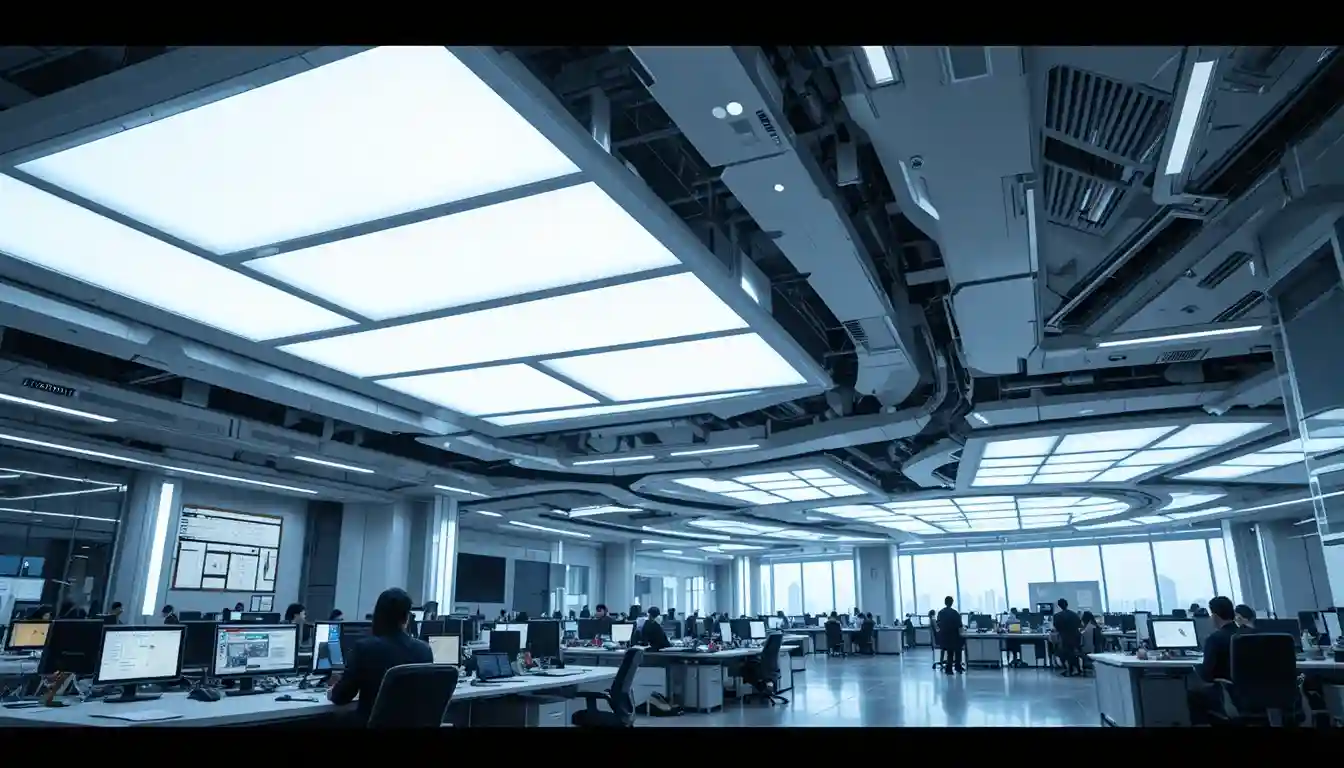
The sphere of commercial real estate is always evolving. Workplaces are being reconfigured, stores are being rearranged, and businesses are always seeking greater efficiency. In this dynamic world, rigid lighting solutions can be a liability.
Replacing a failed component means replacing the whole fixture, adding costs, waste, and production downtime. Modular lighting systems address this issue by enabling businesses to replace parts as needed without replacing the entire system.
The process impacts energy consumption, maintenance, flexibility, and planning. In today’s world, businesses need lighting that can keep up with change.
Why Businesses Need Flexible Commercial Lighting Systems?
Flexible Systems for Changing Business Needs
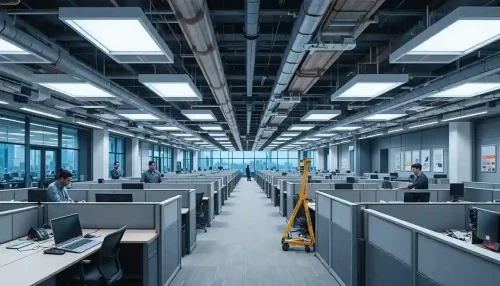 Modern businesses are overhauling their workplace layouts at a growing pace, driven by an ever-changing set of demands. Existing lighting systems are not easily reconfigured because they are integrated units.
Any change in layout can result in a large reinstallation. A modular system allows easy rearrangement of parts without replacing the whole system. If an office floor is transformed from private cubicles to open workstations, the lighting needs to change. It’s costly and time-consuming to replace fixtures.
Modular lighting makes it easier to make smaller changes. This allows companies to adapt without having to replace entire fixtures.
Better Maintenance Without Full Replacement
Businesses often replace an entire light fitting when only one component needs changing. That’s where modular lighting makes sense for a business.
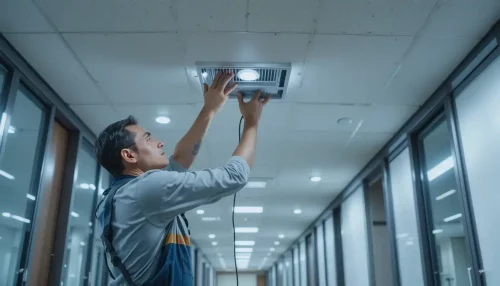
Rather than replacing the entire fixture, the technician can locate the malfunctioning module and replace it. This saves time, reduces disruption, decreases wasted labour, and provides greater efficiency.
For example, in a hotel with corridor lighting on multiple floors, replacing whole fittings is unnecessary if only one module fails. By replacing only the required component, the system continues to operate without inconveniencing guests. With modular fittings, the specific problem can be targeted and solved.
Lower Costs Over the Long Term
 Many businesses focus only on installation cost and miss the bigger financial picture. Modular systems enable companies to improve performance gradually rather than all at once. This provides greater control over budgets, along with reducing long-term spending.
The benefits also extend beyond the cost of replacement. Less downtime means fewer interruptions to business activity, and reduced maintenance costs mean lower labour costs. Improved efficiency helps control monthly energy bills. For large commercial spaces, these savings are often more valuable than the initial installation cost.
Sustainability Through Smarter Upgrades
Sustainability has become a mainstream business practice. Consumers, tenants, and shareholders want companies to minimise waste and be sustainable. When only parts of fixtures are faulty, full replacement leads to waste. It also drives the need for new resources, production, and transportation.
A modular system is better because it extends the life of the useful parts. This helps in waste reduction and the environmental impact of the lighting system. Combined with LED modules and controls, energy efficiency is also boosted.
Sustainability should not be an isolated project; it should be integrated into business decision-making, and lighting upgrades are one of the cleanest examples.
Smart Controls Make Systems More Efficient
 Today’s commercial buildings require more than just lights that turn on and off. They need more control over light, usage, and energy. Smart modular systems can work with sensors, motion controls, and remote brightness settings.
Lights respond to how spaces are actually used, rather than running at full power all day. Meeting spaces, storage, or unused office areas do not require and demand the same level of brightness all day.
Smart controls increase efficiency by providing energy only when needed. This creates better performance without increasing operational complexity.
The Future of Commercial Lighting
The future of commercial lighting is not about replacing more. It is about creating better performing systems that last longer and respond quicker. Modular systems offer businesses a competitive edge by enhancing flexibility, reducing waste, and managing costs.
As commercial spaces change, their lighting should change too. Upgrades, maintenance, and efficiency lead to better business results than replacements. In modern commercial spaces, modular lighting is no longer just a consideration; it is the new standard.