




















Last checked: 6 July 2026
The Royal Mail Second-Class changes in 2026 introduce an alternate weekday delivery model for 2nd Class letters and other non-1st Class mail from Monday to Friday.
Under the new system, Second Class letters will no longer be delivered on Saturdays in areas where the changes have been implemented, while Royal Mail continues to aim for delivery within three weekdays. First Class letters and parcels are not affected by these changes.
Key takeaways:
- No Saturday delivery for Second Class letters in affected areas.
- Delivery target remains within three weekdays.
- First Class letters and parcels continue under existing delivery arrangements.
- Businesses may need to adjust posting schedules and use faster services for time-sensitive mail.
For UK businesses, the changes mean reviewing mailing timelines to ensure bills, statements, reminders, and customer communications continue to reach recipients when expected.
What Are the Royal Mail Second-class Changes in 2026?
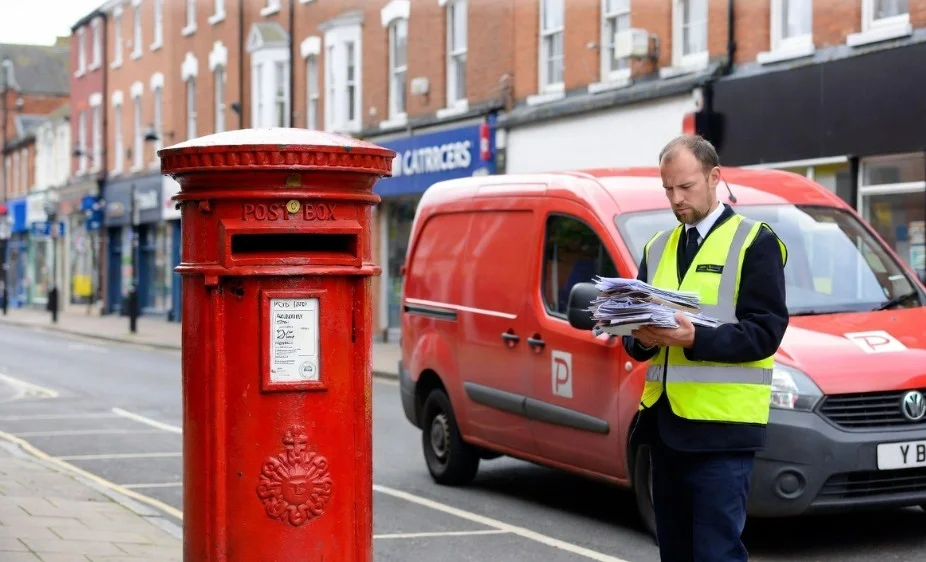
 The Royal Mail Second-Class changes mainly affect letters, not parcels. Under the new model, 2nd Class and other non-1st Class letters are being delivered every other weekday, from Monday to Friday.
Royal Mail states on its Future of Letter Deliveries page that it aims to deliver 2nd Class mail within three weekdays, and that standard bulk business letters such as bills and statements will move to a three-day delivery aim.
The rollout is phased. Royal Mail says implementation is taking place gradually across around 1,200 delivery offices and is expected to be complete by December 2026. This means businesses should avoid assuming that every UK address has already moved to the new model at the same time.
In practical terms, Second Class remains a lower-cost option for non-urgent mail, but it now requires more planning. A letter that previously had a wider Monday-to-Saturday delivery pattern may now arrive only on the next scheduled alternate weekday once the new pattern applies locally.
Why is Royal Mail Changing Second Class Letter Deliveries?
Royal Mail is changing Second Class delivery because the UK letter market has changed. Fewer letters are being sent, while delivery networks still need to cover homes and businesses across the country.
Declining Letter Volumes
Ofcom says the number of letters sent each year has more than halved since 2011. The regulator has linked reform to the need for a more sustainable universal postal service that still protects important delivery features for users.
What Did Ofcom Approve?
Ofcom approved reforms that allow Second Class letters to be delivered on alternate weekdays while keeping a three-working-day delivery standard. In its public statement, Ofcom said:
“These changes are in the best interests of consumers and businesses.”
The full context is set out in Ofcom’s postal service reform announcement, which also explains the new protections against long delays.
Business reliability pressure
For businesses, reliability matters as much as speed. An invoice, appointment notice or compliance letter may still be non-urgent, but delayed arrival can create customer confusion.
The reform is intended to make service standards more realistic, but businesses still need to build the new delivery rhythm into their communication planning.
When Will Second Class Post Be Delivered Under the New Rules?
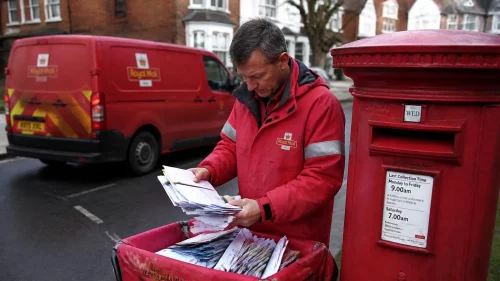
 Under the new rules, Second Class letters are delivered on alternate weekdays, Monday to Friday. Royal Mail gives the example of a Monday, Wednesday and Friday pattern one week, followed by Tuesday and Thursday the next.
Its delivery-times guidance says First Class letters continue six days a week, while Second Class and bulk letters move to this alternate weekday schedule.
This means Saturday delivery for Second Class letters ends where the new model applies. However, the change does not mean Second Class disappears. It remains available, but delivery days become less frequent.
What changes and what stays the same:
| Mail type | Is it affected? | Rule under the new model | Business impact |
| 2nd Class letters | Yes | Delivered every other weekday, Monday to Friday | Post earlier for routine documents |
| Bulk business letters | Yes | Three-day delivery aim | Review invoice and statement schedules |
| 1st Class letters | No major change | Monday to Saturday, next-working-day aim | Use for more urgent letters |
| Parcels | No | Continue up to seven days a week | E-commerce parcel delivery is not changed in the same way |
This distinction is important because many businesses use several Royal Mail services at once and should not apply the Second Class letter rule to every item they send.
How Long Will Royal Mail Second Class Delivery Take Now?
Royal Mail still aims to deliver Second Class mail within three working weekdays under the changed model. The key difference is that the delivery day may depend on the alternate weekday schedule in the recipient’s area.
The Three-weekday Delivery Aim
According to Royal Mail, Second Class mail typically takes two to three working days to arrive. Under the new delivery arrangements, the company continues to target delivery within three working weekdays, even though Saturday deliveries for Second Class letters will no longer take place in affected areas.
What Happens After a Friday Posting?
Royal Mail’s updated guidance provides examples of how the new delivery schedule may affect Second Class mail posted later in the week.
Key examples include:
- Friday posting: A Second Class letter posted on Friday would typically be delivered by the following Wednesday.
- Thursday posting: A letter posted on Thursday may normally arrive by the following Tuesday, depending on the local alternate weekday delivery schedule.
For businesses, these changes mean it may be sensible to review mailing schedules. Midweek posting could become a more reliable option for:
- Payment reminders.
- Appointment letters.
- Customer invoices.
- Other time-sensitive business communications.
Planning mailings earlier in the week can help improve delivery timing and reduce the risk of delays under the new Second Class delivery model.
Are First Class Letters and Parcels Affected by the Second-class Changes?
First Class letters and parcels are not affected in the same way as Second Class letters. Royal Mail says First Class letters continue to be delivered six days a week from Monday to Saturday, and parcels continue to be delivered up to seven days a week.
This matters because some public discussion can make the reform sound broader than it is. The main change is to 2nd Class and other non-1st Class letters. Businesses sending parcels, ecommerce orders or tracked delivery items should check the specific service used, but they should not assume parcel delivery has moved to the Second Class letter schedule.
For urgent written communication, First Class may be more suitable. For proof of delivery or customer-sensitive items, tracked or signed options may be more appropriate than standard Second Class post.
What Do the Royal Mail Second-class Changes Mean for UK Businesses?
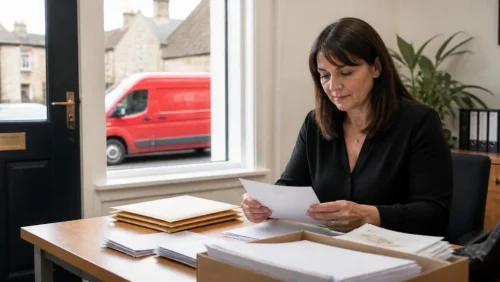 The Royal Mail Second-Class changes mean businesses need to think more carefully about mailing windows. Second Class can still be useful for non-urgent post, but it is less suitable for messages that depend on a specific arrival day.
Invoices, Statements and Customer Letters
Bulk business letters, including bills and statements, are moving to a three-day delivery aim aligned with Second Class. A company sending monthly statements, reminders or account notices should check whether its print-and-post cycle still gives customers enough time to respond.
Should Urgent Documents Move to First Class or Tracked?
Urgent letters should not rely on the lowest-cost service if arrival timing is important. Businesses may need to use First Class for faster delivery, Signed For services where confirmation matters, or tracked services where visibility is needed.
Digital Fallback Planning
Businesses should also review when postal communication is genuinely required. For some customers, a letter may still be essential. For others, email, secure portals, SMS reminders or customer dashboards can reduce dependence on postal timing. The safest approach is usually a blended communication plan.
How Do the New Ofcom Delivery Targets Affect Second Class Post?
Ofcom has updated the delivery targets used to assess Royal Mail’s performance. From 1 April 2026, Royal Mail is expected to deliver 90% of First Class mail by the next working day and 95% of Second Class mail within three working days. A new backstop target also requires 99% of Second Class mail to arrive within five working days.
Key changes include:
- 95% of Second Class mail should be delivered within three working days.
- 99% should arrive within five working days under the new backstop target.
For businesses, these targets are performance standards rather than guaranteed delivery times. Given recent investigations into Royal Mail’s delivery performance, organisations should allow extra time for important mail and avoid relying on delivery targets as fixed arrival dates.
How Much Does Royal Mail Second Class Cost in 2026?
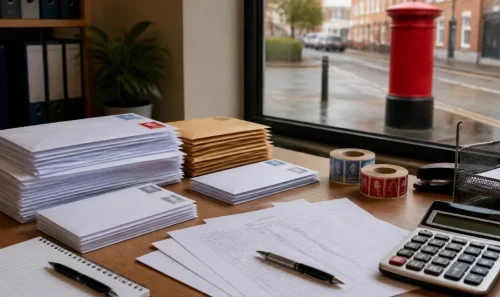 A standard Second Class letter stamp currently costs 91p, while a Second Class Large Letter up to 100g costs £1.55. These prices are shown by both Royal Mail and the Post Office, but businesses should always check the latest rates before sending large volumes because postage prices can change.
Standard Second Class Stamp Price
The standard 2nd Class stamp price is relevant for ordinary letters up to 100g. It remains the lower-cost option compared with First Class, which is why many businesses use it for routine, non-urgent correspondence.
Large Letter and Business Mailing Cost Considerations
Large Letters cost more than standard letters because size and weight affect postage. Businesses sending brochures, forms, contracts or multi-page customer packs should check whether their item qualifies as a Letter or Large Letter before budgeting.
For businesses with regular mail volumes, small price changes can add up quickly. A mailing list of thousands of customers may need a revised postage budget, especially if some items now need to move from Second Class to First Class or tracked services.
What Should Businesses Do Next to Prepare for the Royal Mail Changes?
Businesses should treat the Royal Mail Second-Class changes as an operational planning issue, not just a postal news story. The most practical response is to review what is sent, when it is sent and how important the arrival date is.
Review Mailing Calendars
Finance, operations, customer service and marketing teams should check regular posting days. If letters are currently printed and posted on Fridays, the business may need to move routine mail earlier in the week.
What Should Be Upgraded to Faster Services?
Letters involving deadlines, appointments, customer complaints, legal sensitivity or payment action may need First Class, tracked, signed or guaranteed delivery. Standard Second Class is better suited to non-urgent mail.
Customer Messaging Updates
Businesses should also update customer-facing wording. Instead of saying a letter “will arrive in a few days”, it may be safer to say that postal delivery times can vary and that customers should allow sufficient working days.
A short internal checklist can help: identify regular Second Class mail, classify urgent versus non-urgent items, adjust posting days, update customer templates and check official Royal Mail guidance during the rollout.
Conclusion
The Royal Mail Second-Class changes 2026 are a major adjustment for routine business mail, but they do not mean the end of Second Class post. The service remains available for less urgent letters, while First Class and parcel services continue under different arrangements.
For UK businesses, the safest approach is to plan earlier, communicate clearly and use faster or trackable options when timing matters.
The change is especially relevant for organisations that send statements, invoices, reminders, appointment letters or customer updates by post. By reviewing mailing calendars now, businesses can reduce disruption and keep customer communication reliable.
FAQs About Royal Mail Second-Class Changes
Does Royal Mail 2nd Class include tracking?
Standard Royal Mail 2nd Class does not provide full tracking in the same way as a tracked service. Businesses that need visibility, confirmation or a signature should choose a tracked, signed or guaranteed service.
Can businesses still send Royal Mail 2nd Class parcels?
Yes. Royal Mail 2nd Class parcel services are still available, and parcels are not changing in the same way as Second Class letters. Businesses should check the exact parcel service, size, weight and delivery aim before sending.
Are Royal Mail Second Class prices fixed for all of 2026?
Not necessarily. The current standard Second Class stamp price is 91p, but postage prices can change. Businesses should check Royal Mail or Post Office pricing before preparing large mail campaigns.
What counts as a working day for Second Class post?
For the new Second Class letter model, the key delivery schedule is based on weekdays from Monday to Friday. Bank holidays can affect delivery and collection timings.
Do the changes to Second-Class post affect bills and statements?
Yes, standard bulk business letters such as bills and statements are moving to a three-day delivery aim aligned with Second Class. Businesses should review sending schedules for these items.
Where can businesses check local Royal Mail delivery updates?
Businesses should check Royal Mail’s official updates, service pages and local delivery information during the phased rollout. Local timing may matter because the new model is not introduced everywhere at once.
Should small businesses stop using Second Class post?
Small businesses do not need to stop using Second Class post altogether. It can still work for non-urgent letters, but urgent, sensitive or deadline-based documents may need a faster or more secure option.
Editorial Note:
This article was prepared for general business information and was last checked on 6 July 2026. It is based on official Royal Mail, Ofcom and Post Office information available at the time of checking. It should not be treated as financial, legal or regulatory advice.
Because the rollout is phased, businesses should avoid assuming that the new Second Class delivery model applies identically in every local area on the same date. Official updates should be checked before making operational decisions.
How We Checked?
The information was checked against Royal Mail’s Future of Letter Deliveries guidance, Royal Mail delivery-time information, Ofcom’s postal reform updates, Ofcom’s 2025/26 delivery performance investigation and current Post Office stamp pricing.
The article also separates confirmed facts from practical business interpretation. Confirmed facts include the alternate weekday delivery model, the three-weekday Second Class delivery aim, the continued First Class and parcel arrangements, the phased rollout and the current published stamp prices.